A garage workshop wall has to survive sawdust, engine grease, and a bad case of humidity, so wall art for garage workshops needs different rules than a living room gallery wall.
- Gallery-wrapped canvas beats framed glass art in garages that swing more than 20 degrees between morning and afternoon in 2026 — buy canvas, skip glass.
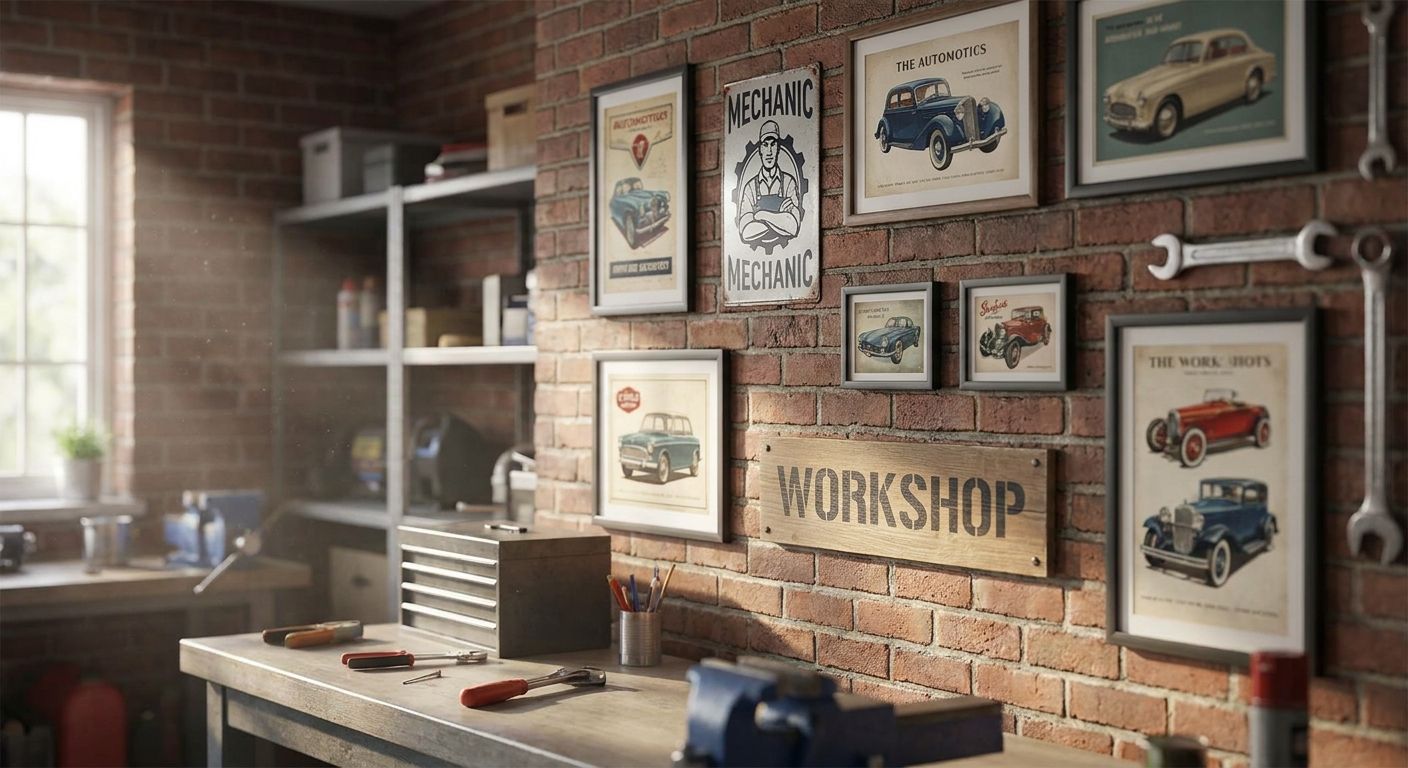
- Vintage automotive and travel-poster themes read as workshop decor without looking like a dorm room; see the guide on wall art for man caves for the full palette.
- Most two-car garages carry 20-30 ft of open wall above the workbench, which is exactly where an oversized canvas earns its keep.
- Hang the center of any piece at 57 inches so it reads right whether you're standing at the bench or parked in a rolling chair.
Why this matters
A garage isn't climate-controlled like the rest of the house, and most wall art was never designed for that. Unheated garages in 2026 still see the same swings they always have — cold concrete floors, hot afternoon light through the door glass, oil vapor drifting off the workbench. Framed pieces with glass fog up when a cold garage door opens into warm shop air, and paper posters yellow fast once grease gets in the air. Canvas, printed right and hung right, shrugs most of that off.
Who this is for
This guide is for anyone turning a garage, detached shop, or man cave into a space they actually want to spend time in — the weekend mechanic, the woodworker with a dust collector running, the collector who wants their tool wall to look intentional instead of accidental. If you're decorating a finished, heated bonus room over the garage, treat it like any other room in the house; the guide on wall art for man caves covers that crossover territory well. This one is for the working, unfinished, dusty side of the garage.
What to look for in wall art for garage workshops
Materials that shrug off dust, grease, and temperature swings
Canvas with a UV-protective coating handles airborne grit and oil mist far better than uncoated poster paper, which absorbs moisture and starts to curl at the corners within a season. Framed pieces under glass look sharp on day one but fog and streak once the garage door starts cycling temperature every time it opens. If the space isn't insulated, canvas is the safer bet in 2026 and every year after.
Mounting hardware built for drywall, concrete, or steel studs
Garage walls are rarely finished drywall over standard studs — plenty are exposed studs, concrete block, or steel framing on a metal building. Whatever you're drilling into changes the anchor, and getting it wrong means a canvas on the floor next to a chipped wall. The guide on hanging canvas art without damaging walls walks through anchor choices for surfaces that aren't standard drywall.
Size that matches your actual wall real estate
A 16x20 canvas disappears on a 10-foot garage wall the same way a postage stamp disappears on a barn door. Garage walls tend to run bigger and blanker than living room walls, so the math is different — go up a size or two from what you'd hang in a bedroom. The canvas sizing guide has the room-to-canvas ratios if you're unsure where to land.
A theme that fits the room's job, not just its looks
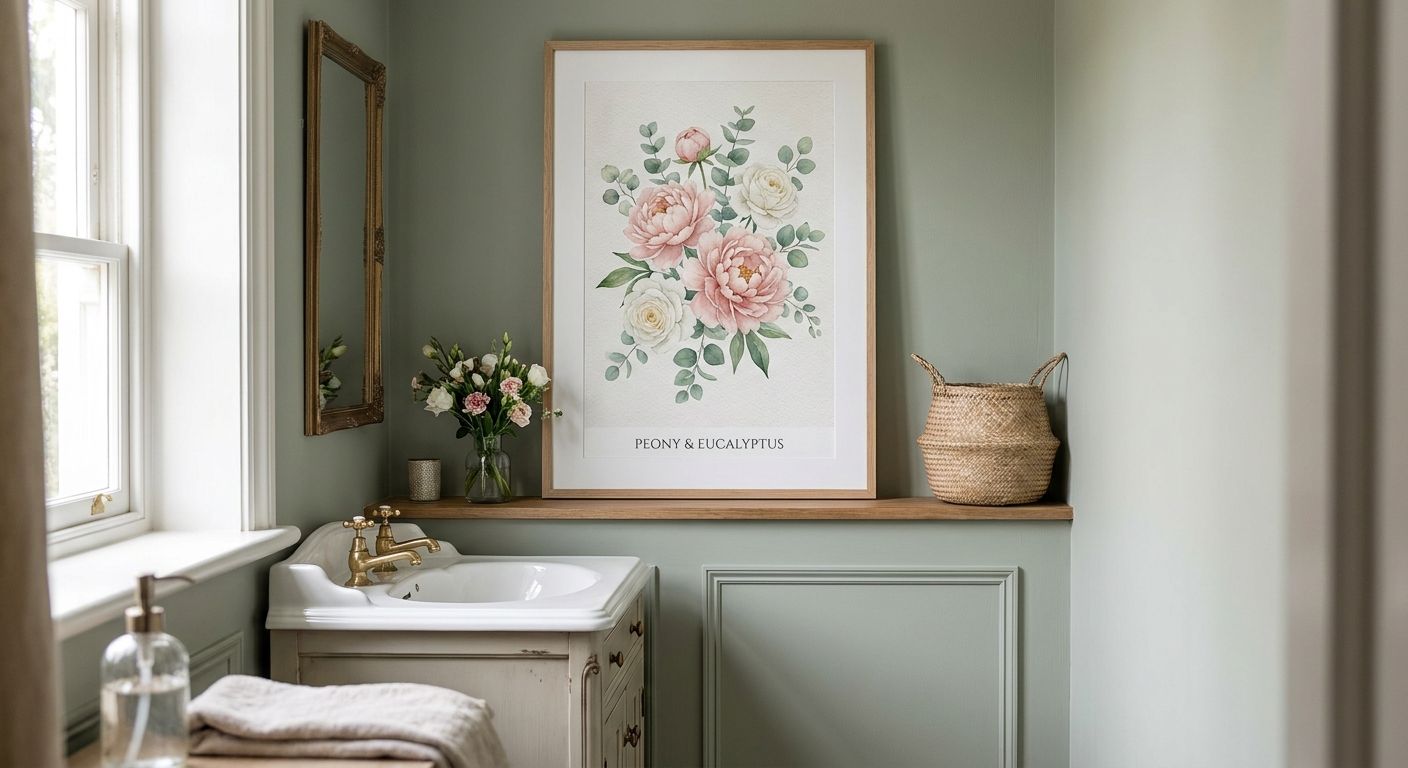
A workshop wall reads best with subject matter that nods to what happens in the room — route maps, engine diagrams, vintage garage signage, line-art tools — rather than florals or soft pastels that feel out of place next to a torque wrench. Theme consistency is what separates a curated wall from a random print someone had lying around.
Glare control under shop lighting
Most garages run cool-white LED shop lights at high output, and glossy canvas or glass framing throws that light straight back at you. A matte or satin canvas finish reads clean under bright overhead light without the hot spot.
Easy-clean surfaces you won't baby
You're not going to dust a garage wall weekly. A wipeable canvas surface that tolerates a damp microfiber cloth without smearing ink is worth more here than in any other room in the house — check the canvas cleaning and maintenance guide before you assume any print can take a wipe-down.
Top picks for a garage workshop wall
The gearhead pick — vintage automotive and travel-style prints. Route 66 maps, classic gas station signage, and mid-century travel poster styling all sit naturally in a shop without trying too hard. A 16x20 or 24x36 canvas works over a tool cabinet or between two windows. Verdict: Buy — it's the theme that reads workshop fastest.
The oversized statement — a single large-format canvas over the main workbench. With 20-30 ft of open wall typical in a two-car garage, a 40x60-inch gallery wrap fills space that three small prints never could, and it's one hanging point instead of six. Verdict: Buy if your wall runs longer than 8 feet uninterrupted.
The line-art minimalist — blueprint or schematic-style line drawings. These read clean and modern, and they hide dust better than high-contrast photography because there's less flat dark background to show smudges. Verdict: Consider — better for a finished, brighter shop than a dim, dusty one.
The framed nostalgia piece — a matted, glass-front vintage racing poster. It looks sharp in a showroom photo, but glass framing in an uninsulated garage fogs and sweats every time the door cycles temperature, and moisture behind glass warps matting within a season. Verdict: Skip unless the garage is insulated and climate-controlled.
What to avoid
- Framed pieces with glass in an unheated garage — condensation behind the glass is a matter of when, not if.
- Uncoated paper posters — they absorb oil vapor and yellow fast near a workbench.
- Small-scale prints on long walls — an 8x10 on a 12-foot wall reads like an afterthought, not decor.
Verdict comparison
| Pick | Best for | Finish | Verdict |
|---|---|---|---|
| Vintage auto/travel canvas | Any garage wall near tools | Matte canvas | Buy |
| Oversized single canvas | Long, blank workbench walls | Matte gallery wrap | Buy |
| Line-art/blueprint canvas | Bright, finished shops | Matte canvas | Consider |
| Framed vintage poster | Insulated, climate-controlled garages only | Glass front | Skip (uninsulated) |
Gioia's canvas prints ship as gallery wraps roughly 1.5 inches deep, which is enough to clear most pegboard hooks and shelf brackets without you having to rearrange the wall first — a detail that matters more in a workshop than almost anywhere else in the house.
FAQ
What's the best wall art for garage workshops?
Gallery-wrapped canvas with a matte, UV-protective finish is the best wall art for garage workshops because it resists dust, grease, and the temperature swings unheated garages see year-round. Framed glass pieces look sharp but fog under those same conditions.
Is canvas better than framed art for a garage?
Yes, canvas is better than framed art for a garage in most cases because there's no glass to fog when the door cycles temperature. Framed art only makes sense in an insulated, climate-controlled garage or bonus room.
How big should wall art be for a garage workshop?
Go bigger than you would in a bedroom or living room — a 24x36 or 40x60 canvas fits the long, open walls typical of a two-car garage, which often run 20 to 30 feet uninterrupted. Small prints under 16x20 get lost on walls that size.
What height should I hang art in a workshop?
Hang the center of the piece at 57 inches off the floor, the same standard used in any other room, so it reads correctly whether you're standing at the bench or seated in a rolling chair.
Does humidity in a garage damage canvas prints?
Coated canvas handles typical garage humidity and dust far better than uncoated paper posters, which absorb moisture and curl at the corners within a season. Framed pieces under glass are more vulnerable to condensation than open canvas.
What themes work best for garage workshop wall art?
Vintage automotive signage, travel-poster maps, and line-art tool or blueprint prints work best because they nod to what actually happens in the room. Florals and soft pastels tend to feel out of place next to a workbench.
Can I hang wall art on unfinished garage drywall or concrete?
Yes, but the anchor changes depending on the surface — exposed studs, concrete block, and steel framing all need different hardware than standard finished drywall. Check the anchor type before you drill.
How do I clean canvas wall art in a dusty garage?
A dry or slightly damp microfiber cloth wiped gently across a coated canvas surface removes shop dust without smearing the print. Avoid household glass cleaners, which can strip a matte coating over time.
One last thing
The detail most people skip: matte canvas doesn't just look better under LED shop lighting, it hides dust between cleanings far longer than a glossy or glass-front piece does, because there's no reflective surface catching every speck under bright overhead light. If you're only going to wipe the wall down twice a year, that's the difference between a piece that still looks curated in 2026 and one that looks neglected by spring.