Picking the right canvas size is the difference between a wall that looks finished and one that looks like you forgot to hang something. This guide walks through the measuring, the math, and the mock-up trick that takes the guesswork out of it.
- How to choose canvas size starts with the 60-75% rule: art should span that much of the furniture below it.
- Above an 84-inch sofa, a 40x60 inch canvas or a three-piece set is the safe pick for 2026 living rooms.
- Hang canvas so the center sits 57 inches from the floor — the museum eye-level standard.
- Gallery walls need 2 to 3 inches of breathing room between each framed piece, no more.
- Painter's tape mock-ups on the wall catch sizing mistakes before you order, every time.
Why this matters
A canvas that's too small floats on a big wall and reads as an afterthought. One that's too large crowds a room and fights with the furniture instead of framing it. Most sizing mistakes come from buying on instinct instead of measuring first — and once a large canvas print ships, returns get expensive fast.
Gioia Wall Art hears this question constantly from shoppers picking between a single statement canvas and a curated multi-piece set. The fix isn't complicated. It's a handful of measurements and one rule of thumb that interior stylists have used for decades.
What you'll need
- A tape measure (steel, not fabric, for accuracy on tall walls)
- Painter's tape or kraft paper to mock up dimensions on the wall
- A pencil and level
- The width and height of the furniture piece the canvas will hang above
- Ceiling height, if the wall runs higher than 8 feet
- A step stool or ladder for walls above the reach of a chair
The steps
1. Measure the wall segment, not the whole room
Measure the specific stretch of wall the canvas will occupy — above the sofa, over the bed, behind the console table — not the entire wall span. This is the number every other calculation depends on.
Use the tape measure horizontally at the height where the art will hang, and note the width in inches. Write it down before you start browsing, or you'll end up shopping by feel instead of by fit.
Common mistake: measuring the full wall including empty space on either side of the furniture, which inflates the size you think you need.
2. Apply the 60-75% rule
For any furniture-anchored wall — sofa, bed, buffet, desk — the art or art grouping should cover 60% to 75% of that furniture's width. An 84-inch sofa calls for a canvas or set spanning roughly 50 to 63 inches.
This rule holds whether you're choosing a single oversized canvas or splitting the space across a three-piece set. It's the single most reliable formula in the sizing playbook for 2026, and it works in nurseries, dining rooms, and entryways alike.
3. Mock it up before you buy
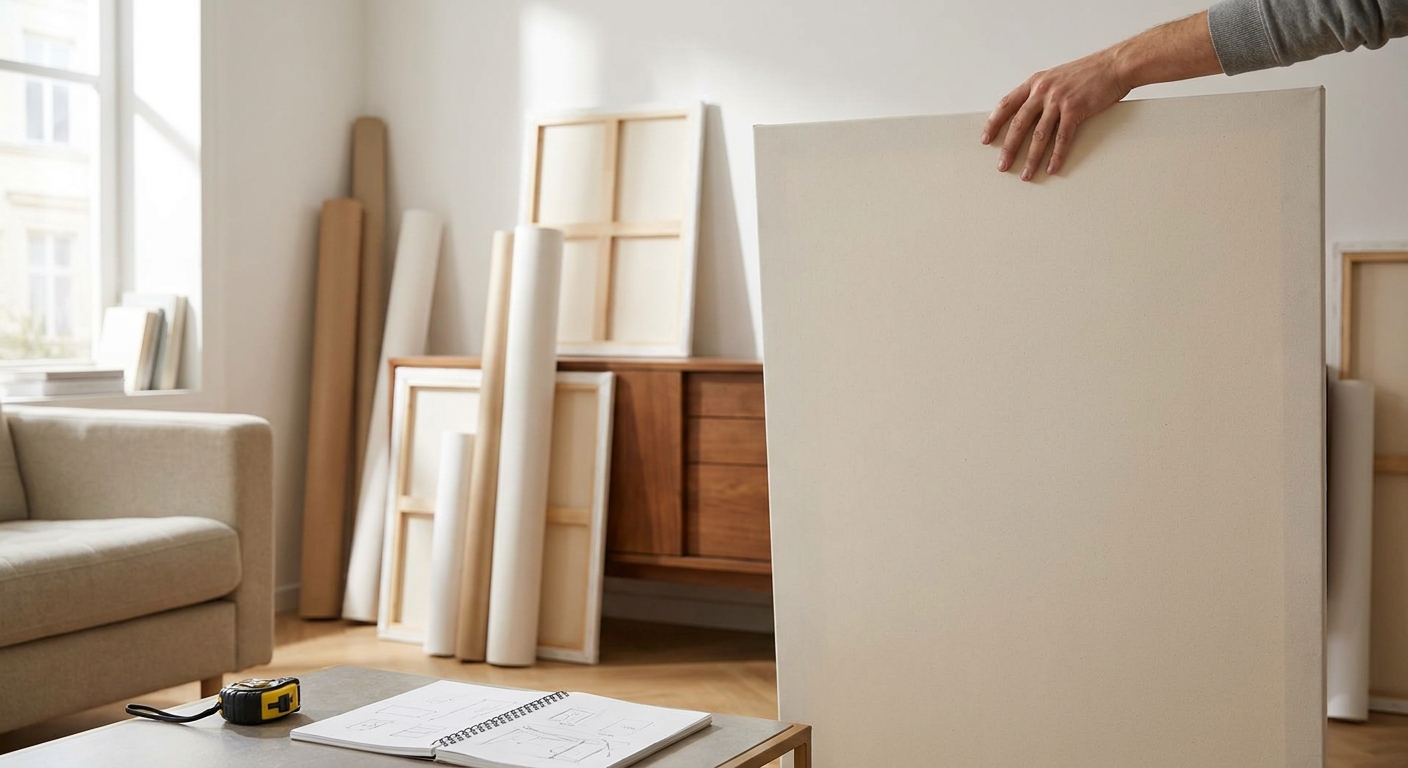
Cut kraft paper to the exact dimensions you're considering, or tape off the rectangle directly on the wall with painter's tape. Step back at least 8 feet and look at it from where you'd actually sit or stand in the room.
This step catches almost every sizing regret before it happens. If the taped outline looks small from the doorway, size up. If it swallows the wall, size down or shift to a smaller grouping.
Common mistake: judging size up close instead of from normal viewing distance, which makes everything look bigger than it will once you walk away.
4. Set the hang height at 57 inches to center
The museum-standard hang height puts the center of the artwork 57 inches from the floor. That's roughly eye level for an average adult standing in the room, and it's the number professional installers default to unless furniture dictates otherwise.
Over a sofa or bed, adjust slightly: leave 6 to 8 inches of clearance between the top of the furniture and the bottom edge of the canvas. Tall ceilings don't change the 57-inch rule — they just mean more open wall space above the piece, which is fine.
5. Decide single statement piece vs. multi-piece set
A long, narrow wall or a room with lower ceilings often reads better with a horizontal three-piece set than one oversized canvas. A square or tall wall segment usually wants a single vertical or square canvas as the anchor.
Look at the furniture's lines. A low, wide sofa pairs naturally with a wide single canvas or a triptych; a narrow console or hallway wall favors one vertical piece over a cluttered grouping.
6. Account for frame width if you're going framed
A framed print adds anywhere from 1 to 3 inches per side depending on the frame profile, which changes your total footprint. If you're comparing a framed piece against an unframed canvas print, measure the frame's outer edge, not just the print size listed on the product page.
This matters most in gallery wall layouts, where a frame that's slightly larger than expected throws off your spacing math for every piece around it.
Common mistake: ordering based on the print dimensions alone and discovering the framed piece is 2 inches wider than the taped mock-up.
7. Confirm clearance and finalize the order
Before checkout, double-check that the canvas won't collide with light switches, door frames, or ceiling lines once hung at 57 inches to center. Walls behind doors or near staircases need extra clearance on the swing side.
Once the dimensions clear every obstacle, lock in the size. A canvas that fits the tape outline and clears the room's obstacles is ready to order — no more second-guessing.
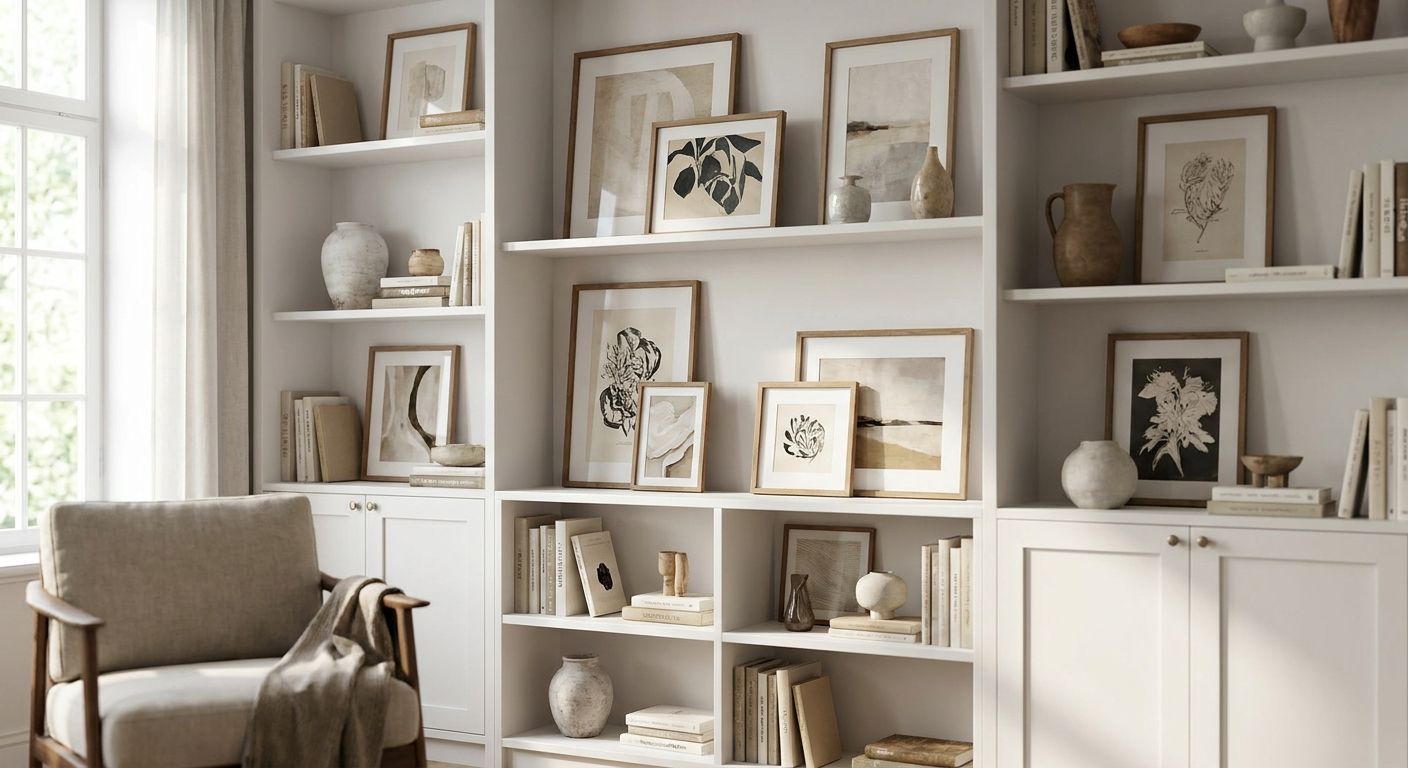
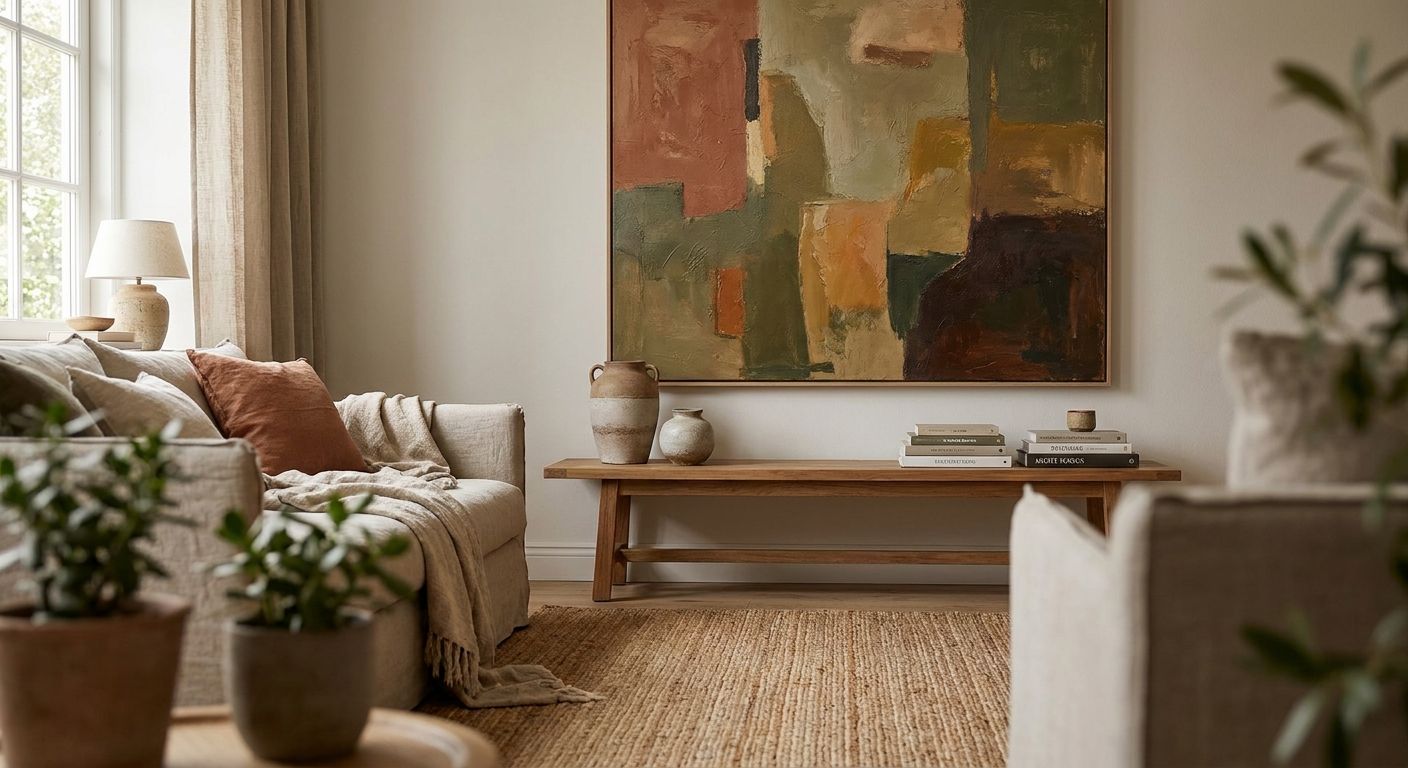
Styled correctly, a well-sized canvas over a sofa or an extra-large canvas piece for a statement wall does the heavy lifting in a room without needing anything else on that wall.


Troubleshooting
- The canvas looks lost over the sofa. It's likely under the 60% width threshold — size up or add a second piece to bridge the gap.
- It feels cramped in a narrow hallway. Switch from a wide single canvas to a vertical piece sized to 30-40% of the wall width instead of the furniture rule, which applies mainly to seating walls.
- Gallery wall pieces look uneven. Check spacing first — anything over 3 inches between frames starts to read as disconnected pieces rather than one grouping.
- Ceiling height throws off the proportions. The 57-inch center rule doesn't move with ceiling height; resist the urge to hang higher just because there's more wall above.
- A multi-piece set doesn't align visually. Confirm all pieces share the same color palette or theme before ordering — mismatched framed and unframed pieces in one set rarely work.
- The framed piece arrived bigger than expected. This traces back to skipping the frame-width step; measure outer frame edges next time, not print size alone.
Tools and resources
- Painter's tape and kraft paper for wall mock-ups
- A steel tape measure and level
- Canvas print sets of three for gallery walls if you're weighing a grouping over a single piece
- Wall art sizing guidance for above-the-sofa placement
- The best canvas art sets for gallery walls for layout inspiration once dimensions are locked in
What to do next
Once you've got your wall segment measured and a size range mocked up in tape, browse Gioia Wall Art's full catalog filtered by the dimensions you landed on. If you're still torn between a single statement canvas and a gallery grouping, read through the gallery wall guide above before committing — it's easier to adjust a plan on paper than to return a canvas that's already on the wall.
FAQ
How do I choose canvas size for above a sofa?
Measure the sofa's width and aim for a canvas or grouping covering 60% to 75% of that width. An 84-inch sofa suits roughly a 50 to 63 inch wide piece or set.
What size canvas is best for a bedroom wall above the bed?
Use the same 60-75% rule against the headboard's width, and center the piece 6 to 8 inches above the headboard. A queen bed typically pairs with a 40 to 50 inch wide canvas or set.
How high should I hang a canvas on the wall?
Center the canvas 57 inches from the floor, the standard museum eye-level height used by professional installers. Adjust downward slightly if it's hanging directly above furniture.
Is one large canvas better than a gallery wall set?
A single large canvas works best on square or tall wall segments, while a multi-piece set suits long, narrow walls or lower ceilings. Both can satisfy the 60-75% furniture-width rule.
How much space should be between pieces in a canvas gallery wall?
Leave 2 to 3 inches between each framed piece. Anything wider starts to look disconnected rather than one cohesive grouping.
Does frame width change the canvas size I should order?
Yes. A framed print adds 1 to 3 inches per side depending on the frame profile, so measure the frame's outer edge, not the print size alone, before finalizing dimensions.
What canvas size fits a narrow hallway?
Skip the furniture-width rule for hallways and size the canvas to 30% to 40% of the wall's width instead, favoring a vertical orientation over a wide horizontal piece.
How do I know if a canvas is too small for my wall?
Tape off the dimensions directly on the wall and step back 8 feet. If the outline looks lost or floats with excess empty space around it, size up before ordering.
One last thing
The 57-inch eye-level rule holds even in rooms with 10 or 12-foot ceilings — resist sizing up just to fill vertical space, because a canvas hung too high above furniture reads as disconnected no matter how large it is. Get the width right against the furniture below it, keep the center at 57 inches, and the height of the ceiling stops mattering.