Canvas wall art collects dust faster than people expect, and the wrong cleaning method can crack the print or warp the stretcher bars in one afternoon. This guide walks through the safe way to dust, spot-clean, and deep-clean canvas prints so the colors stay sharp for years, not months.
- How to clean canvas wall art safely starts with a dry microfiber cloth, never water or glass cleaner, on the first pass.
- Gioia Wall Art canvas prints handle a barely damp, distilled-water cloth for spot stains - skip baby wipes and all-purpose sprays.
- Direct sunlight and bathroom steam age a canvas print faster than dust ever will - reposition before you scrub.
- A full deep clean takes under 10 minutes twice a year - doing it more often risks the print surface.
Why this matters
Canvas is stretched fabric with a printed or painted surface, not glass or laminate, so it reacts to moisture, sunlight, and pressure differently than a framed poster does. Wipe it with the wrong product in 2026 and you're not cleaning it, you're stripping ink or softening the canvas fibers.
Most damage isn't from dirt. It's from someone reaching for a household cleaner because that's what worked on a mirror or a countertop. Canvas wall art needs a lighter touch, and knowing the difference between weekly maintenance and an actual deep clean saves the print.
What you'll need
- A dry microfiber cloth (lint-free, not paper towel)
- A vacuum with a soft-bristle brush attachment
- Distilled water (tap water leaves mineral spots)
- A second clean, soft cloth for spot-treating
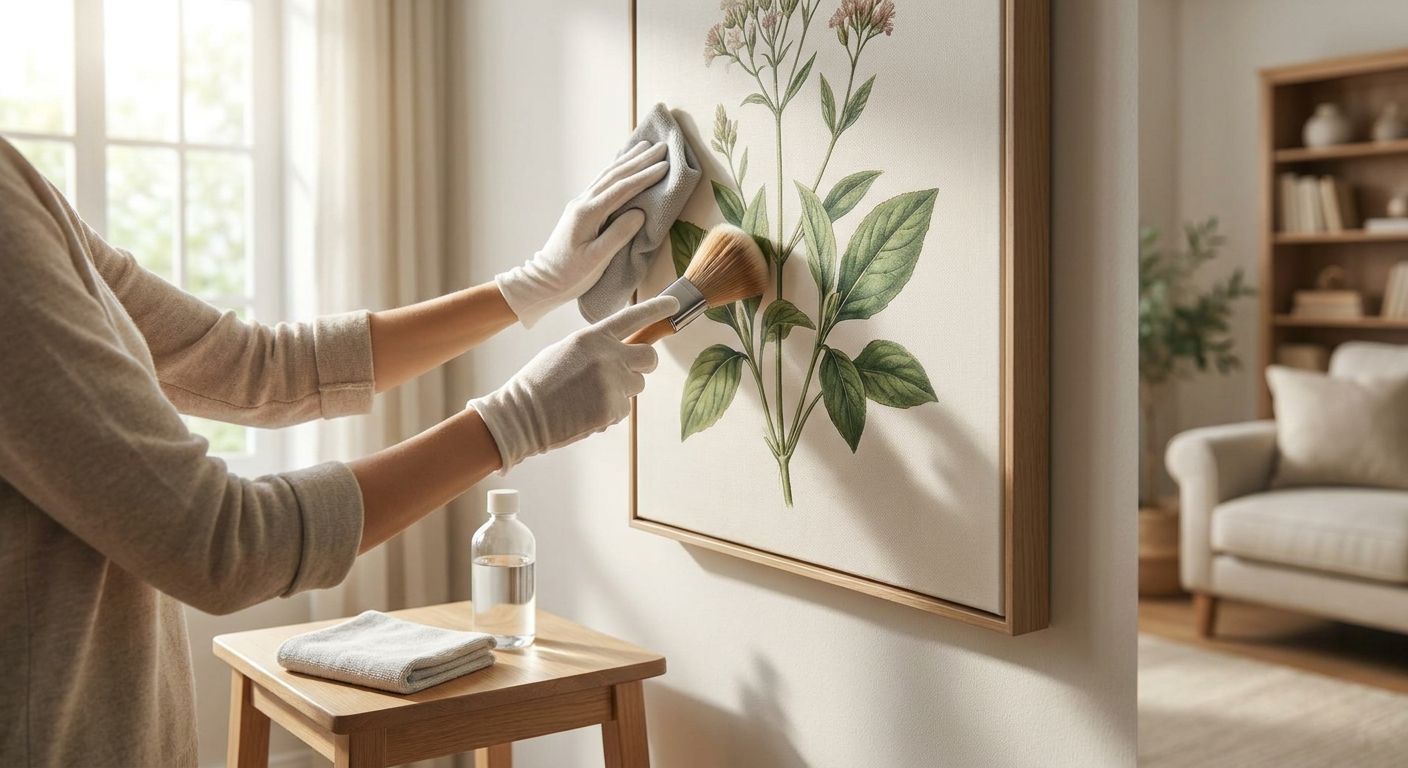
- A soft artist's brush for corners and textured edges
- Mild, pH-neutral soap, diluted, for stubborn marks only
If the canvas is wrapped around wooden stretcher bars, check the hanging hardware while you're at it. A print that's hung without damaging walls properly also tends to sit more securely, which means less shifting, less edge wear, and less dust settling into the frame gap over time.
The steps
1. Dust weekly with a dry microfiber cloth
This is the single habit that prevents 90% of canvas cleaning problems. Dust that sits for months bonds with humidity in the air and turns into a film that's much harder to remove later.
Run the cloth in one direction, following the texture of the brushstrokes if the piece has visible texture, using light pressure only. Never press hard enough to dent the canvas surface. Expected result: a visibly brighter surface with no lint left behind. Common mistake: circular scrubbing motions, which can stretch or fray the canvas weave over time.
2. Vacuum for deeper dust buildup
A dry cloth handles surface dust, but textured or heavily painted canvases trap particles a cloth can't reach. Use the vacuum's lowest suction setting with a soft brush attachment, holding it an inch off the surface rather than dragging it across.
Do this monthly in households with pets or in high-traffic rooms, quarterly everywhere else. Common mistake: full suction power, which can pull at loose threads on the canvas edge or wrapped corners.
3. Spot-treat marks with a barely damp cloth
For a smudge, fingerprint, or light stain, dampen a clean cloth with distilled water only, wring it until it's almost dry, and dab (never rub) the mark. Rubbing spreads the stain and can smear printed ink.
Test an inconspicuous corner first and wait five minutes to confirm no color transfer or texture change. Expected outcome: the mark lifts without a water ring. Common mistake: soaking the cloth, which lets water seep behind the canvas and warp the stretcher bars.
4. Check the frame, edges, and hanging hardware
Wipe down any exposed wood frame or wrapped canvas edges with a dry cloth while you're already up close. Loose D-rings or sawtooth hangers cause a print to hang crooked and rub against the wall, which grinds dust into the edges faster.
Retighten any hardware that's shifted. Common mistake: skipping this step until the canvas is visibly tilted, by which point the wall behind it usually needs touch-up too.
5. Control light and humidity exposure
Direct sunlight fades pigment and yellows canvas fibers faster than any amount of dust accumulation. Steam-heavy rooms do the same thing through moisture instead of UV.
If a canvas hangs somewhere humid, look at pieces designed to hold up in those conditions, like the picks in this guide to canvas art for humid bathrooms, rather than fighting the environment with cleaning alone. Common mistake: hanging a canvas print directly across from a south-facing window and wondering why it fades within a year or two.
6. Deep clean twice a year
Set a seasonal reminder, once in spring and once in fall, for a full pass: dust, vacuum, spot-check every corner for mildew or discoloration, and inspect the back of the canvas if it's easy to access. This takes under 10 minutes per piece in 2026 if you've been dusting weekly in between.
Common mistake: treating deep cleaning as a once-a-decade event, which lets small issues like a loose staple or a faint water spot turn into permanent damage.
7. Match your stain treatment to the mess
Food grease, crayon, and ink each need a slightly different approach. A tiny amount of diluted, pH-neutral soap on a damp cloth handles grease; crayon lifts better with a dry cloth and gentle friction first; ink is the hardest to treat safely and often isn't worth the risk of spreading it.
Expected outcome: the mark fades noticeably without a soap ring left behind. Common mistake: reaching for rubbing alcohol or a magic eraser, both of which can strip printed color right off the canvas.
Troubleshooting
- Yellowing or fading on one side. This is sun damage, and it doesn't reverse with cleaning. Reposition the canvas away from direct light going forward; the existing fade is permanent.
- Musty smell or faint dark spots. That's early mildew, usually from a humid room or a damp wall. Move the canvas to a drier spot immediately and wipe the back with a dry cloth; if spots persist, the print may need replacing.
- Sagging or a bowed canvas face. The internal staples have loosened. A framer can re-tension the canvas on its stretcher bars; don't try to flatten it by pressing on the front.
- Stubborn crayon or grease marks in a kid's room. Try a dry cloth with light pressure first, then a barely damp cloth with diluted soap if needed. Avoid solvents entirely near a printed surface.
- Loosening frame corners. Tighten the hardware or add wood glue to a wrapped-corner frame before the canvas starts to sag at that point.
- Dust returning within days. That's usually an HVAC vent or ceiling fan blowing directly at the piece. Reposition the canvas or adjust the airflow rather than cleaning more often.
Tools and resources
- Microfiber cloths (2-3 on hand, since a damp one and a dry one shouldn't be the same cloth)
- A vacuum with a soft brush attachment, set to low suction
- Distilled water in a small spray bottle for controlled spot-treating
- A soft artist's brush for textured or heavily painted canvases
- A level and a stud finder, useful whenever you're rehanging a piece after cleaning
If a canvas is beyond saving after fading, mildew, or a stain that won't lift, replacing it is often faster than restoring it. A quick look at choosing the right canvas size for your wall helps make sure the replacement fits the space properly the first time.


What to do next
Once the cleaning routine is set, the bigger factor in how long a canvas print lasts is where it hangs. Rooms with steady light and stable humidity need almost no intervention beyond weekly dusting; bathrooms, kitchens, and sunrooms need more planning up front. Building that into your decor plan in 2026 saves the cleaning work later.
FAQ
What is the best way to clean canvas wall art?
Dust weekly with a dry microfiber cloth and reserve a barely damp, distilled-water cloth for stains only. Avoid glass cleaner, baby wipes, and any solvent-based product on the printed surface.
Can you use water to clean a canvas print?
A small amount of distilled water on a nearly-dry cloth is fine for spot-treating marks. Soaking the canvas or spraying water directly onto it can warp the stretcher bars and cause water rings.
Is it safe to vacuum canvas wall art?
Yes, with a soft brush attachment on the lowest suction setting held slightly above the surface. Full suction can pull at loose threads along the canvas edges.
How often should canvas wall art be cleaned?
Dust weekly and do a full deep clean twice a year, once in spring and once in fall. Households with pets or heavy foot traffic should vacuum monthly in between.
Why is my canvas print fading?
Fading is almost always caused by direct or prolonged sunlight breaking down the pigment, not by dust or cleaning products. Reposition the canvas away from direct light; existing fade doesn't reverse.
Can mold grow on canvas wall art?
Yes, in humid rooms like bathrooms or basements without ventilation, mildew can develop on the canvas back or edges. Move the piece to a drier location and check it monthly if it hangs anywhere steam collects.
What should you never use to clean canvas art?
Skip glass cleaner, rubbing alcohol, magic erasers, and baby wipes, all of which can strip printed color or soften the canvas fibers. Stick to dry microfiber cloths and distilled water only.
How do you remove a stain from canvas wall art without damaging it?
Dab, don't rub, using a barely damp cloth and test an inconspicuous corner first. For grease or crayon, a small amount of diluted, pH-neutral soap on a damp cloth usually lifts the mark.
One last thing
The canvas edges wrapped around the stretcher bars collect more dust than the front face because they're rarely wiped, and that buildup is what eventually attracts moisture and mildew in humid rooms. Give the wrapped edges the same weekly pass as the front and most long-term canvas problems never start.