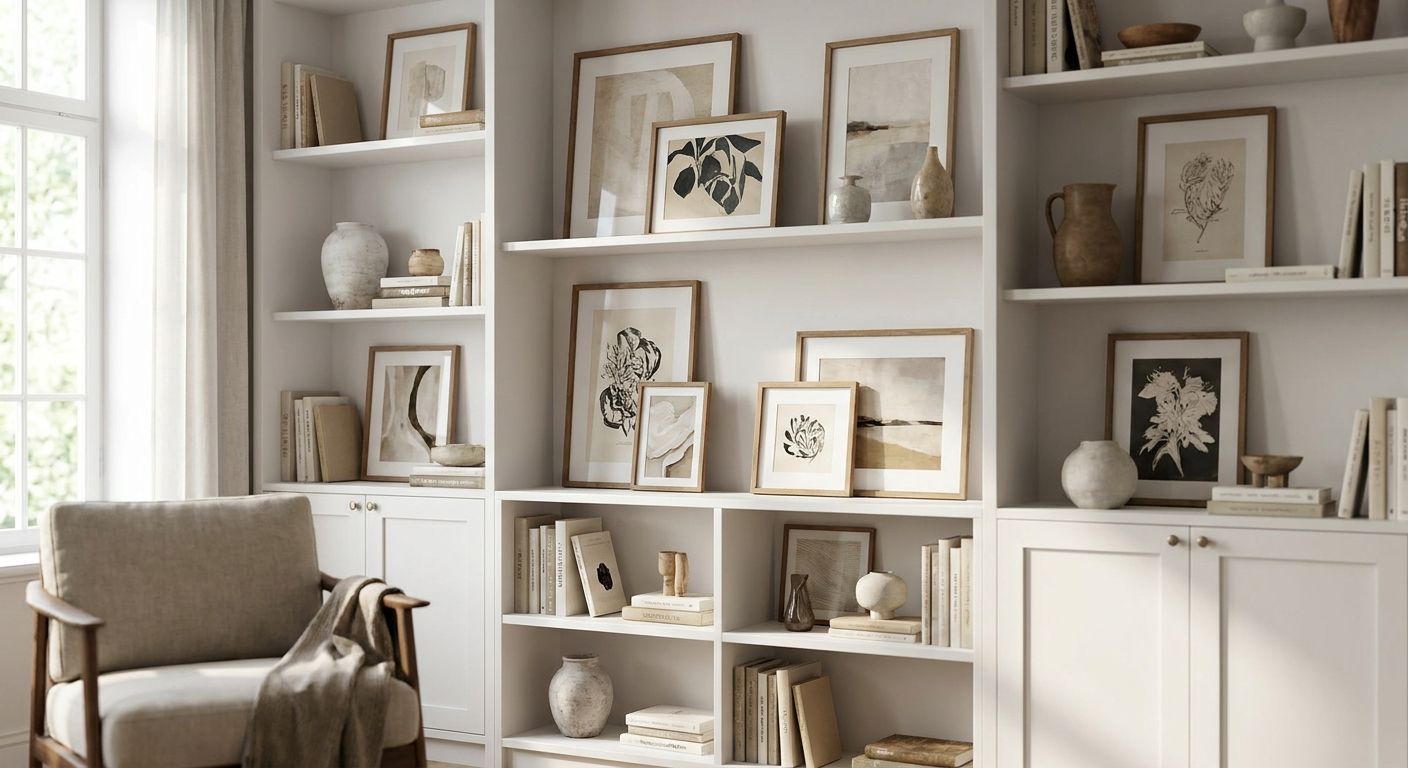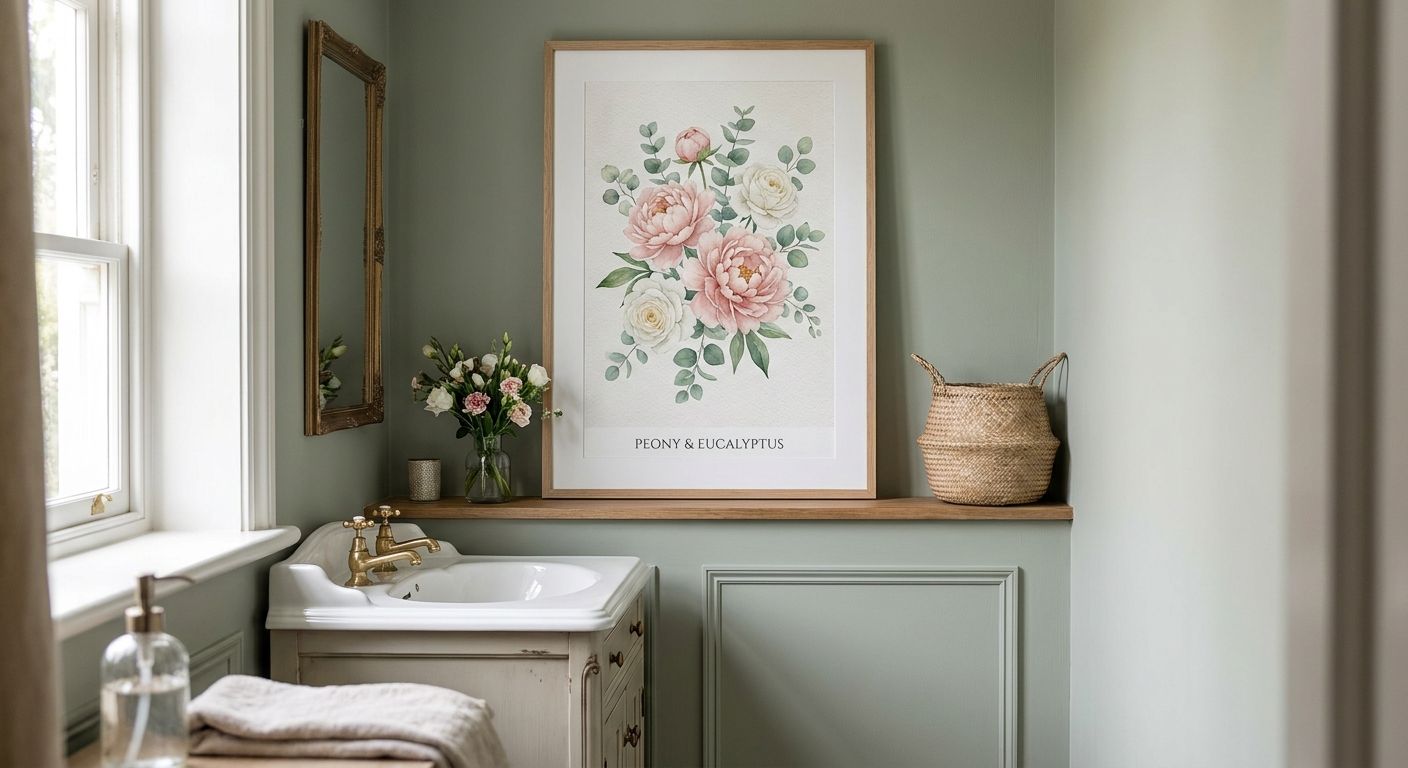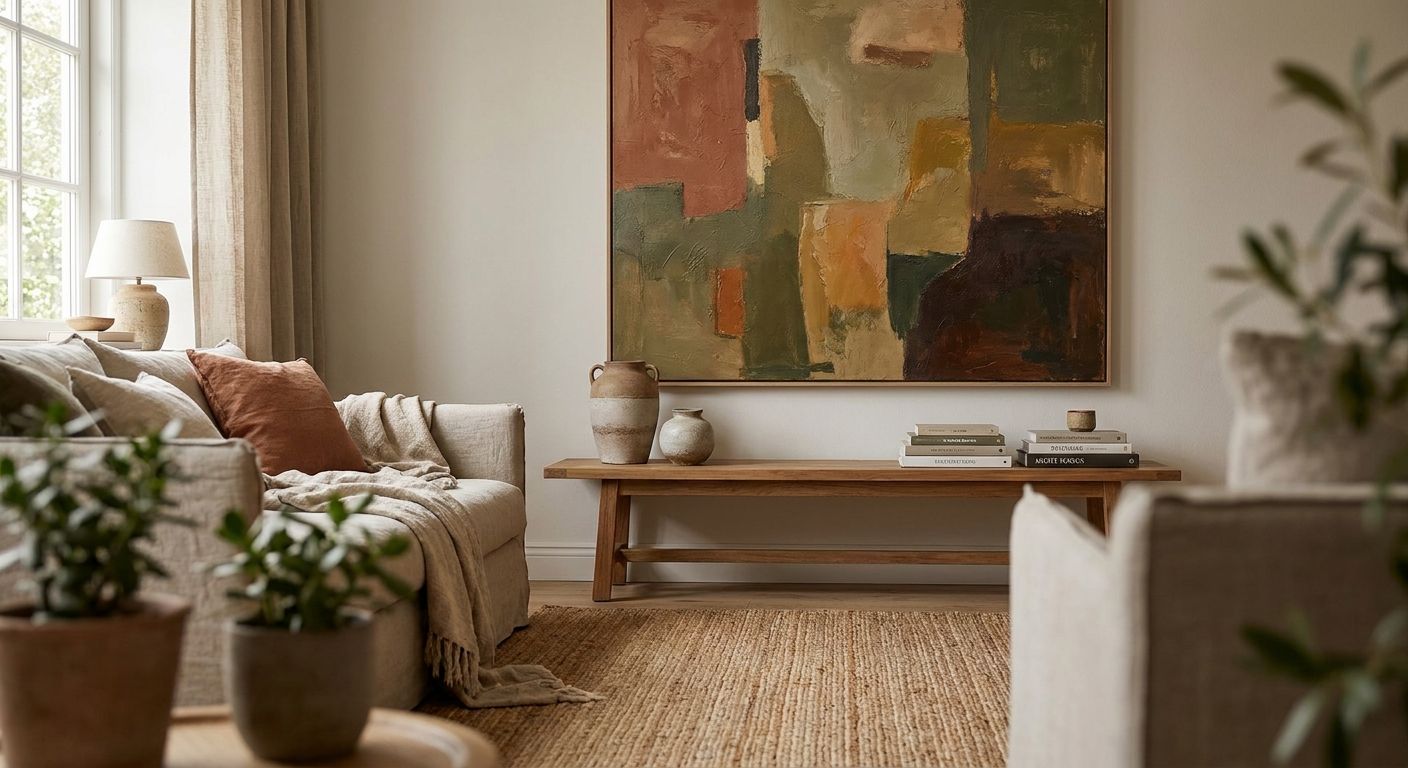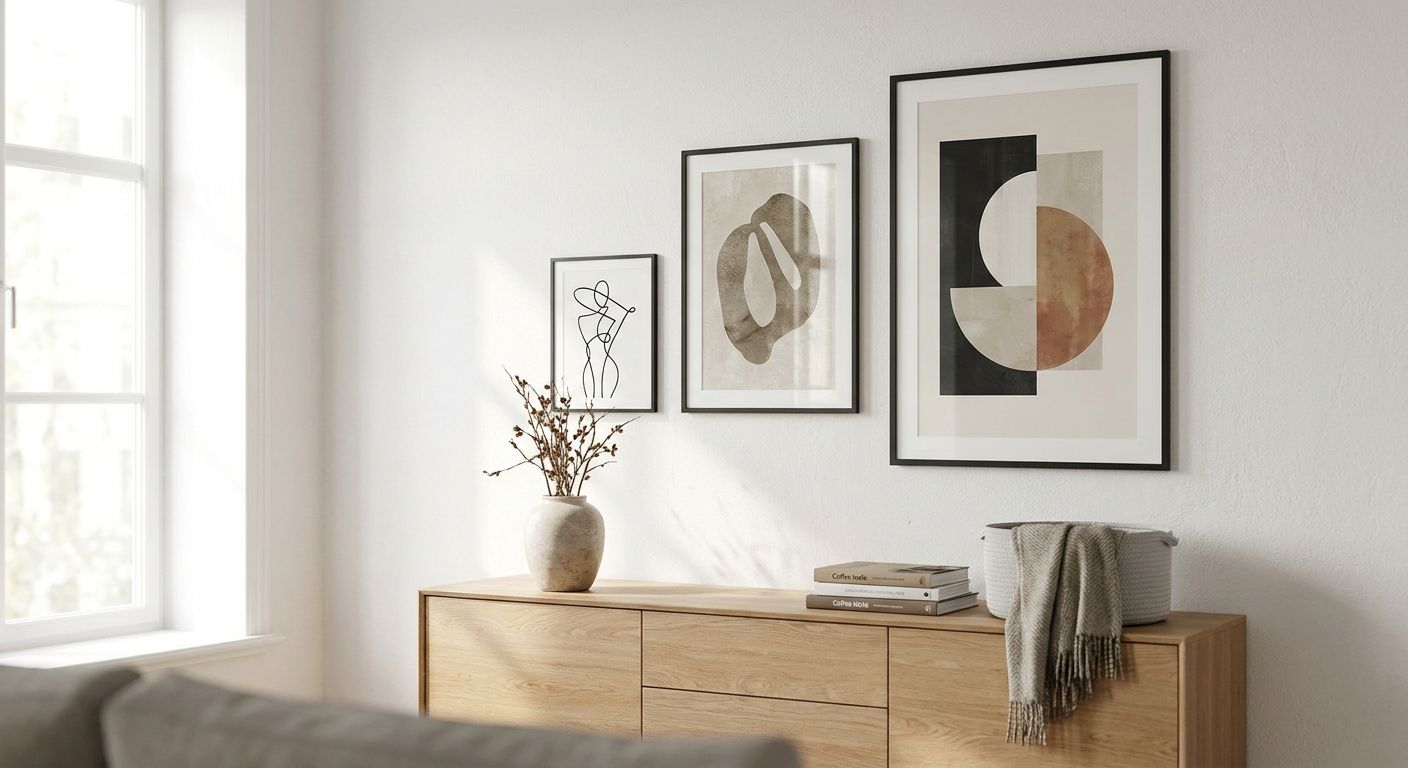
Scandinavian wall art is minimalist, nature-toned decor built to make a room feel calmer, not busier. It leans on muted palettes, clean lines, and generous breathing room around each piece — the opposite of a maximalist gallery wall. If you're decorating in the Scandi or Japandi direction, the goal isn't more art, it's the right one or two pieces that let the light and the architecture do most of the talking.
- Scandinavian wall art works best in muted, nature-drawn tones — oat, dove grey, driftwood beige, soft charcoal.
- Size to the furniture below it, not the trend: undersized pieces are the most common mistake in Scandi rooms.
- Gioia Wall Art's canvas prints and framed fine art prints both suit the look; poster prints work for renters testing the style first.
- Skip anything with more than two or three accent colors — it stops reading as Scandinavian.
Why scandinavian wall art matters for this look
The whole Scandi and Japandi aesthetic is built on restraint. A room with white oak floors, linen upholstery, and a pared-back palette gets undone fast by wall art that's too saturated, too busy, or too small for the wall it's on.
That's the tension anyone shopping for scandinavian wall art in 2026 is trying to solve: how do you add a focal point without adding visual noise? The answer isn't a rule about subject matter — it's a rule about restraint, scale, and material choice, and it applies whether you're hanging a single canvas over a sofa or building a two-piece set in a bedroom. Gioia Wall Art organizes its catalog by exactly this kind of intent, which makes it easier to shop by feeling rather than by keyword.
Update your palette before you shop
Start with the tones already in the room, then pick art that repeats two or three of them at most.
- Warm white and oat
- Dove grey and soft charcoal
- Driftwood beige and unbleached linen
- One muted accent — sage, dusty blue, or clay — never more than one
Stark black-and-white contrast art can work as a single accent piece, but it reads more industrial than Scandi when it's the only thing on the wall.
Choose motifs pulled from nature, not pattern
Scandinavian design borrows heavily from the outdoors — birch forests, coastlines, quiet still lifes — rather than busy repeating patterns.
- Botanical line drawings
- Birch or pine forest photography
- Coastal or driftwood imagery
- Abstract linework in a single tone
- Simple still-life compositions with one or two objects
This is also where Japandi wall art for minimalist bedrooms overlaps almost entirely with the Scandi look in 2026 — the two styles share the same restraint, just with slightly different material choices.
Size the piece to the wall, not the trend
Undersized art is the single most common mistake in Scandinavian rooms — a small canvas floating over a large sofa reads unfinished no matter how good the print is.
- Center the piece at roughly 57 inches from the floor, the standard eye-level hanging height used across gallery and design guides
- Cover 60-75% of the width of the furniture below it
- Leave at least a hand's width of clear wall around the frame
- When in doubt, size up rather than down — negative space only works if the piece itself is substantial
Layer texture without adding clutter
A flat, glossy print in an all-matte, all-linen room can look out of place. Mixing finishes — one canvas, one framed piece, both in a matched palette — adds depth without adding noise.
This is where a ready-made canvas print earns its keep over a DIY frame job: a stretched canvas has built-in texture and depth that a flat poster doesn't, and it skips the framing step entirely.
- One textured canvas plus one flat framed print, same tonal family
- A single oversized piece instead of three small ones, if the wall is already busy with furniture
- Matte canvas over glossy for anything hung across from a window
- Fine art paper prints for pieces that will sit behind glass
Arrange as one statement piece or a tight grid, never a sprawl
Scandinavian rooms favor one confident choice over a scattered collection. If you do want multiple pieces, keep the spacing tight and consistent.
- One oversized canvas as the sole focal point
- A symmetrical pair, evenly spaced, same size
- A tight three-piece grid with 2-3 inches between frames, not a loose salon-style cluster
- Matching frame widths across every piece in a grouping
If a grid feels right for the space, how to arrange a gallery wall with framed art covers the spacing math in more detail than fits here.
Choose light wood or thin black frames, not ornate ones
Frame material does more to signal Scandinavian style than the print itself. Heavy gilt or dark carved wood frames pull a piece toward traditional or French Provincial, not Scandi.
- Light oak or birch frames
- Thin black metal frames for a single high-contrast accent
- No-frame stretched canvas for a cleaner, more minimal edge
- Matte finishes over glossy or lacquered ones
Rotate sparingly and keep swaps neutral
Scandinavian interiors don't lend themselves to frequent seasonal art changes — the whole point is a settled, calm room. If you do rotate through 2026, swap within the same tonal family rather than introducing a new palette each season.
“If a piece needs more than two accent colors to work, it is not Scandinavian art anymore — it is just colorful art in a neutral room.”
Comparing your options for a Scandinavian room
| Option | Best for | Key limitation |
|---|---|---|
| Stretched canvas print | Textured focal points over sofas and beds | Heavier and harder to reposition once hung |
| Framed fine art print | Rooms that already use light wood or black metal accents | Adds a frame-matching step to the room's material palette |
| Unframed poster | Renters or anyone testing the Scandi look before committing | Reads flatter and less finished without a frame |
| Original painting | A single statement piece in an otherwise pared-back room | Limited to one-of-a-kind pieces, less flexible for pairs or grids |
Verdict: for most Scandinavian living rooms and bedrooms in 2026, a stretched canvas in a muted, nature-drawn tone is the safest starting point — it adds texture without needing a frame decision, and it scales up easily for an above-sofa or above-bed placement.
Common mistakes people make with scandinavian wall art
- Picking prints that are too saturated. A single coral or teal piece can look great in isolation and completely wrong once it's on a linen-toned wall.
- Undersizing the piece. A 16x20 canvas over a king bed disappears; go bigger than instinct says.
- Mixing too many frame finishes in one room. Light oak next to black metal next to gilt reads as unplanned, not eclectic.
- Treating typography prints as the main event. Word art works as a small accent in this style, not as the sole focal point — save that role for a photograph or a botanical piece.
- Skipping texture entirely. An all-poster, all-flat wall in a room full of natural materials misses the point of the style.
If your walls also carry a busy wallpaper or pattern, how to choose wall art for a room with patterned wallpaper is worth a look before you commit to a Scandi palette on top of it.
FAQ
What colors work best for scandinavian wall art?
Muted, nature-drawn tones work best: warm white, oat, dove grey, driftwood beige, and soft charcoal, with at most one muted accent color like sage or dusty blue. Anything with three or more bright accent colors stops reading as Scandinavian.
Is scandinavian wall art the same as japandi?
They overlap heavily but are not identical. Scandinavian leans on light woods and pale, airy palettes, while Japandi blends that with darker wood tones and more deliberate asymmetry.
Should scandinavian wall art be framed or unframed?
Both work, but stretched canvas without a frame gives the cleanest, most minimal edge, while a thin black metal or light oak frame suits a single accent piece. Avoid ornate or heavily carved frames, which pull the look toward traditional styles.
How big should scandinavian wall art be over a sofa or bed?
Size the piece to cover roughly 60-75% of the furniture's width and center it around 57 inches from the floor, the standard eye-level hanging height. Undersizing is the most common mistake in this style.
What subjects fit the scandinavian style best?
Nature-drawn subjects fit best: botanical line drawings, birch or pine forest photography, coastal imagery, and simple still lifes. Busy patterns or highly saturated abstracts tend to clash with the style's restraint.
Can I mix scandinavian wall art with a gallery wall?
Yes, but keep it tight and symmetrical rather than a sprawling salon-style cluster, with matching frame widths and 2-3 inches of spacing between pieces. A single oversized piece is often the safer choice in a small or already busy room.
Does scandinavian wall art work in a small apartment?
It works especially well in small spaces because the palette and restraint keep a room from feeling cluttered. One well-sized statement piece does more for a small apartment than several smaller ones.
One last thing
The detail that trips people up most isn't color or subject — it's frame width. A thin, half-inch light oak frame reads Scandinavian; a two-inch chunky frame in the same wood tone reads more farmhouse. If you're comparing two nearly identical prints in 2026 and can only judge by the photo, check the frame profile before the palette.