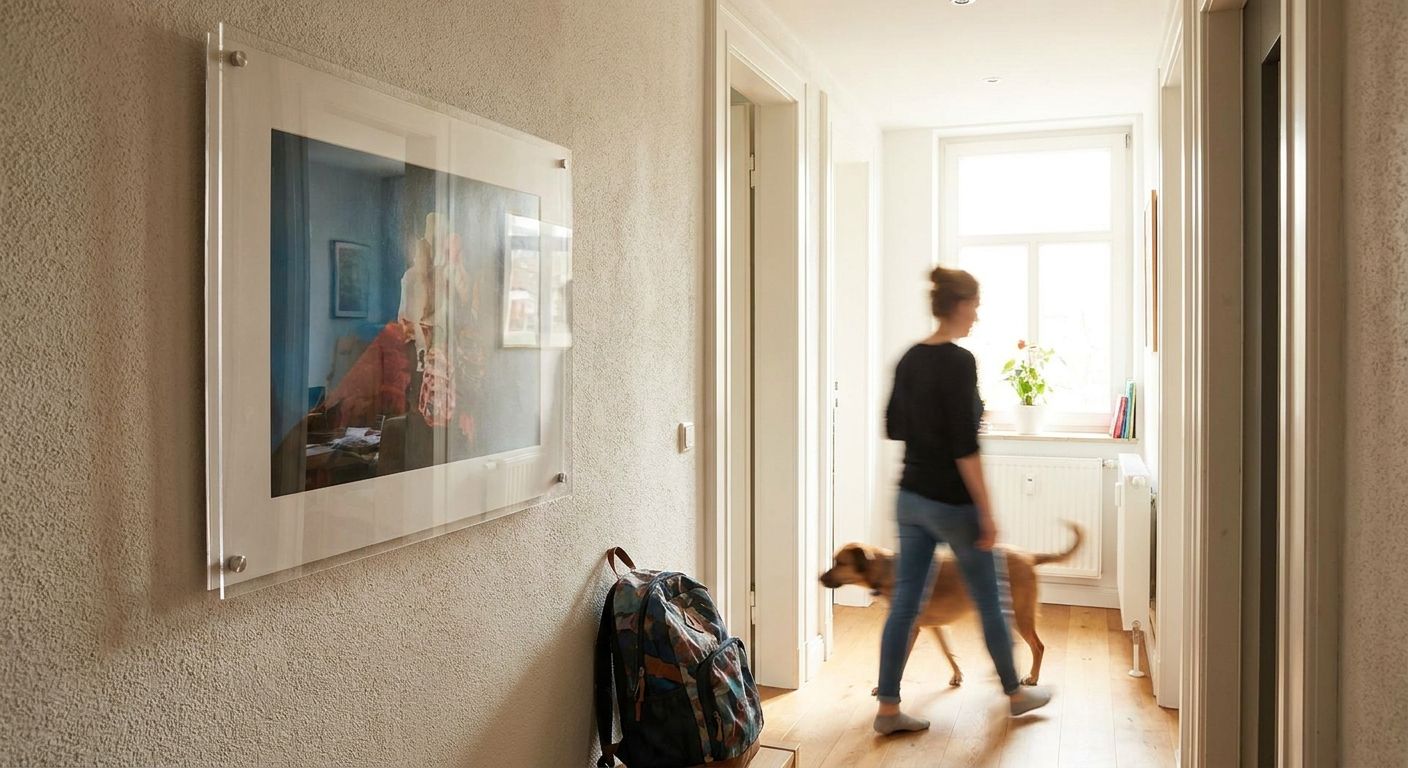
A hallway takes more abuse than any other wall in the house — shoulder bumps, kids running past, luggage wheels, the occasional dog tail. Picking wall art that survives that traffic without curling, cracking, or fading is a materials problem as much as a style one, and getting it right means fewer replacements and a hallway that actually looks finished year-round.
- Gallery-wrapped canvas on 1.5-inch stretcher bars resists dents better than thin poster prints — the safe pick for busy hallways.
- Acrylic-glazed framed prints beat glass in tight corridors; glass shatters on impact, acrylic scuffs and survives.
- Hang durable wall art for hallways at 57-60 inches to center, the standard eye-level rule interior designers use in 2026.
- Keep at least 36 inches of clear walkway per ADA guidance so art doesn't get clipped by shoulders or strollers.
- UV-cured inks and matte coatings hold color longer under hallway light fixtures than glossy poster stock.
Why this matters
Hallways funnel foot traffic, bags, laundry baskets, and the occasional running toddler past the same six square feet of wall, day after day. A canvas print that looks great in a bedroom can start showing dents or a bowed frame within a year if it's mounted somewhere people brush past constantly. The fix isn't complicated — it's choosing the right substrate, glazing, and hardware before you buy, not after the corner gets dinged.
At Gioia Wall Art, durability questions come up constantly from customers decorating narrow hallways, staircases, and mudroom corridors — spaces where the wrong material choice shows wear fast. The good news: a handful of build details separate wall art that survives daily bumps from wall art that needs replacing by 2027.
What you'll need
- A tape measure and pencil for marking hang height
- Stud finder or picture-hanging anchors rated for the piece's weight
- A level (a laser level speeds this up on long hallway runs)
- The wall art itself — gallery-wrapped canvas or an acrylic-glazed framed print, not glass-glazed or thin poster stock
- Felt bumpers or corner guards if the piece sits near a doorframe or stair turn
- A microfiber cloth for maintenance once it's hung
The steps
1. Choose a substrate built for contact, not just display
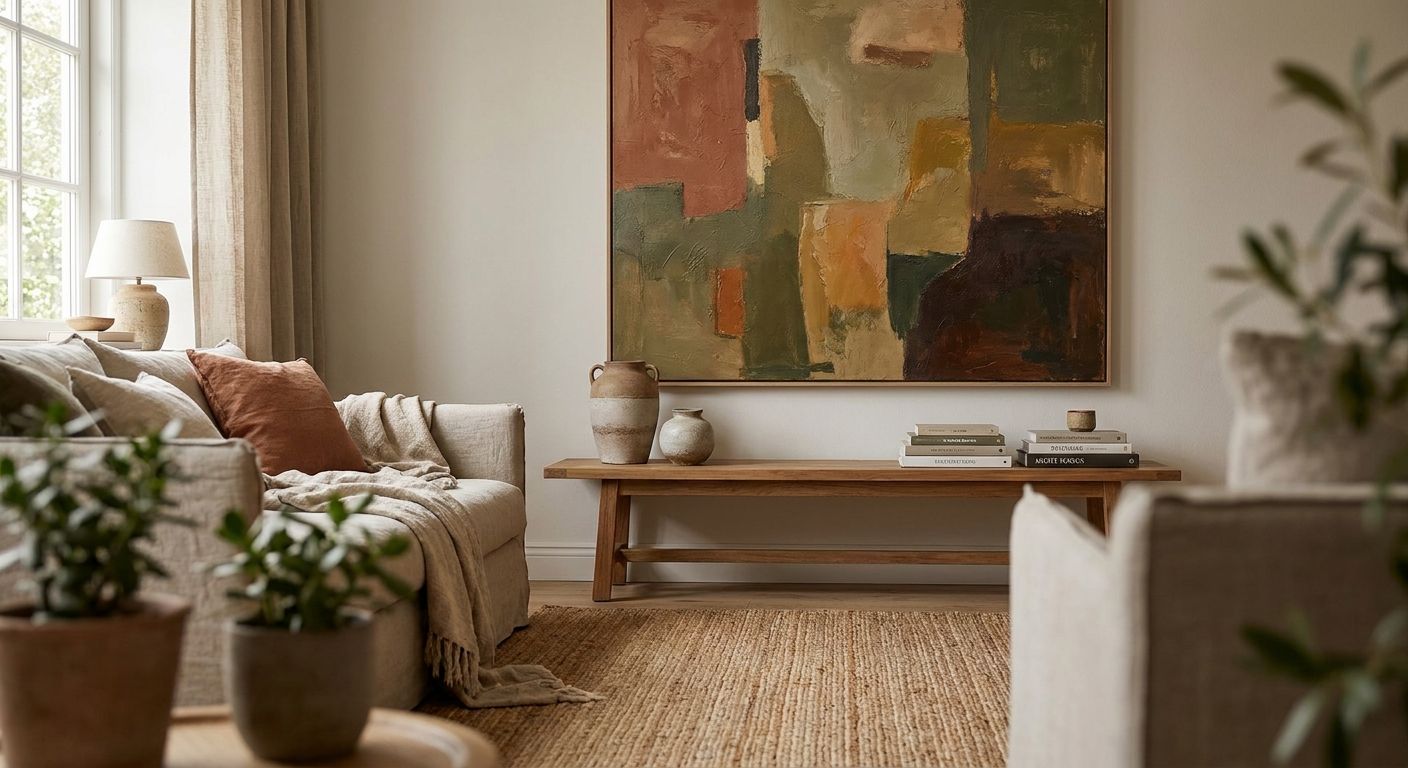
Gallery-wrapped canvas stretched over 1.5-inch bars holds its shape under a bump far better than a flat print mounted on thin board. The thicker stretcher gives the surface some give instead of denting flat.
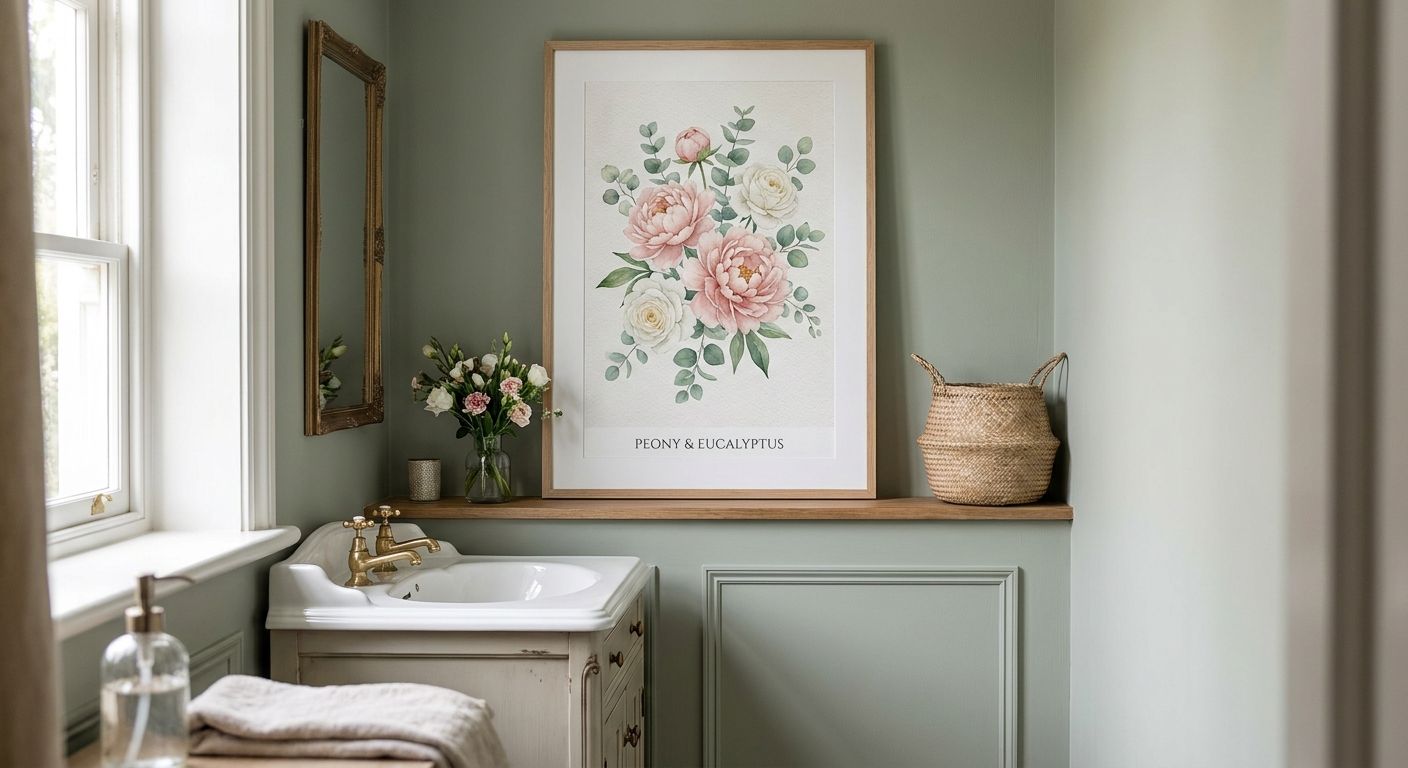
For framed pieces, skip glass glazing in any hallway under 42 inches wide — one stumble and it shatters. Acrylic glazing scratches before it breaks, which matters when the print hangs somewhere people pass with bags, dogs, or kids every day.
Common mistake: buying based on the image alone and not checking whether the listing specifies canvas depth or glazing material.
2. Set hang height using the 57-60 inch rule
Center the artwork 57 to 60 inches from the floor — this is the standard eye-level convention interior designers use for consistent sightlines through a hallway, and it keeps the piece above where shoulders and bags typically make contact.
Mark the center point first, then work outward to the hanging hardware position. Skipping this step is why so many hallway galleries end up crooked or too low, right in the collision zone.
3. Leave real walkway clearance
Keep at least 36 inches of clear walking width past any furniture or protruding frame edges — that's the ADA minimum clear width for accessible routes and a reasonable floor for household traffic too. In a narrow hallway, that means flush-mounted canvas or slim frames, not deep shadowbox styles that stick out several inches.
If the hallway is under 42 inches wide, gallery-wrapped canvas without an outer frame is the safer geometry — nothing protrudes far enough to catch a sleeve or a stroller handle.
4. Anchor for the wall art's actual weight, not a guess
A 24x36-inch canvas can weigh several pounds once stretched and framed. Use a stud when you can; when you can't, pick a picture-hanging strip or anchor rated above the piece's weight, not just good enough. Loose mounts are the number one reason hallway art ends up crooked within weeks — repeated foot traffic vibrates floors and walls more than people expect.
Common mistake: using a single center nail on a wide canvas. Two mounting points spaced apart keep it level as vibration accumulates.
5. Pick finishes that hide fingerprints and hold color
Matte or satin coatings on canvas resist glare from hallway light fixtures and don't show fingerprint smudges the way a glossy finish does. UV-cured inks also resist fading longer under the mix of daylight and overhead lighting a hallway typically gets throughout 2026 and beyond.
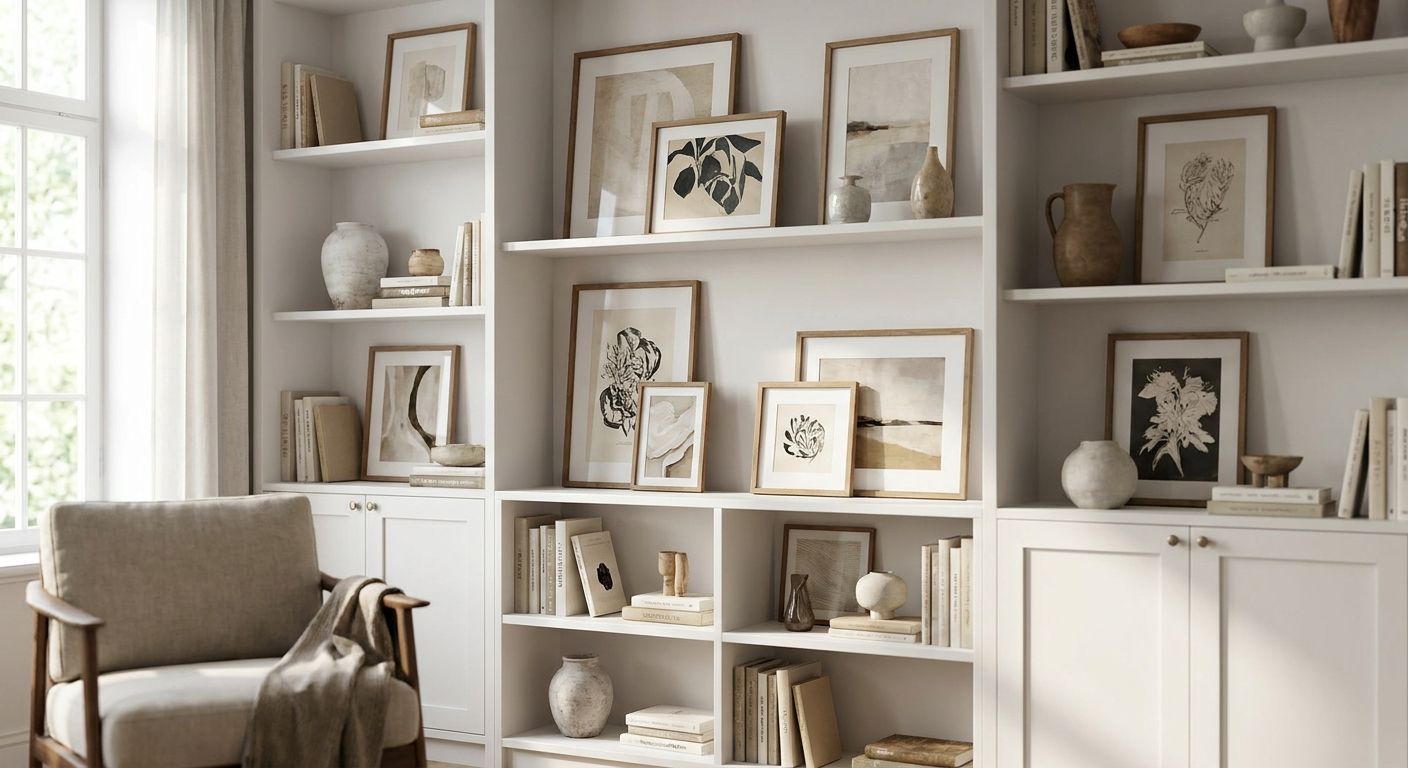
Darker backgrounds and busy patterns — botanical prints, abstract landscapes, gallery-style sets — also camouflage minor scuffs better than large blocks of flat white or pale color.


6. Mount without damaging the wall behind it
Removable hanging strips work fine for lightweight canvas but lose grip fast on anything over a few pounds in a high-traffic zone — vibration from footsteps loosens adhesive over time. For anything substantial, a picture-hanging kit rated for the weight beats an adhesive strip in a hallway every time. A quick guide on how to hang canvas art without damaging walls walks through the anchor options if you're renting and can't drill freely.
7. Space multiple pieces to survive bumps as a group
If you're running a gallery wall down the hallway instead of one large piece, leave at least 2-3 inches between frames. Tight spacing means one bump can knock a whole row crooked; a little breathing room keeps a single nudge contained to one piece.
Troubleshooting
- Corners are already dented or scuffed. Felt corner guards applied to the frame's back edges stop repeat damage and are nearly invisible from the front.
- The piece keeps sliding crooked. Swap a single center hook for two spaced mounting points, or add a small strip of museum putty behind the bottom corners.
- Colors look faded after a year. Direct sun exposure through a nearby window is the usual cause — reposition the piece or add a UV-filtering window film rather than replacing the print.
- Glass glazing cracked. Replace with acrylic glazing on the next piece; it's the standard fix for any framed print in a tight corridor.
- Canvas surface shows a dent from a bump. Minor canvas dents on gallery-wrapped stretcher bars often relax back out within a day or two as the fabric tension redistributes; deep gouges need a replacement print.
- Frame edge is scraping the opposite wall in a narrow hall. Swap to an unframed gallery-wrapped canvas, which has no protruding edge to catch.
Tools and resources
- How to choose the right canvas size for your wall before ordering anything for a tight corridor
- How to clean and maintain canvas wall art once the piece is hung and taking daily wear
- A stud finder and a level, non-negotiable for hallway hanging jobs
- Felt bumpers or self-adhesive corner guards, sold at most hardware stores
What to do next
Once the durable wall art for hallways is hung and holding up, the next question is usually spacing and arrangement — especially in narrow runs where a single large canvas competes with a full gallery layout. That's a separate decision worth its own read before you commit to a layout.
FAQ
What is the most durable wall art for hallways?
Gallery-wrapped canvas on 1.5-inch stretcher bars is the most durable option for hallways in 2026 because it has no glass to shatter and enough give to absorb minor bumps. Framed prints with acrylic glazing are the next best choice for pieces that need a frame.
Is canvas or framed art better for a hallway?
Canvas is generally better for narrow or high-traffic hallways because it has no protruding frame edge or glass to crack. Framed art works fine in wider hallways as long as the glazing is acrylic, not glass.
How high should you hang wall art in a hallway?
Center hallway wall art 57 to 60 inches from the floor, the standard eye-level height used across residential interior design. This keeps the piece above shoulder height where most contact happens.
How much wall clearance do you need in a hallway with art hanging?
Keep at least 36 inches of clear walkway width, matching the ADA minimum for accessible routes. Flush-mounted canvas without an outer frame helps preserve that clearance in narrow corridors.
Does glass-framed art work in a busy hallway?
Glass-framed art is risky in any hallway under about 42 inches wide because one stumble can shatter it. Acrylic glazing is the safer substitute and scratches instead of breaking.
How do you stop wall art from getting dented in a hallway?
Use gallery-wrapped canvas with a thick stretcher bar, which absorbs minor bumps better than thin poster board mounted flat. Felt corner guards on framed pieces also prevent repeat scuffing at the edges.
What finish resists fading best in a hallway?
UV-cured inks combined with a matte or satin coating resist fading longest under mixed daylight and overhead lighting. Glossy finishes show glare and fingerprints faster in a high-traffic corridor.
Can you hang a gallery wall in a narrow hallway?
Yes, as long as pieces are flush-mounted canvas with 2-3 inches of spacing between frames so one bump doesn't knock the whole row crooked. Keep the total footprint within the 36-inch clearance rule.
One last thing
The detail most people skip: check the actual canvas depth before ordering, not just the image dimensions. A 3/4-inch depth flexes and dents far more easily under contact than a 1.5-inch gallery wrap — same print, same size, very different durability once it's living in a hallway that gets walked past fifty times a day.