Wall art for therapist offices is decor chosen to lower a client's anxiety the moment they sit down, not to show off a therapist's personal taste. A waiting room or session room carries a different job than a living room wall: the person looking at the art might be nervous, grieving, or mid-crisis, and the piece needs to help them settle rather than give them something to overanalyze.
That changes almost every decision — color, subject matter, size, even where the piece hangs relative to the seating. A therapist's office is a client-facing space with one job: make the room feel safe enough to talk in.
- Soft, low-contrast nature and botanical canvas prints outperform abstract or emotionally ambiguous art in therapist offices.
- Center wall art around 57-60 inches from the floor in both waiting rooms and session rooms.
- Skip direct-gaze portraits facing the seating area — clients feel watched, not calmed.
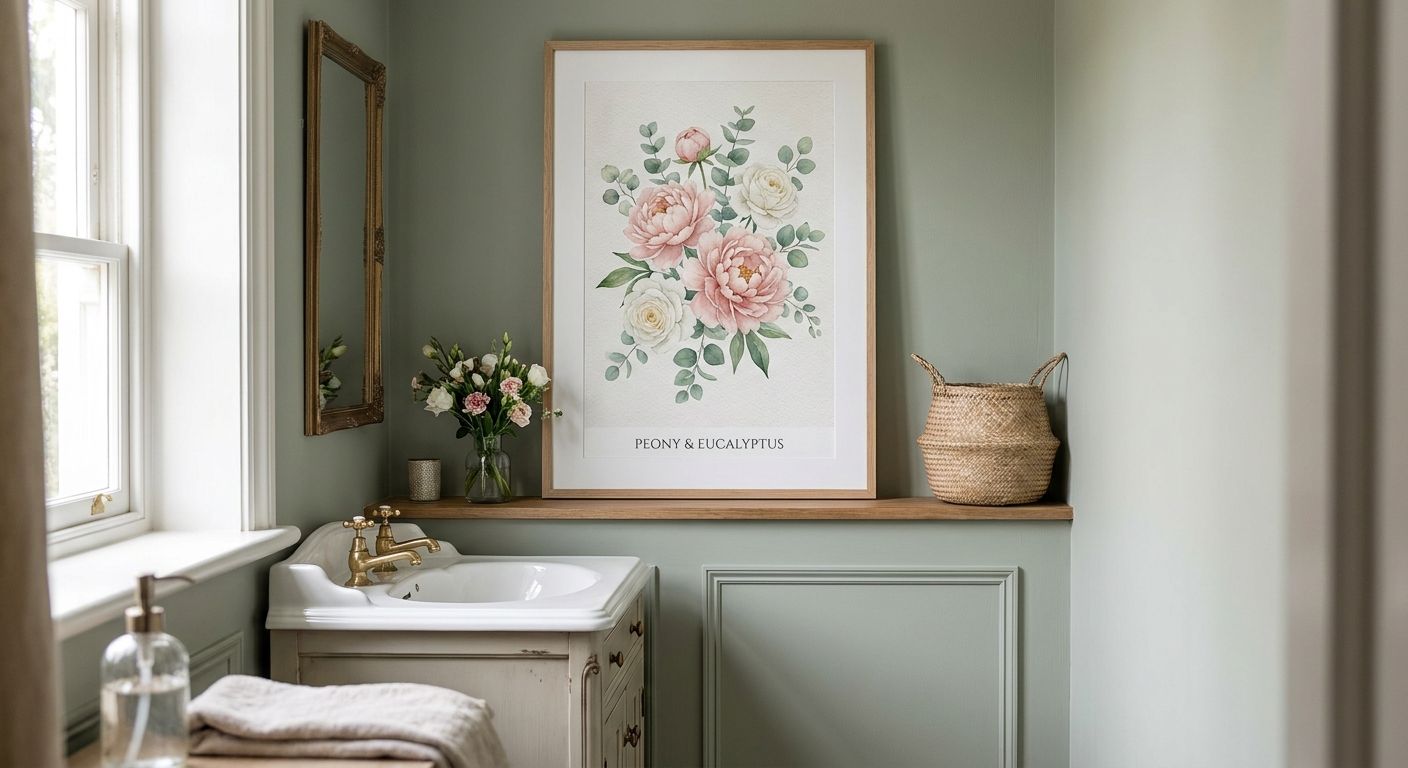
- Gioia Wall Art's floral and nature canvas prints at $179.99 fit calming waiting room palettes without a designer.
- Give the session room quieter, lower-contrast art than the waiting room so eyes settle instead of wander.
Why wall art matters for therapist offices
A counseling practice's walls are often the first thing a nervous, first-time client studies while they wait — before they've said a word to anyone. Sterile, empty walls read as clinical; personal family photos read as unprofessional; the wrong art reads as distracting at exactly the moment someone needs to feel grounded.
The wall art for medical and dental office waiting rooms approach shares some overlap here — both spaces need to soothe someone who may be anxious about what happens next. Therapist offices push that further: the art has to work for people managing grief, anxiety, relationship stress, or trauma, often in the same room on the same day.
Getting it right in 2026 isn't about spending more. It's about picking subject matter and color with the client's nervous system in mind, not the therapist's Pinterest board.
Choose calming color palettes over stark contrast
Color does more emotional work in a counseling office than in almost any other commercial space. Muted, desaturated tones read as steady; saturated primaries and high-contrast graphics read as stimulating, which is the opposite of the goal.
- Test swatches against the existing wall color under the office's actual lighting, not a phone photo
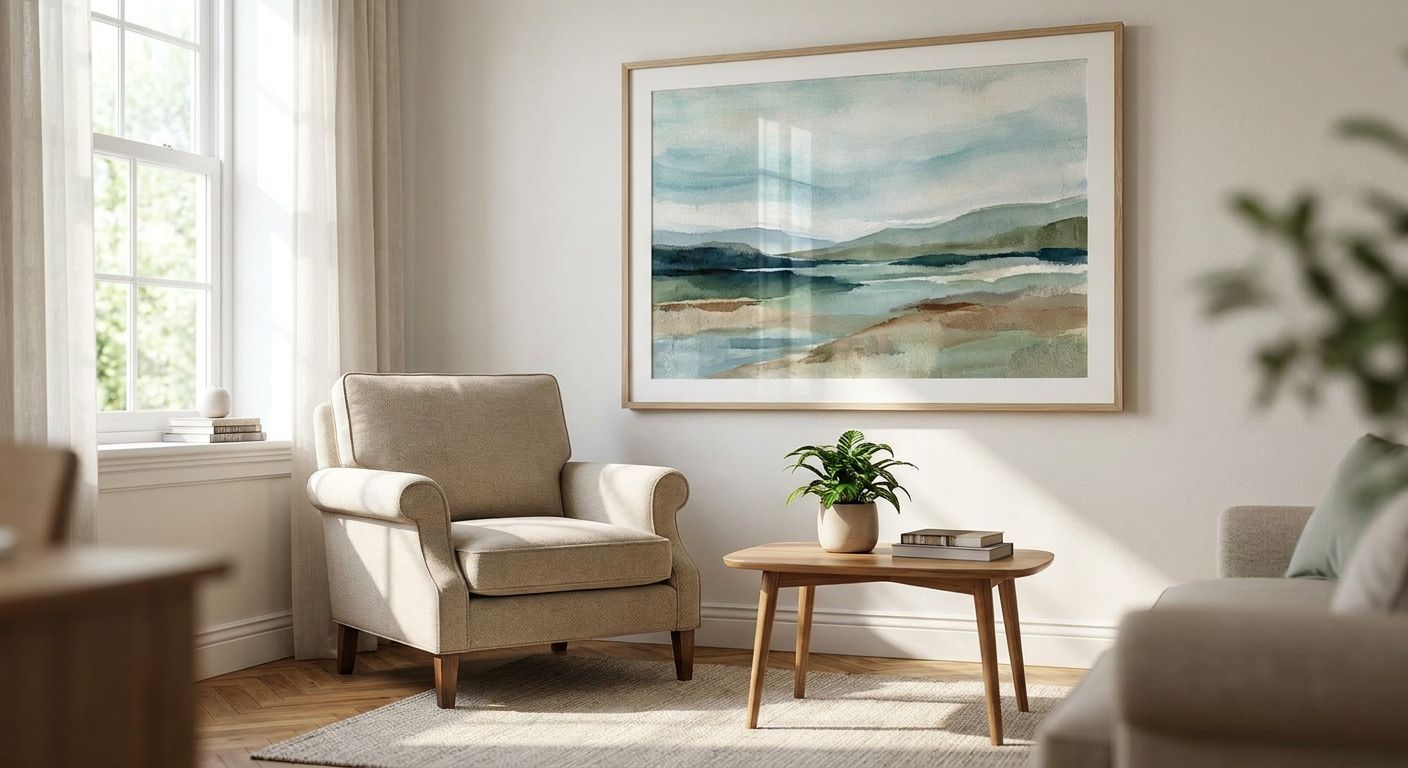
- Favor muted blues, sages, and warm neutrals over bright primary colors near seating
- Limit the palette to 2-3 dominant colors so the room reads as intentional
- Save deep jewel tones like navy or emerald for a single accent wall, not the main seating wall
- Cross-check new pieces against how to match wall art to your room's color palette before buying
Skip subject matter that could unsettle a client
What reads as tasteful abstract art to one person can read as chaotic or unsettling to someone managing anxiety. The safest default subject matter is quiet and unambiguous.
- Avoid direct-gaze portraits facing the waiting area seating
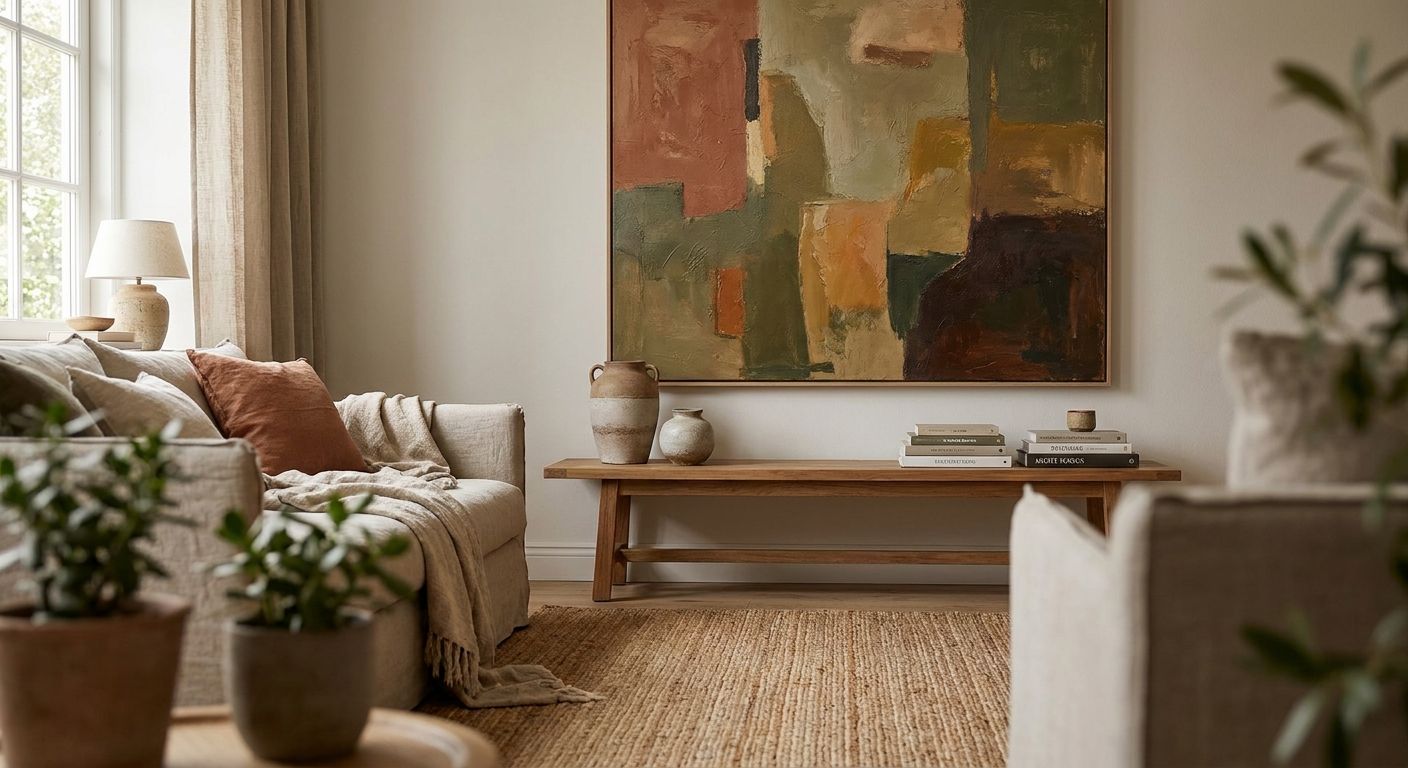
- Skip chaotic, high-motion, or ambiguous abstract compositions open to dark interpretation
- Leave out text-based art with heavy or loaded phrases, even well-intentioned ones
- Avoid sterile, clinical imagery that echoes a hospital waiting room
- Default to botanicals, soft landscapes, or nature scenes when in doubt
Size the piece to the room, not just the wall
Undersized art in a waiting room looks like an afterthought; oversized art in a small session room feels overwhelming to someone already on edge.
- Aim for the piece to cover roughly 60-75% of the seating wall's width
- Center the art around 57-60 inches from the floor, the standard eye-level rule most galleries use
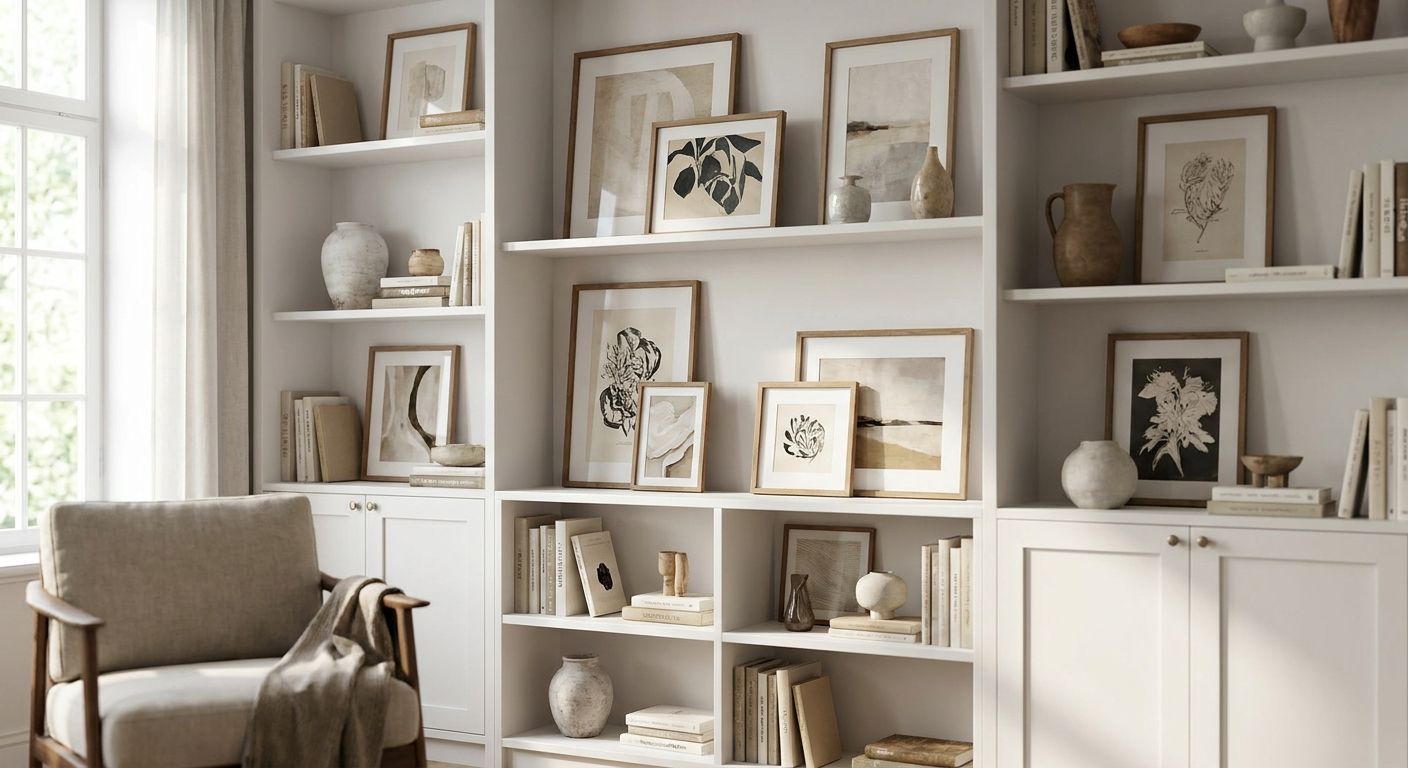
- Choose one larger canvas over a cluttered mini-gallery in a tight waiting room
- Leave 6-8 inches of breathing room between the sofa top and the frame's bottom edge
- Run the numbers against how to choose the right canvas size for your wall before ordering
Separate waiting room energy from session room energy
The waiting room and the actual session room do different emotional jobs, and the art should reflect that rather than repeat itself.
- Keep waiting room pieces slightly more vibrant to ease first-visit nerves
- Choose quieter, lower-contrast art for the session room so a client's eyes settle instead of wander mid-conversation
- Avoid hanging the exact same print in both spaces
- Browse a curated set of calming floral and nature canvas prints when time is tight rather than starting from a blank Pinterest board
Match the visual tone to your specialty
A child therapist's waiting room and a trauma specialist's session room shouldn't look identical, even if both are calming.
- Family or child-focused practices can lean warmer and slightly more playful in the waiting area
- Trauma-informed practices should avoid any imagery implying threat, sudden motion, or heavy shadow
- Couples counselors benefit from art suggesting connection without being overtly romantic
- Group practices with varied clientele do best with more universally neutral, calming choices
Frame for durability in a high-traffic space
Waiting rooms see more hands, bags, and foot traffic than a home wall ever does, so framing choices matter as much as the image.
- Choose canvas prints over glass-framed pieces near seating to cut glare and breakage risk
- Pick ready-to-hang canvas so there's no exposed glass edge in a room with kids or anxious hands
- Skip heavily textured or embossed pieces in humid waiting areas or bathrooms
- Clean canvas surfaces with a dry microfiber cloth rather than glass cleaner
Budget across every room at once, not one wall at a time
Practicing owners who decorate one room, then another, months later usually end up with a mismatched office by year two.
- Price out the waiting room, hallway, and 2-3 session rooms as one project
- Reuse the same 2-3 color families across rooms so pieces feel cohesive even bought separately
- Compare costs across canvas prints, framed prints, and original paintings against options built for law firm and financial office decor before committing
- Hold back one room's budget in case client or colleague feedback shifts your direction
Comparing wall art options for a counseling practice
| Option | Best for | Key limitation |
|---|---|---|
| Canvas print | Waiting rooms and session rooms, low glare | No glass protection, can dent if bumped |
| Framed fine art print | Reception desks and higher-traffic hallways | Glass glare under fluorescent lighting |
| Original painting | A private office as a signature piece | Higher cost, one-of-a-kind sizing |
| Poster (framed or unframed) | Group practices refreshing decor on a tighter cycle | Feels less permanent in a lobby |
For most therapist and counseling offices in 2026, canvas prints win on the combination of low glare, durability, and calming subject matter — the same reasons they're the default pick for medical and dental waiting rooms.


Common mistakes therapist offices make with wall art
- Decorating the waiting room like a home living room — personal family photos in a client-facing space read as unprofessional, not warm
- Choosing art that matches the therapist's taste over what calms a first-time client — the room isn't for the therapist
- Cramming a small gallery wall of many frames into a tight waiting room — more pieces means more visual noise, not more calm
- Decorating only the reception area and ignoring session rooms — the room where the real work happens gets overlooked
- Hanging art too high because the ceiling is tall — a seated, anxious client still looks at eye level, not the ceiling
FAQ
What's the best wall art for a therapist's waiting room?
Soft-toned botanical or nature canvas prints work best for a therapist's waiting room in 2026 because they're calming without inviting dark interpretation. Avoid direct-gaze portraits and high-contrast abstract pieces in the seating area.
Should therapy office wall art have people in it?
Portraits with a direct gaze toward the seating area are best avoided in a counseling office. Nature scenes, botanicals, and soft landscapes are a safer default for both waiting rooms and session rooms.
How high should wall art hang in a counseling office?
Center wall art around 57-60 inches from the floor, the standard eye-level rule most galleries and interior designers use. This keeps the piece at a seated client's natural sightline.
Is it better to use canvas prints or framed prints in a therapy office?
Canvas prints are generally the better choice for therapist offices because they cut glare and reduce breakage risk near seating. Framed prints with glass work better in lower-traffic hallways or reception desks.
How much wall art does a small counseling office need?
A small counseling office typically needs one well-sized piece per wall rather than a cluttered gallery arrangement. Aim for art covering 60-75% of the seating wall's width instead of several small frames.
What colors work best for therapist office wall art in 2026?
Muted blues, sages, and warm neutrals are the most reliable palette for therapist offices in 2026. Limiting the room to 2-3 dominant colors keeps the space feeling intentional rather than busy.
Should session rooms and waiting rooms have different wall art?
Yes, waiting rooms and session rooms should use different pieces because they do different emotional jobs. Waiting rooms can be slightly more vibrant, while session rooms should stay quieter and lower-contrast.
Can original paintings work in a counseling office?
Original paintings can work well in a therapist's private office as a signature piece, though they typically cost more and come in one-of-a-kind sizing. Canvas prints are the more practical choice for shared waiting and session rooms.
One last thing
The single most overlooked detail in therapist office decor isn't the art itself — it's what's directly across from the seating. If a client sits facing a mirror, a window with harsh glare, or a piece with a face staring back, that's what they'll fixate on for the entire wait, regardless of how calming the rest of the room is. Check the sightline from every chair before finalizing a single purchase.