Wall art for senior living communities is decor chosen for common rooms, resident hallways, and shared lounges with the goal of easing wayfinding, lowering anxiety, and making a facility read as a home rather than an institution. This segment buys differently than a homeowner does: pieces need to survive daily sanitizing, work for low vision and memory recognition, and get purchased in batches against a facility budget instead of one room at a time.
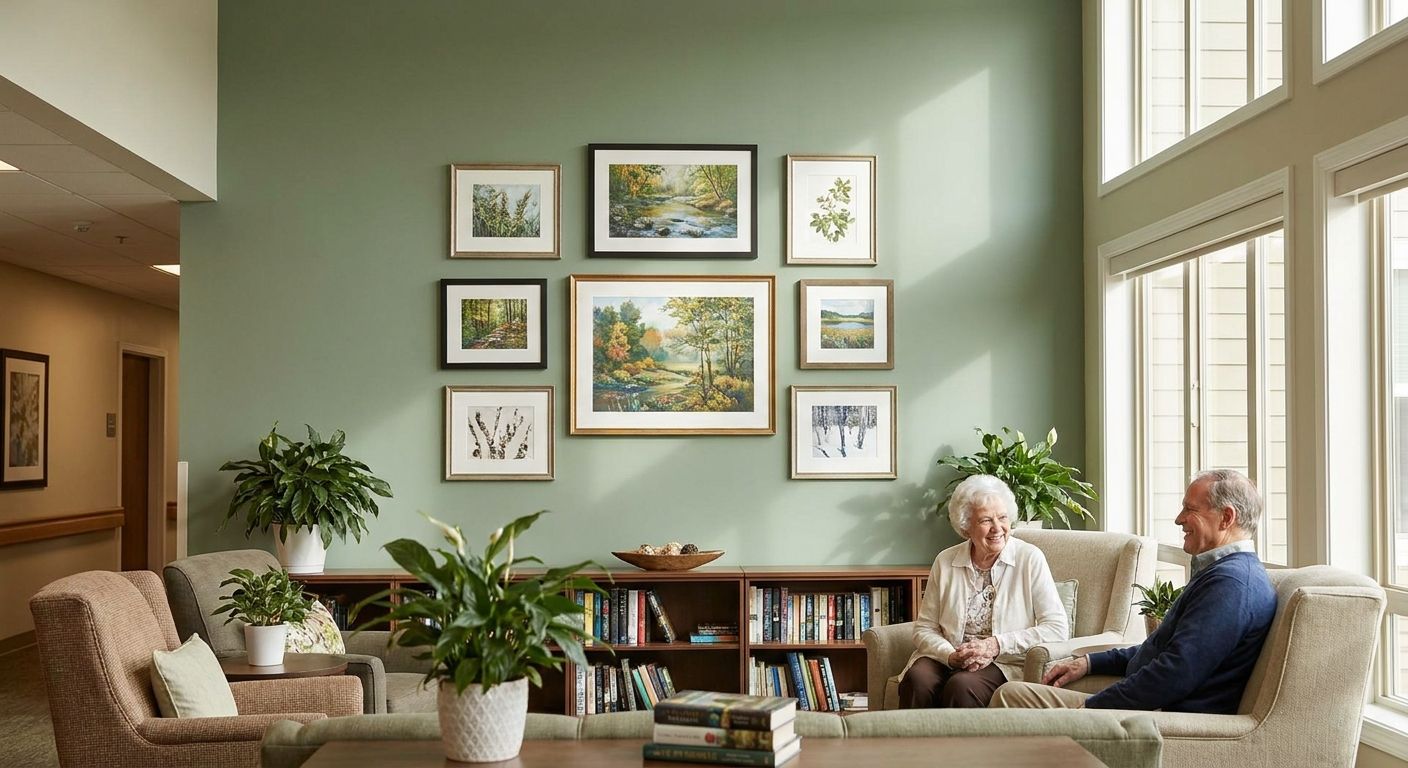
- Large florals and recognizable landscapes outperform abstract art in wall art for senior living communities because residents identify the subject faster.
- Ready-to-hang canvas beats glass-framed prints in hallways — no shatter risk near walkers or wheelchairs.
- Budget one statement piece per common room plus smaller, recognizable pieces near doors for wayfinding cues.
- Rotate seasonal or activity-linked pieces every 3-4 months to keep reminiscence programs and lounges feeling current.
- Gioia Wall Art's ready-to-hang canvas catalog covers calming, recognizable themes without custom framing lead times.
Why wall art matters for senior living communities
Senior living buyers are not shopping the same way a homeowner picking a living room accent piece does. An activity director or facilities manager is often sourcing art for a dozen rooms at once, working against a fixed budget, and answering to both residents' families and dementia-care design guidance that favors familiar, high-contrast, recognizable imagery over trendy abstraction.
That changes what "good" wall art looks like. A piece that reads as sophisticated in a downtown loft can read as confusing or cold in a memory care wing. The right wall art for senior living communities does double duty: it decorates the space and it helps a resident recognize where they are.
Wall art gifts for grandparents draws on the same instinct — pick subjects a person already loves and already recognizes — and that instinct scales up when you're outfitting an entire community rather than one relative's room.
Choose calming, recognizable themes over trendy abstraction
Start with subjects residents can name at a glance: florals, gardens, coastal scenes, gentle wildlife, and nostalgic landscapes. Abstract geometric prints look current in a design portfolio, but they don't give a resident with cognitive decline anything to anchor to.
- Favor florals, birds, and garden scenes over abstract shapes and heavy patterns
- Use warm, natural color palettes — residents respond better to sunset tones and greens than stark black-and-white
- Skip busy, high-contrast optical patterns that can read as disorienting to residents with vision changes
- Choose subjects tied to eras residents grew up in — mid-century florals, classic still lifes, rural scenery
- Test one piece in a common room and watch resident reactions before ordering the same theme across every floor


Size and placement for low vision and mobility
A piece that looks proportional to a design magazine can be invisible to a resident with declining eyesight or hard to see from a wheelchair. Placement matters as much as subject matter here.
- Hang common-room pieces at a lower sightline than standard gallery height — closer to seated eye level, not standing eye level
- Go larger than you would in a home: bigger canvases with simple, single-subject compositions read faster from a distance
- Space pieces so residents using walkers or wheelchairs have a clear, unobstructed sightline down hallways
- Avoid clustered gallery walls in dementia care wings — one clear image per wall segment beats six small frames
- Add task lighting near key pieces used for wayfinding so they stay visible in dimmer hallways
Select finishes that survive sanitizing and high traffic
Senior living common areas get wiped down constantly, and hallway art takes bumps from carts, walkers, and wheelchairs that a home hallway never sees. Glass-framed pieces are a liability here.
- Choose stretched canvas or acrylic-faced prints over glass-framed art in any hallway or dining room
- Confirm the print surface can handle a damp wipe-down without smearing or warping
- Mount securely with wall anchors rated for the piece's weight — loose hanging hardware becomes a safety issue fast
- Avoid raised 3D textures or protruding frames in narrow hallways where a cart or wheelchair could catch an edge
- Pick matte or low-glare finishes for rooms with heavy overhead lighting to cut glare for residents with vision loss
How to choose wall art for high-traffic hallways to prevent damage covers the same mounting and finish logic for any high-traffic corridor, senior living or otherwise.
Personalize common spaces with resident-relevant art
Generic hotel-lobby art fills a wall but does nothing for a resident's sense of belonging. Community-specific and resident-relevant pieces do more work per dollar.
- Feature local landmarks, regional landscapes, or scenes tied to where most residents grew up
- Rotate a "resident spotlight" wall with family-submitted photos alongside purchased art
- Use nostalgic still lifes and garden imagery in dining rooms to support mealtime conversation
- Reserve one or two statement pieces per floor rather than spreading budget thin across every hallway segment
- Ask activity staff which themes generated the most resident comments during past rotations, and buy more of what worked
Balance activity director budgets against per-room needs
A facilities budget rarely covers custom framing and gallery consultations for 40 rooms. Buying ready-made, ready-to-hang pieces stretches the budget further than commissioning custom work room by room.
- Standardize on one or two canvas sizes across common rooms to simplify hanging hardware and future replacements
- Prioritize shared spaces first — dining rooms, lounges, and main hallways — before individual resident rooms
- Batch-order the same collection across multiple rooms to keep per-piece cost predictable
- Hold back a portion of budget for seasonal rotation pieces rather than spending it all on a single permanent installation
- Check current pricing directly on the product page before batch-ordering, since availability shifts across the catalog
Install without damaging rental or managed-property walls
Many senior living buildings are leased or managed properties where wall damage during installation or turnover becomes a real cost. How to hang canvas art without damaging walls walks through the anchor and hook options that avoid repair bills.
- Use weight-rated picture hooks instead of adhesive strips for anything over a few pounds
- Mark stud locations in high-traffic hallways so heavier canvases don't rely on drywall anchors alone
- Keep a hanging template for each standard canvas size so reinstalling after a repaint is fast
- Document hook placement per room so maintenance staff can replace or rotate pieces without new holes
Rotate art seasonally to support engagement programs
Static decor stops registering with residents after a few months. Seasonal rotation gives activity directors a built-in conversation piece and keeps memory care programs supplied with fresh visual cues.
- Swap dining room pieces seasonally — spring florals, summer coastal scenes, autumn landscapes
- Tie art rotations to activity calendar themes, like a garden month or a travel-memory reminiscence session
- Keep a rotation inventory so pieces aren't repeated in the same room within a year
- Coordinate rotation timing with deep-cleaning schedules to minimize extra wall handling
Vintage-inspired botanical and garden prints hold up especially well across rotations because they read as timeless rather than trend-driven — see vintage botanical prints for cottagecore rooms for the same principle applied to residential spaces.
Comparing wall art formats for senior living spaces
| Option | Best for | Key limitation |
|---|---|---|
| Framed canvas (acrylic face) | Formal lounges, dining rooms, front entries | Heavier to hang; needs wall-rated anchors |
| Ready-to-hang stretched canvas | Hallways and high-traffic common areas | No frame edge, so it reads less formal in a main lobby |
| Custom photo canvas | Resident memory walls, reminiscence programs | Needs family- or resident-submitted photos; longer lead time |
| Unframed poster prints | Budget-limited or short-term seasonal displays | Needs mounting or lamination to survive cleaning and handling |
Verdict: ready-to-hang stretched canvas wins for most senior living common areas in 2026 — it skips the glass-breakage risk of framed art and holds up better to wipe-downs than an unmounted poster.
“If a piece needs a magnifying glass to identify from six feet away, it's the wrong size for a senior living hallway.”
Common mistakes senior living communities make
- Choosing trendy abstract art for memory care wings. Staff like it in the showroom; residents with cognitive decline have nothing to recognize in it.
- Hanging everything at standard gallery height. Standing eye level ignores residents who spend most of their day seated or using mobility aids.
- Using glass-framed prints in hallways. Glass near walkers, wheelchairs, and rolling carts is a breakage risk waiting to happen.
- Repeating identical art on every floor. Without visual variation, residents lose the cues that help them find their own room or wing.
- Skipping the cleaning test before ordering in bulk. A finish that can't handle a sanitizing wipe degrades within months in a high-touch common room.
FAQ
What's the best wall art for senior living communities?
Large, recognizable subjects — florals, gardens, coastal scenes, and gentle wildlife — work best because residents can identify them quickly, including in memory care settings. Ready-to-hang canvas in these themes handles hallway traffic and sanitizing better than framed, glass-covered prints.
Is canvas or framed print better for senior living hallways?
Ready-to-hang stretched canvas is better for hallways because it has no glass to shatter near walkers, wheelchairs, or carts. Save framed, glass-faced pieces for lower-traffic formal spaces like a main lobby.
How much wall art should a senior living community buy per room?
Prioritize one statement piece per common room plus smaller, recognizable pieces near doors and hallway junctions for wayfinding. Individual resident rooms come after shared spaces are covered.
What themes work best for dementia care wall art?
Familiar, single-subject imagery — florals, gardens, and nostalgic landscapes tied to the era residents grew up in — works better than abstract or high-contrast optical patterns. The goal is quick recognition, not visual complexity.
Can wall art help with wayfinding in senior living facilities?
Yes. Distinct, recognizable pieces placed consistently at hallway junctions and floor entrances give residents visual landmarks to navigate by, which matters most in memory care wings.
How often should senior living communities rotate wall art?
Every 3-4 months tied to seasons or activity calendar themes keeps common rooms feeling current and gives reminiscence programs new material to work with. Permanent pieces in main lobbies don't need the same rotation.
Is glass-framed art safe for senior living hallways?
It's a risk in high-traffic corridors where walkers, wheelchairs, and carts can make contact with the frame. Ready-to-hang canvas or acrylic-faced prints remove that breakage risk entirely.
What size wall art works for senior living common rooms?
Go larger than typical home decor sizing, since bigger single-subject canvases read faster from a distance and from a seated sightline. Check the product page for available sizes before ordering across multiple rooms.
One last thing
Color-coding art by floor or wing is a simple, low-cost wayfinding trick borrowed straight from dementia-care design practice: keep the palette consistent per floor — blues on one level, warm florals on the next — and residents start using color as a landmark before they consciously register it. It costs nothing extra beyond the art you're already buying for 2026's rotation, and it does more for resident orientation than any single statement piece.