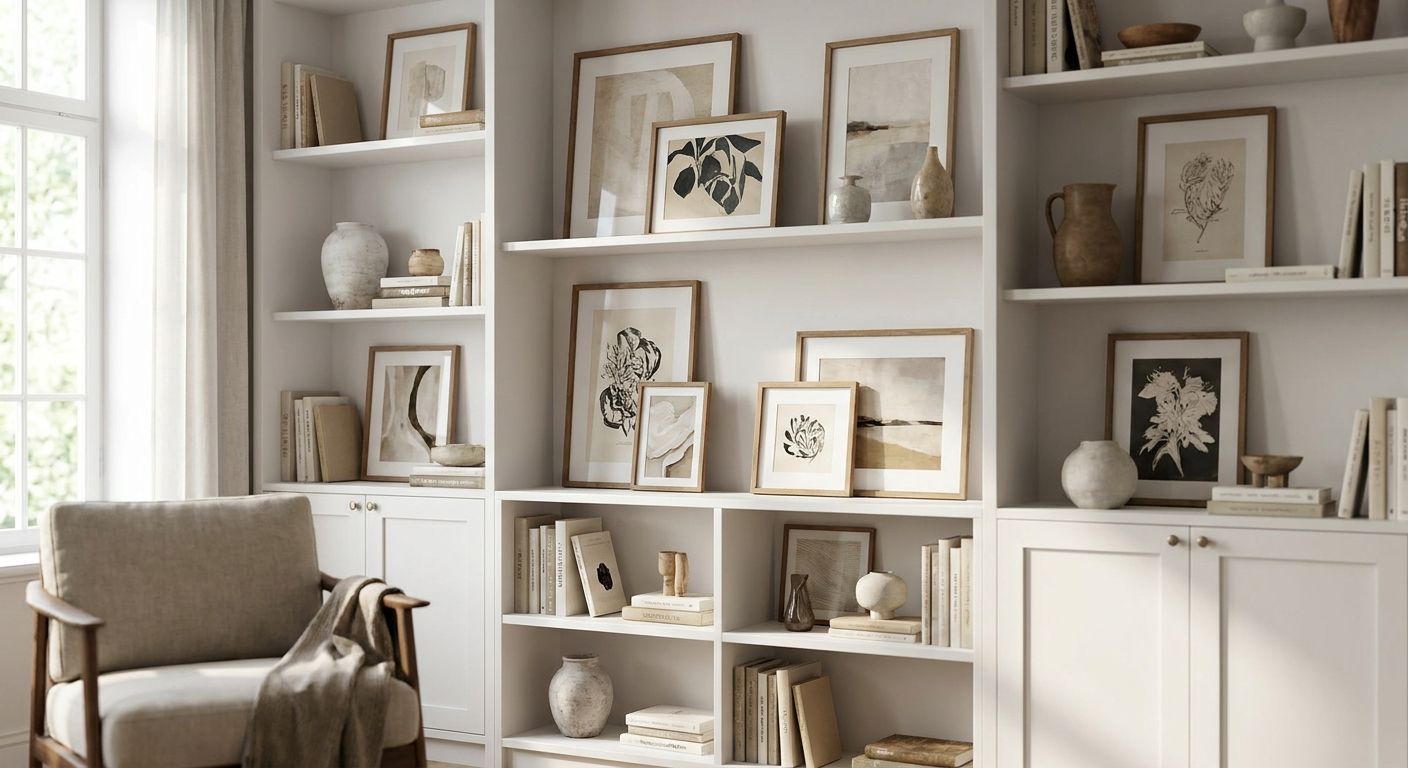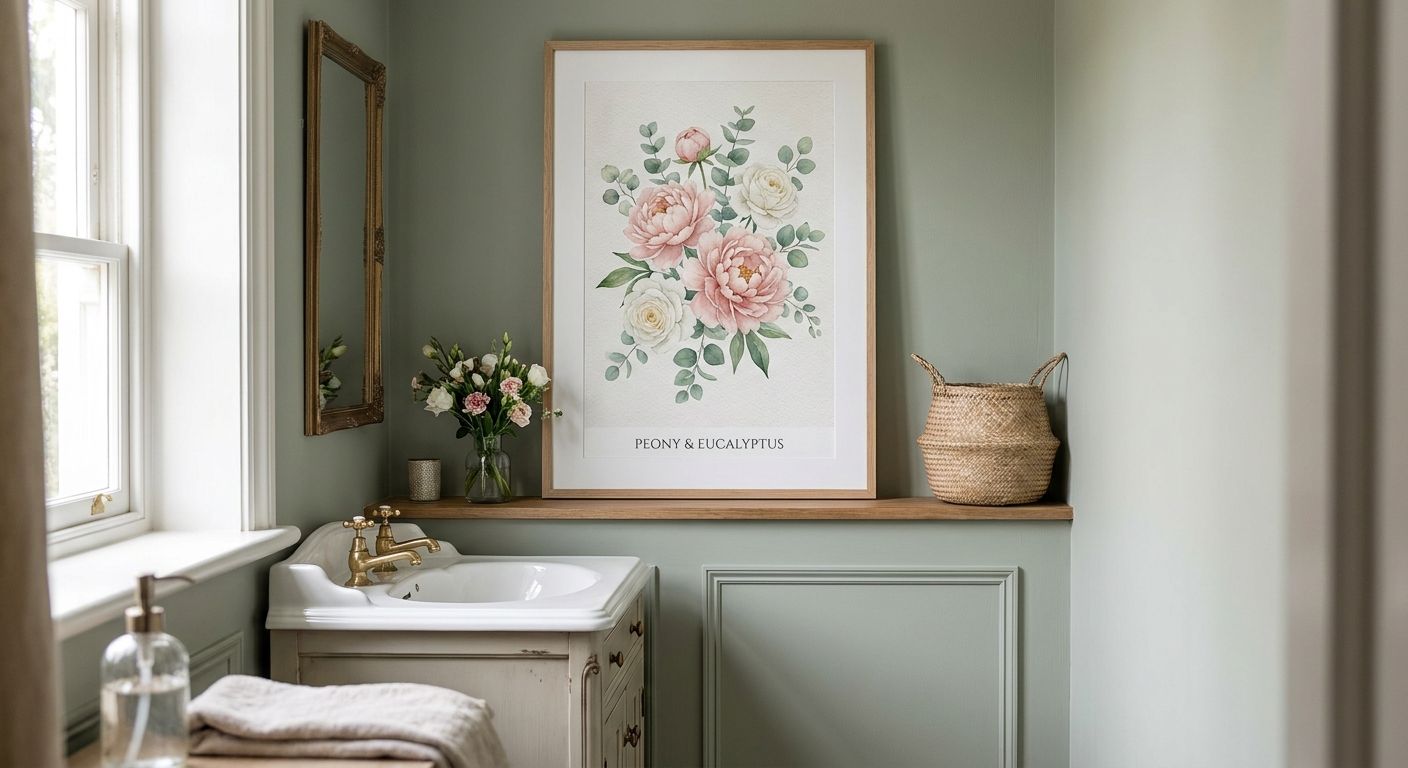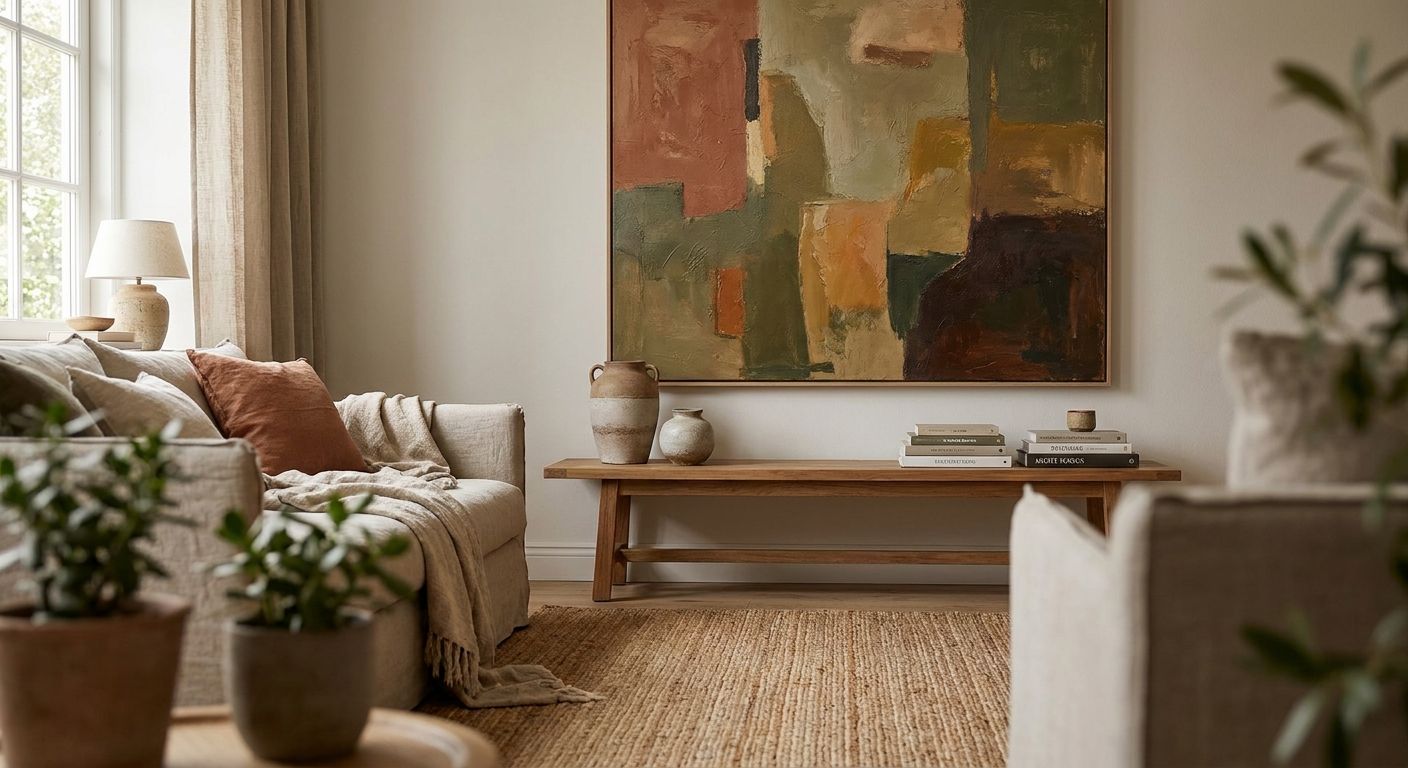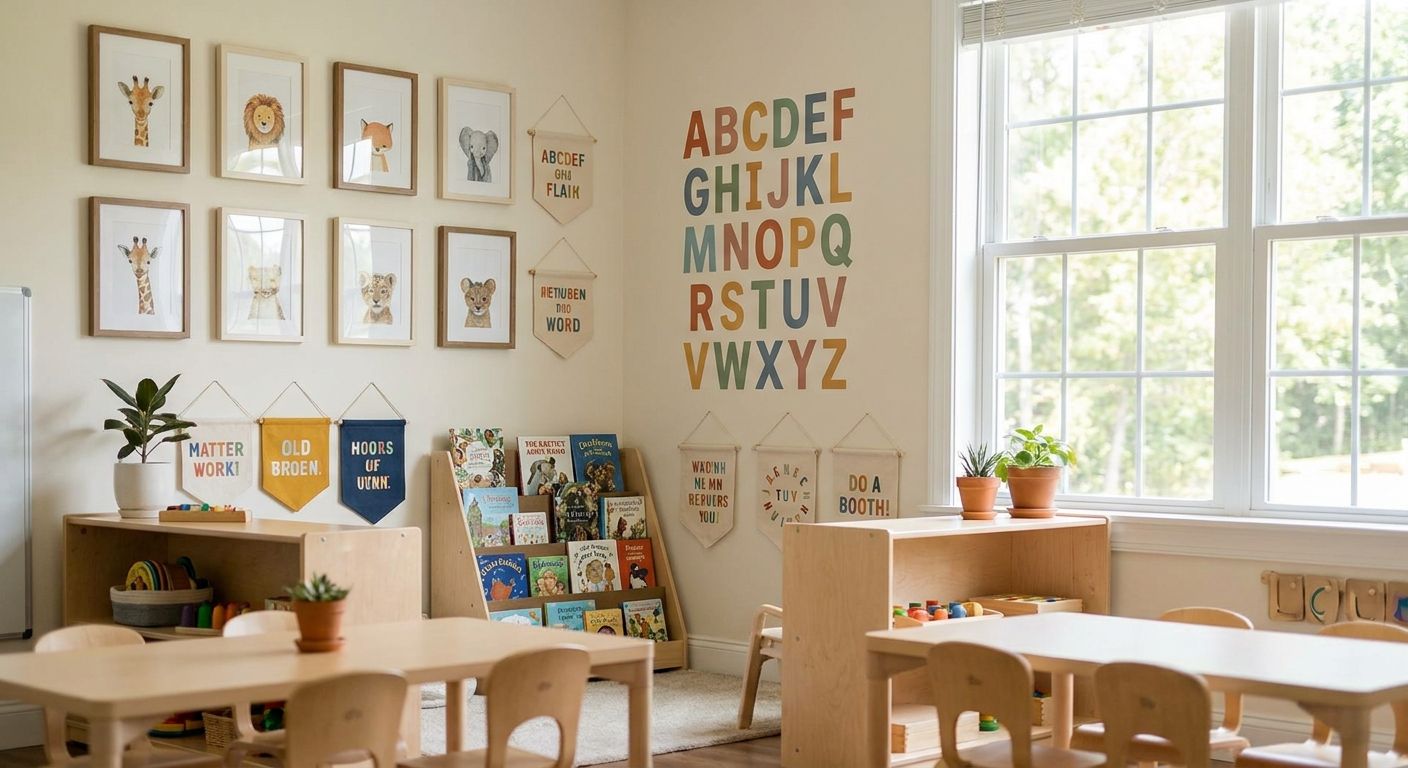
Outfitting a classroom or daycare room with real classroom wall art means solving a different problem than decorating a bedroom: you need pieces that survive 25 kids a day, that hold up to a rotating cast of art projects taped nearby, and that still make the room feel like somewhere a four-year-old wants to spend eight hours. Get it right and the wall art becomes part of how the room functions, not just how it looks.
- Classroom wall art should be canvas, not glass-framed, near active play zones — glass framing is a skip for daycare centers.
- Sweet Sleeping Tiger from Gioia Wall Art suits calm-down corners in 2026 classrooms: buy for its muted palette.
- Size art to the child's eye level, not the adult teacher's sightline, when hanging in a preschool room.
- Colorful Striped Mary Janes works for playful entryways and cubby walls in younger rooms: consider it for preschool.
- At roughly $180 per canvas, outfitting four zones — reading corner, cubbies, circle time wall, calm corner — takes real budget planning, not one impulse order.
Who this guide is for
This is written for the people actually responsible for what goes on classroom walls: preschool directors, daycare center owners, elementary teachers decorating their own rooms out of pocket, and school administrators sourcing wall art for common areas and hallways. You're not shopping for a living room. You're shopping for a room that gets used by kids who touch everything, teachers who need the space to do double duty as a reading corner and a quiet-time corner, and budgets that rarely stretch as far as anyone would like in 2026. If your walls need to hold up under daily wear while still setting a calm, welcoming tone, this list of criteria and picks is built for that job — not for a nursery that gets gently admired from a rocking chair. For that softer version of the same problem, see wall art for kids' playrooms.
What to look for in classroom wall art
Durability over delicacy
A daycare wall gets bumped by backpacks, smudged by small hands, and occasionally used as a landing spot for a thrown block. Canvas prints handle that kind of daily contact far better than glass-framed pieces, which can crack or shatter if knocked loose. Choose gallery-wrapped canvas for anywhere kids are moving freely, and reserve framed pieces for staff-only walls like the front office.
Scale to child sightlines, not adult ones
Most classroom wall art gets hung at a height that looks right to the adult installing it, which usually means it's hung too high for the kids it's supposed to engage. A three-year-old's eye level is roughly 30 to 36 inches off the floor, well below where a teacher naturally reaches. Getting the size and placement right matters enough that it's worth reading a dedicated breakdown on choosing the right canvas size before you order anything.
Calm, non-overstimulating color palettes
Classrooms are already visually busy — cubbies, alphabet charts, kids' own artwork taped up everywhere. Wall art with a saturated, chaotic palette adds to that noise instead of giving eyes somewhere to rest. Softer, warmer tones work better in calm-down corners and reading nooks, while brighter pieces can anchor high-energy zones like a circle time wall.
Installation that doesn't damage leased walls
Most daycare centers and many school classrooms operate in leased or district-owned buildings, which means drilling holes isn't always an option. Command strips and adhesive hooks rated for canvas weight solve this in most cases, but only if you pick a piece light enough for the hardware to hold. The full method is covered in how to hang canvas art without damaging walls, and it's worth following exactly if you're on a lease that charges for wall damage at move-out.
Thematic zoning by activity
The strongest classrooms use wall art to signal what a corner is for before a teacher says a word. A nature-and-animal theme near a reading nook, calmer florals near a quiet corner, brighter pieces near an activity table — the room reads itself. Bird and wildlife wall art is a reliable anchor for a nature corner if you're building a room around that idea.
Budget that scales across multiple rooms
A single canvas print running around $179.99 is a reasonable one-off purchase for a home office. Multiply that across four or five rooms in a daycare center and the math changes fast — plan the budget per room, not per piece, and prioritize the zones kids spend the most time in first: reading corners and calm-down spaces before hallways.
Top picks for classroom and daycare walls


Happy Tiger in Poppies — the safe pick. It's bright enough to hold attention in a reading corner without tipping into overstimulating, and the canvas format at $179.99 means no glass to worry about near a rug where kids sit close to the wall. Buy for ages 3 to 8 reading nooks.
Sweet Sleeping Tiger — the calm-down corner pick. Muted tones and a resting animal subject make this the piece to hang where kids go to settle down after recess or before nap. At $179.99, it's the same price as the more energetic picks but does a completely different job in the room. Buy for quiet-time and calm-down corners.
Colorful Striped Mary Janes — the playful pick. Whimsical and fun rather than serene, this suits a preschool cubby wall or entryway where the goal is to greet kids with something cheerful, not to calm them down. Consider for younger-room entryways rather than reading corners.
Sleeping Black Cat — the wildcard. It reads a little more grown-up than the tiger pieces, which makes it a better fit for after-school care rooms with older elementary kids than for a toddler room. Consider for after-school or pre-K-plus spaces, not infant rooms.
What to avoid
- Glass-framed prints in active play zones. They look polished in a photo, but glass near a play area is a liability daycare insurers and directors flag immediately — save framed pieces for staff offices.
- Text-heavy or visually busy prints. A classroom wall already competes with cubbies, charts, and kids' own artwork; adding a print packed with detail just adds noise instead of calm.
- Undersized art on institutional walls. A piece that reads as generously sized on a home living room wall can disappear on a 12-foot classroom wall — check the size guide before ordering, not after it arrives.
Verdict comparison
| Pick | Best For | Price | Verdict |
|---|---|---|---|
| Happy Tiger in Poppies | Reading corners, ages 3-8 | $179.99 | Buy |
| Sweet Sleeping Tiger | Calm-down and quiet-time corners | $179.99 | Buy |
| Colorful Striped Mary Janes | Preschool entryways, cubby walls | $179.99 | Consider |
| Sleeping Black Cat | After-school and pre-K-plus rooms | $179.99 | Consider |
Why this matters
A classroom's walls do more work than a home's ever will — they set tone for a room that changes activity every 30 to 45 minutes, and they need to survive that turnover without looking worn out by October. Getting the wall art right in 2026 isn't about picking the prettiest print; it's about matching canvas durability, scale, and color to how the room actually gets used. Gioia Wall Art built its catalog around exactly this kind of room-by-room thinking, which is why the same canvas that anchors a nursery corner can do a second job in a daycare reading nook.
FAQ
What is the best wall art for a classroom in 2026?
Gallery-wrapped canvas prints in calm, non-glare finishes are the best classroom wall art in 2026 because they resist bumps and don't shatter. Pieces like Happy Tiger in Poppies or Sweet Sleeping Tiger work well because they're durable and low-glare under fluorescent lighting.
Is canvas or framed print safer for a daycare center?
Canvas is safer for a daycare center because it has no glass to crack or shatter if bumped. Reserve framed prints for adult-only spaces like the front office or staff lounge.
How high should wall art be hung in a preschool classroom?
Hang wall art at roughly 30 to 36 inches off the floor to match a preschooler's eye level, not the adult teacher's sightline. Circle-time or activity walls can go higher since kids view them from further back.
How much does classroom wall art cost?
A single canvas print from Gioia Wall Art runs around $179.99, so outfitting four zones in a daycare center - reading corner, cubbies, circle time wall, and calm corner - takes real per-room budgeting rather than a single order.
Should classroom wall art be educational or decorative?
Decorative wall art still does a job in a classroom by signaling what each corner is for through color and subject matter. Save alphabet charts and educational posters for instructional walls, and use decorative canvas for reading nooks and calm-down corners.
Can wall art help with a calm-down corner?
Yes, a muted-palette canvas print with a resting subject, like a sleeping animal, gives a calm-down corner a visual cue that signals rest rather than activity. Avoid bright, busy prints in this specific zone.
How often should daycare wall art be updated?
Most daycare centers update wall art once a year or when a room's theme changes, since canvas holds up well and doesn't need frequent replacement. Rotate seasonal or kids' artwork displays more often while keeping the anchor canvas pieces in place.
Is glass-framed art safe for toddler rooms?
Glass-framed art is not recommended for toddler rooms because of the shatter risk if it's knocked off the wall. Canvas prints deliver the same visual impact without that risk.
One last thing
The detail most daycare directors miss: hardware matters as much as the print itself. A $179.99 canvas hung with the wrong adhesive strip will sag or fall within weeks in a room with door slams and running feet all day — check the weight rating on your hanging hardware before you commit to a wall, not after the first piece comes down.