A homeschool room pulls triple duty as a classroom, a study nook, and often a bedroom-adjacent living space, and the wall art hanging in it either supports that workload or fights against it. This guide breaks down what holds up in a room where a kid sits at a desk for hours, markers get uncapped, and video calls with a co-op group happen mid-morning.
- Vibrant Desert Landscape works as a geography-adjacent focal point for homeschool study nooks in 2026 — buy it.
- Skip glossy framed prints near webcams; glare ruins co-op video calls faster than a busy palette does.
- Happy Tiger in Poppies suits K-3 corners; muted landscapes read better in a teen's study zone.
- Hang wall art for homeschool rooms at eye level from a seated desk chair, not standing eye level.
- Rotate one wall for kids' own work and reserve a second for curated canvas so neither competes for attention.
Why This Matters
A homeschool room differs from a living room or a guest bedroom in one specific way: the same wall faces the same kid for hours at a stretch, sometimes for years. Decor that reads as fun and eclectic in a family room can turn into a distraction the moment a seven-year-old is three sentences into a worksheet. If you're also outfitting a shared co-op space, the durability logic carries over — see wall art for kids' classrooms and daycare centers for the higher-traffic version of this same problem.
A first-grader's corner and a tenth-grader's study nook need almost opposite things from the same wall. Gioia Wall Art built this guide around that gap: the print that anchors a gallery wall in the living room is often the wrong pick six feet from a desk, five days a week, for a full school year.
Who This Guide Is For
This is for the parent setting up a dedicated room, a converted dining nook, or a basement corner for one or more kids doing schoolwork at home, whether that's full-time homeschool, a hybrid co-op schedule, or after-school tutoring sessions. It's also for the parent who's already hung something and noticed it's not working — too busy, too glossy, too hard to keep clean when a marker rolls off the desk.
What to Look For in Wall Art for Homeschool Rooms
A palette that calms instead of competing
A homeschool desk gets stared at for hours, and a print in the kid's direct sightline needs to recede a little, not shout. Warm, muted tones — dusty blues, ochres, soft greens — hold attention better over a school year than saturated neon or high-contrast graphic prints, which read as energetic for about a week and distracting after that.
Durability for close-quarters wear
Homeschool rooms see more marker caps left off, more snack crumbs, and more accidental elbow bumps than a formal living room ever will. Gallery-wrapped canvas holds up to a light wipe-down far better than framed paper behind glass, which shows fingerprints and smudges within weeks in a room this lived-in.
Room to flex as the curriculum changes
A K-2 corner and a middle-school study nook don't need the same wall, but they can share the same frame footprint if you pick pieces sized to swap in and out. Look for pieces that work as a set or a rotation, not a single piece so specific to one grade level that it needs replacing every year.
No glare where video calls happen
Most co-op programs and hybrid schooling schedules run at least one video call a week, and a glossy framed print directly behind the camera throws light back at the lens every time. Home office wall art built for productivity covers the same glare problem for remote workers, and the fix — matte canvas over glass, positioned off-axis from the light source — applies just as directly to a homeschool desk.
The right size for the actual wall, not the whole room
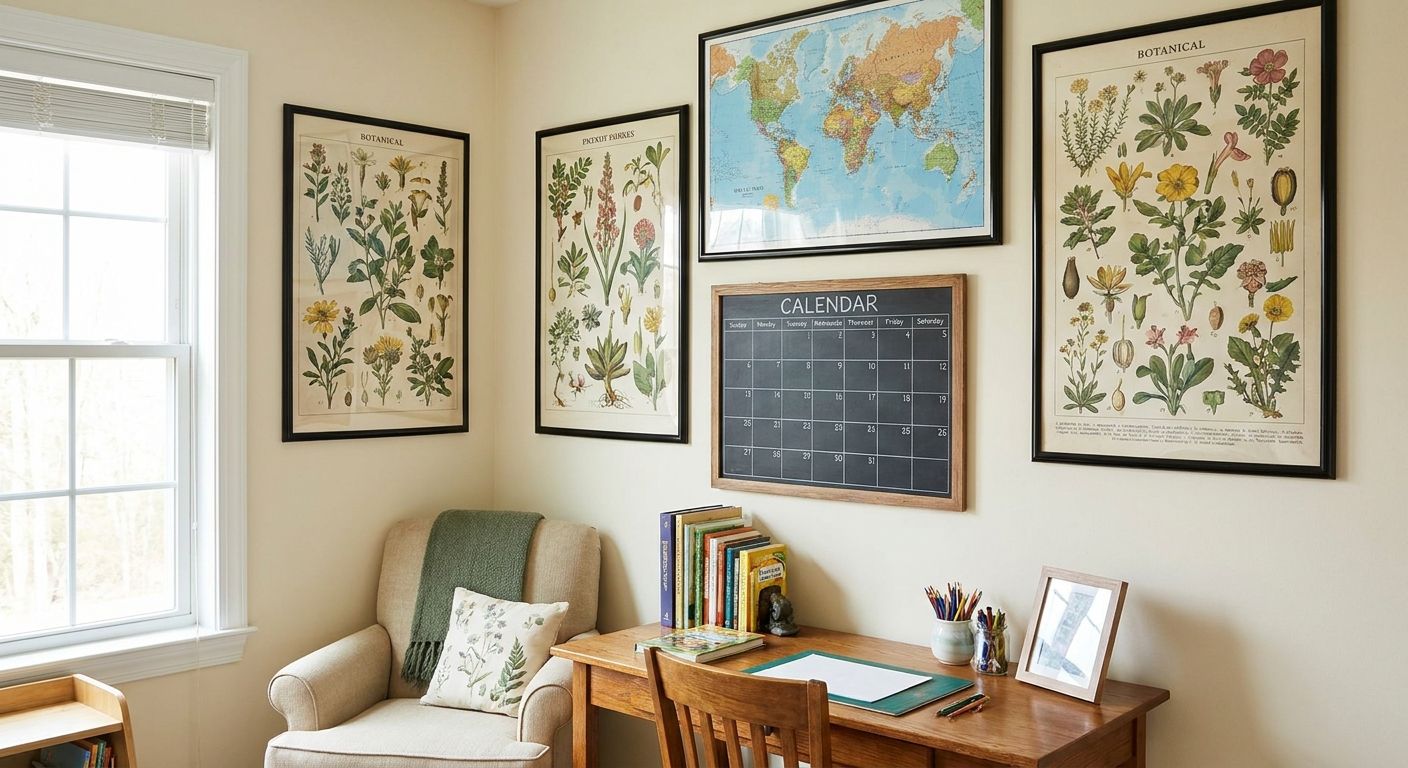
A rule interior designers use for any accent piece: the art should span roughly 60-75% of the furniture width it sits above, whether that's a desk, a bookshelf, or a reading chair. Oversizing a single print in a small homeschool room eats the visual space a child needs for maps, calendars, or a whiteboard. How to choose the right canvas size for your wall walks through the math room by room if the desk wall is an odd shape.


Top Picks for 2026
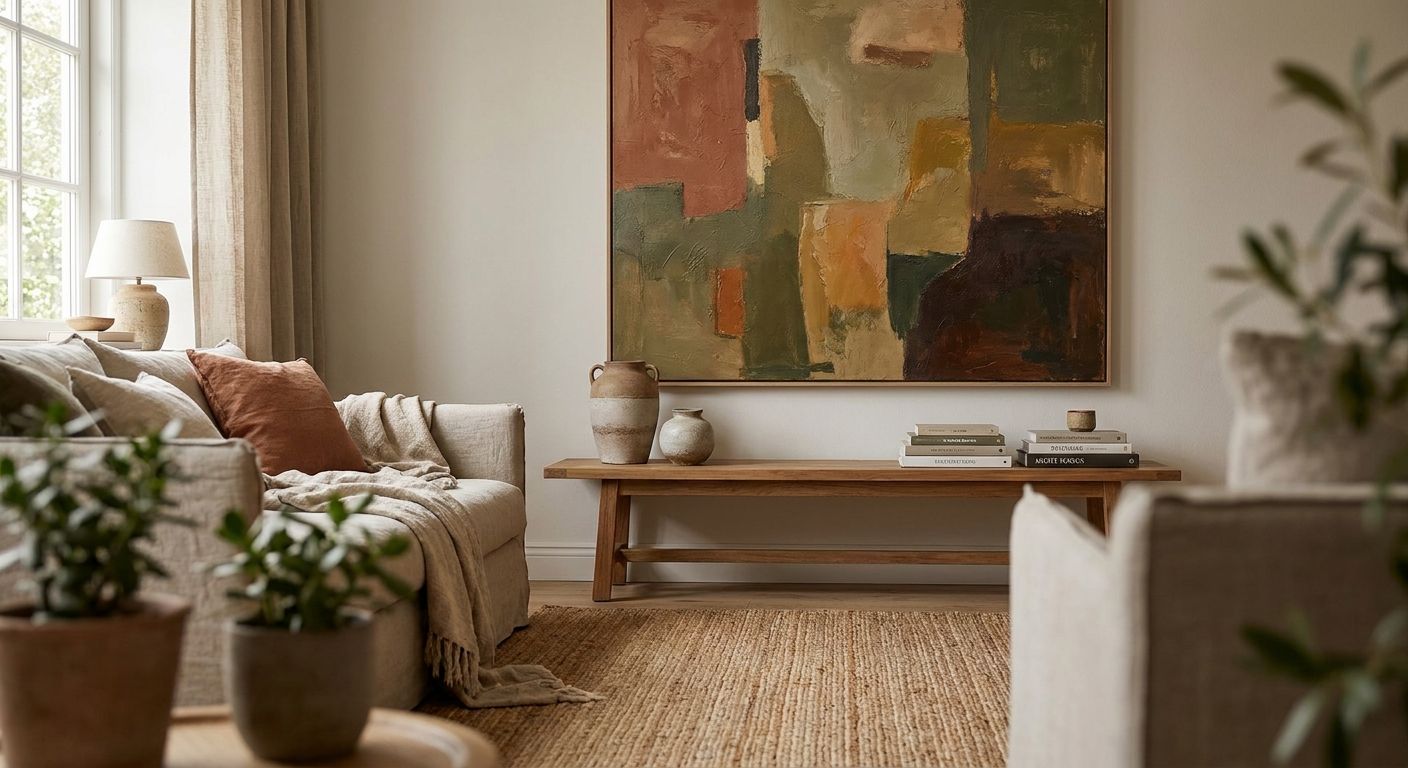
Vibrant Desert Landscape — the geography anchor. Warm ochre and rust tones sit quietly behind a desk without pulling focus, and the landscape format doubles as a jumping-off point for a social studies unit. Priced at $179.99, it works as the single statement piece for a study nook rather than part of a busy cluster. Verdict: Buy for a dedicated study wall in any grade band.
Happy Tiger in Poppies — the curiosity starter for K-3 corners. Bright without being chaotic, this one keeps early-elementary energy up during a long morning of phonics and math worksheets. At $179.99, it's sized for a smaller wall next to a low reading shelf. Verdict: Buy for kindergarten through third-grade rooms.
Vibrant Sunset Landscape — the calm-focus pick for a teen study zone. Muted warm tones read as mature rather than juvenile, which matters once a student is past sixth grade and doesn't want a room that looks like a nursery. At $179.99, it's a solid single piece rather than a full gallery wall. Verdict: Consider if the room also needs to function as a bedroom.
Sweet Sleeping Tiger — the quiet-time pick. Best placed near a reading nook or a transition corner where a younger student decompresses between subjects, not directly at the main desk. At $179.99, it pairs well with the desert or sunset landscape without repeating a theme. Verdict: Buy for a secondary wall, not the main study sightline.
What to Avoid
- Glossy framed prints behind the webcam spot. They look sharp in a showroom and throw a hot spot of glare into every video call the moment morning sun hits the window.
- A full gallery wall directly above the desk. Six or eight small frames clustered in a child's direct line of sight reads as visual noise by week three of the school year, even if the individual pieces are calm.
- Trendy dark, moody palettes. They photograph well for a design blog but cut the light in a room that already needs to feel bright and workable for six-plus hours a day.
Verdict Comparison
| Pick | Best For | Mood | Price | Verdict |
|---|---|---|---|---|
| Vibrant Desert Landscape | Main study wall, any grade | Warm, quiet | $179.99 | Buy |
| Happy Tiger in Poppies | K-3 corner | Bright, playful | $179.99 | Buy |
| Vibrant Sunset Landscape | Teen study zone | Muted, mature | $179.99 | Consider |
| Sweet Sleeping Tiger | Reading nook, transitions | Soft, calming | $179.99 | Buy |
FAQ
What's the best wall art for a homeschool room?
Warm-toned landscape or nature canvas prints work best because they hold a child's attention without competing with schoolwork. Gioia Wall Art's Vibrant Desert Landscape and Happy Tiger in Poppies both fit a homeschool desk wall in 2026 without overwhelming the space.
Is bright, colorful wall art distracting for kids doing schoolwork?
High-contrast, neon-bright prints can distract during focused work, but warm, saturated tones like the ones in Happy Tiger in Poppies work fine for younger kids. Save the boldest palettes for a reading nook rather than the main desk sightline.
How high should wall art hang in a homeschool room?
Hang it at eye level from a seated desk chair, not standing eye level, since the child spends most of the day sitting. That usually means 6 to 10 inches lower than a typical living-room hanging height.
Should homeschool room wall art be educational or decorative?
It can be either, but decorative pieces with a loose educational tie-in — a landscape, a map-adjacent scene, an animal print — tend to age better than literal alphabet charts a child outgrows in a year. Save flashcards and charts for a corkboard, and let the wall art be the calm backdrop.
Is canvas or framed print better for a homeschool room?
Canvas holds up better in a room with markers, snacks, and daily wear because it wipes clean without glass to smudge or crack. Framed prints work fine for a lower-traffic wall away from the main desk.
How much wall art is too much in a small homeschool room?
One statement piece over the desk and one smaller piece near a reading corner is usually enough for a room under 100 square feet. A full gallery wall in a small homeschool room competes with shelving, whiteboards, and supply storage for visual space.
Can wall art work as a video-call backdrop for homeschool co-op meetings?
Yes, as long as it's matte rather than glossy and positioned off-axis from the main light source in the room. A glossy framed print directly behind the camera throws glare into nearly every call.
How often should you rotate wall art in a kids' homeschool space?
Once a school year is enough for the curated pieces, timed to a grade transition rather than a season. Reserve a separate, lower-effort wall for the child's own rotating work so the curated art doesn't need to change every month.
One Last Thing
Leave one wall genuinely bare, or close to it, and reserve it for the kid's own work instead of a second curated print. The temptation in 2026 is to fill every inch of a homeschool room with intentional decor, but a room that's 100% curated leaves no visual space for a proud A-plus spelling test or a science fair ribbon, and kids notice which walls belong to them.