Sourcing wall art for interior design client projects means matching scale, palette, and lead time to a brief you don't get a second shot at. This walkthrough is the workflow professional designers use in 2026 to shortlist, present, and order wall art for interior designers' projects without blowing budget or missing install day.
- Wall art for interior designers starts with wall measurements, not favorites — lock size before you browse.
- A curated catalog of 6,000+ prints beats hopping between five vendor sites for one room's palette.
- Order framed pieces 3-4 weeks ahead of install day; last-minute sourcing derails the schedule.
- One mood board per wall with 3-5 finalists keeps client approval fast and revisions rare.
Why this matters
A client doesn't care how many browser tabs you had open — they care that the piece over the sofa fits the wall, matches the brass hardware, and shows up before the install crew does. Sourcing wall art the wrong way costs hours in back-and-forth emails and, worse, a return shipment two days before a reveal.
Gioia Wall Art's catalog runs over 6,000 curated canvas prints, fine art prints, posters, framed pieces, and original paintings, which matters because a designer sourcing for six rooms in one project needs range, not a boutique shop with forty options. The workflow below treats wall art sourcing as a repeatable process, not a scavenger hunt.
What you'll need
- The client brief or style direction (Japandi, Coastal Luxe, Cottagecore, moody maximalist — whatever the room calls for)
- Wall measurements for every space getting art, not just room dimensions
- Fixed finishes already chosen: flooring, cabinet hardware, paint colors
- A per-room budget range, not a single project total
- Install date and any framing lead time built into the schedule
- Access to a catalog large enough to cover more than one style per project
The steps
1. Lock the brief before you touch a catalog
Browsing before the brief is set is how designers end up with forty saved tabs and no shortlist. Get the client's style words, three reference images, and a hard no-list (no black and white photography, no abstract, whatever it is) before opening a single product page. This step accomplishes the filtering a search bar can't do for you.
Common mistake: starting with "what's popular" instead of what the room needs.
2. Measure the wall, not the room
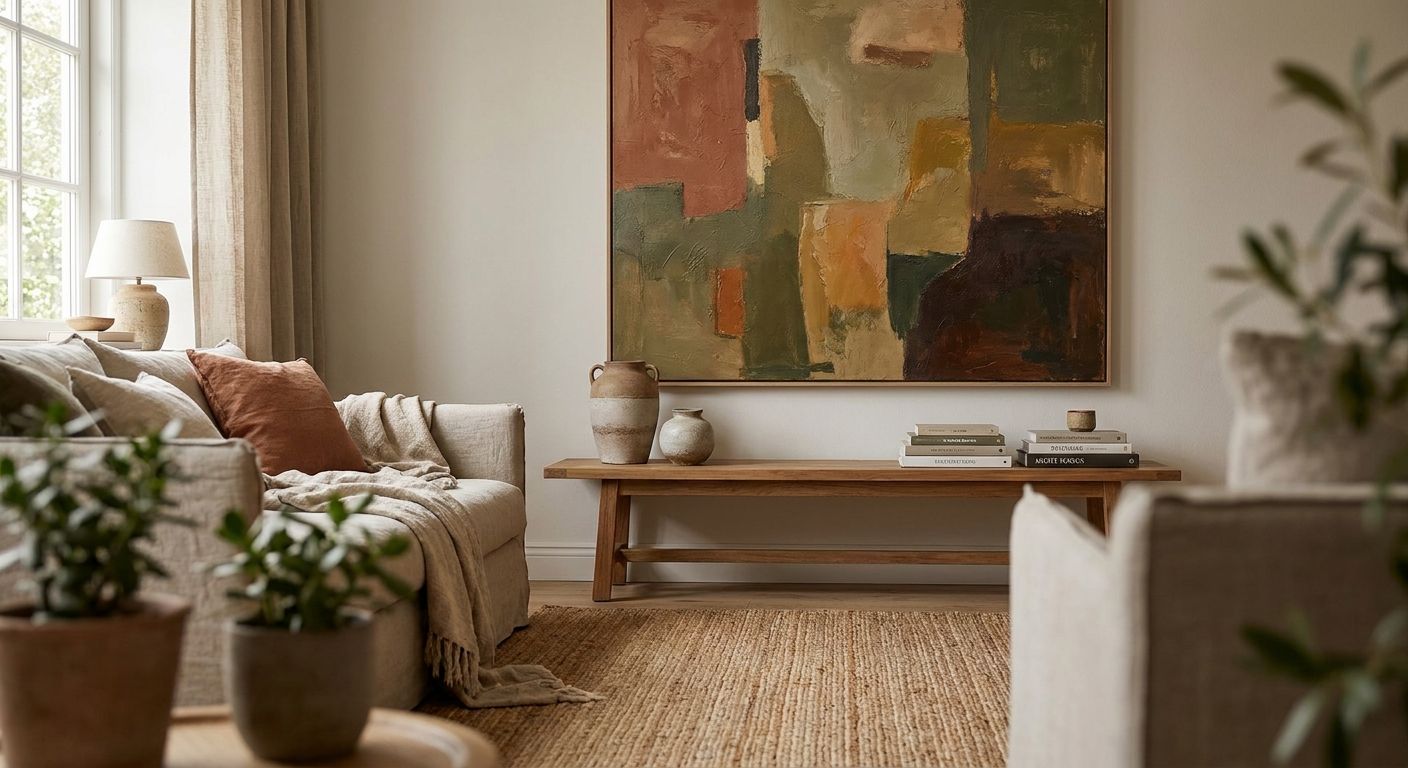
Size decisions in interior design wall art projects get made against the wall itself — the specific stretch of drywall above a console or sofa — not the square footage of the room. A 60-inch sofa wants roughly two-thirds of that width covered in art, which means a single 40-inch canvas or a three-piece set spanning 45 to 50 inches. Gioia's canvas size guide breaks proportions down by furniture piece, which saves you from re-measuring after the client already loves a piece that's four inches too narrow.
Expected outcome: a confirmed size range before you look at a single image.
3. Match the palette to fixed finishes
Paint colors change with a client's mood; cabinet hardware and flooring don't, not mid-project. Pull the undertone from the fixed finishes first — warm brass reads differently against a cool navy print than a mustard one — then filter the catalog to that palette. The color palette matching guide is built for exactly this filtering step, cross-referencing wall art tones against common interior color schemes.
Common mistake: matching art to a mood board color instead of the actual paint chip in hand.
4. Build a shortlist mood board per wall
One mood board per wall, three to five finalists, no more. A client shown fifteen options takes three weeks to decide; a client shown four takes one call. Include the size range, palette family, and a framing note on each finalist so approval doesn't require a follow-up question.


Common mistake: sending the client raw product links with no context on scale or framing.
5. Confirm framing and finish against the install context
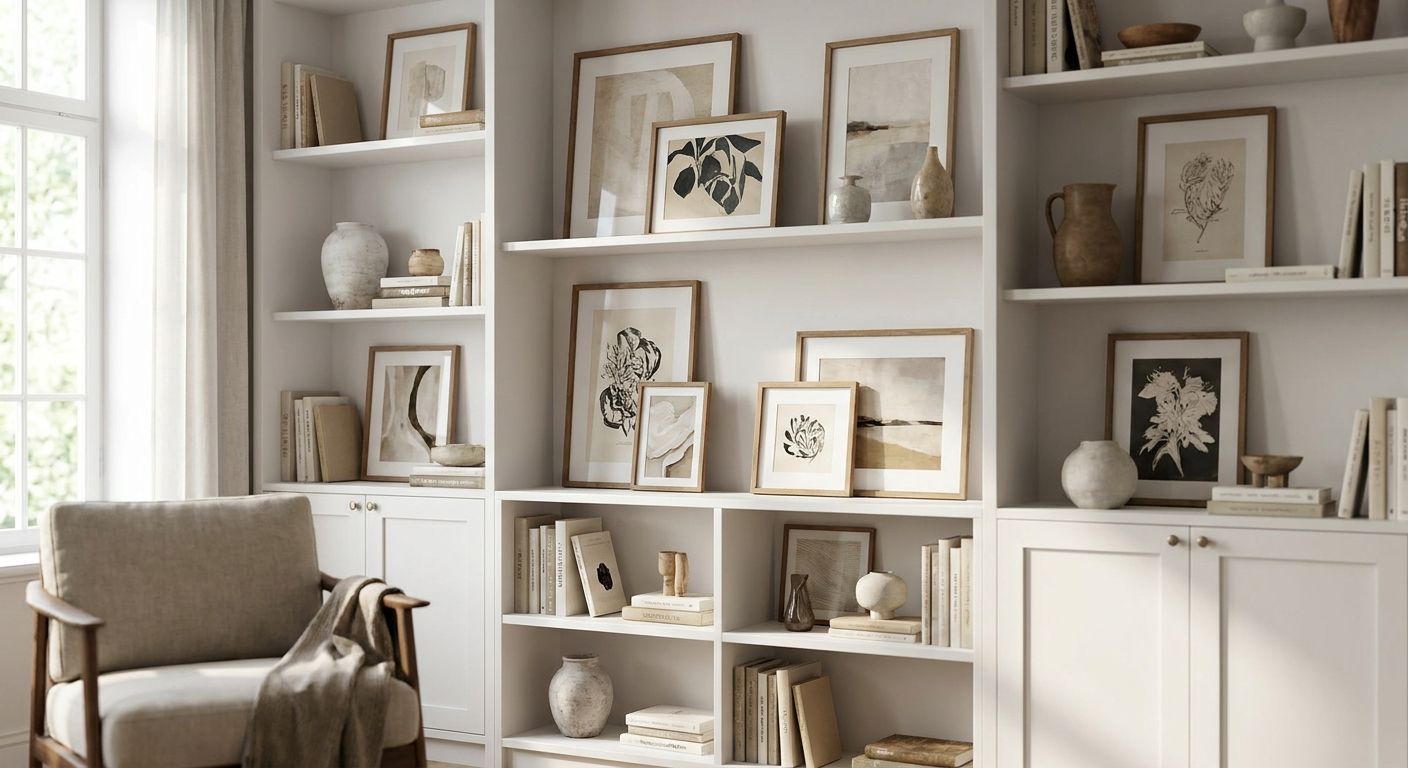
A gallery-style black frame reads wrong in a Japandi bedroom; a raw canvas edge reads unfinished in a formal dining room. Check finish options against the room's existing hardware finishes — chrome, brass, matte black — before locking the order, not after it ships.
Expected outcome: framing choice confirmed on the purchase order, not left as "designer's choice" on the invoice.
6. Sequence orders around install day
Framed pieces and multi-panel sets take longer to produce and ship than a single unframed canvas. Order framed and larger multi-piece sets first, at least 3 to 4 weeks ahead of install day in 2026, and hold smaller accent pieces for a second, faster order closer to the date.
Common mistake: ordering everything in one batch and discovering the framed pieces have the longest lead time two weeks before install.
7. Present finalists at true scale
A thumbnail on a screen doesn't communicate a 40-inch canvas the way painter's tape on the actual wall does. Before the client signs off, tape out the dimensions on-site or in a rendered mockup at true scale. This step accomplishes the one thing a mood board can't: showing the client the piece in their actual room.
Expected outcome: sign-off with zero surprises on delivery day.
8. Lock the hanging plan before delivery
Decide hanging height and hardware before the box arrives, not after. Standard eye-level hanging puts the center of the piece around 57 to 60 inches from the floor, adjusted down over furniture like a sofa or console.
Common mistake: hanging on delivery day without a plan, which is how nail holes multiply.
Troubleshooting
- The print reads differently on screen than in person. Order a smaller test print or check the product's color notes before committing a full multi-piece order to an unfamiliar palette.
- The piece won't fit once furniture is placed. Re-measure against the final furniture layout, not the empty room — this is the single most common resizing request designers report.
- Framing clashes with room hardware. Swap the frame finish rather than the artwork itself; most catalogs offer the same print in multiple frame options.
- A multi-piece gallery set doesn't align. Confirm exact panel dimensions and gap spacing before ordering rather than eyeballing it from a thumbnail grid.
- Budget shifts mid-project. Keep a backup finalist at a lower price point on every mood board so a swap doesn't mean starting the search over.
- Lead time collides with install day. Push framed and oversized pieces to the front of the order queue; they're the pieces most likely to slip the schedule.
Tools and resources
- A canvas size reference for matching art to furniture width
- A color-matching reference tied to fixed finishes, not paint trends
- A gallery wall arrangement reference for multi-piece walls
- A care and maintenance reference to hand off to the client post-install
- A catalog large enough to cover more than one room style per project
What to do next
Once sourcing is locked for one room, the process repeats for the next — but mood boards get faster the second time through. The fine art prints for interior design mood boards guide covers how to structure a board that survives client revisions without a full rebuild.
FAQ
What's the best way to source wall art for interior design clients?
Lock the brief and wall measurements first, then filter a curated catalog by palette and size before building a shortlist. Sourcing wall art for interior designers works best as a repeatable process, not a case-by-case search.
How much lead time does framed wall art need before an install date?
Framed and multi-panel pieces need 3 to 4 weeks of lead time ahead of install day in 2026. Smaller unframed canvases can typically be ordered closer to the date.
Is it better to buy wall art per piece or from one curated catalog?
A single catalog with a wide range, like Gioia Wall Art's 6,000-plus prints, cuts sourcing time versus piecing a project together across five vendor sites. It also keeps framing and finish options consistent across a project.
How do I match wall art to a client's existing color palette?
Pull the undertone from fixed finishes — flooring, cabinet hardware — rather than a paint swatch that might change. Filter the catalog to that undertone before showing the client any options.
What size wall art works above a sofa or console?
Art above a sofa should span roughly two-thirds of the sofa's width; a 60-inch sofa suits a 40-inch canvas or a multi-piece set totaling 45 to 50 inches. Measure the furniture, not the wall's full width.
How many wall art options should I show a client at once?
Three to five finalists per wall is the range that keeps approval fast. More than that slows the decision down rather than speeding it up.
Should framed or unframed wall art be ordered first for a project?
Order framed and larger multi-panel pieces first since they carry the longest production and shipping time. Hold smaller accent pieces for a second order closer to install day.
What height should wall art be hung in a client's home?
Center the piece around 57 to 60 inches from the floor for standard eye-level hanging, lower when it sits over furniture like a sofa or console. Confirm the hanging plan before delivery, not on install day.
One last thing
The designers who move fastest through sourcing aren't the ones with the biggest bookmark folder — they're the ones who filter by wall measurement and fixed finish before they ever click into a product page. Skip the browsing phase entirely and the whole process compresses from days to a single afternoon.