Staging a home for sale means dressing up every wall so buyers picture their own life there, not yours. This guide covers what makes wall art work for staging and open houses, and which pieces from Gioia Wall Art hold up across showing after showing.
- Neutral botanical and still-life canvas prints outperform personal photos for wall art for staging a home in 2026.
- Tree Banksia and Flowervase, Style D both run $179.99 and work in nearly any listing style.
- Skip family portraits, monograms, and pet photos entirely — buyers need to imagine their own family, not yours.
- Command-strip-friendly, damage-free hanging matters more for stagers reusing art across multiple properties.
- An entryway piece sets the tone for the whole showing — get that wall right first.
Why This Matters For A Showing
A buyer forms an opinion on a home within the first few rooms they walk through, and blank or badly-decorated walls read as unfinished. Wall art fixes that fast, but only if it's chosen for the room's job, not for someone's personal taste.
The entryway does the heaviest lifting. Get that piece wrong and the whole tour starts on the wrong foot — worth reading entryway wall art for a strong first impression before you plan the rest of the house.
Stagers and agents buying wall art in 2026 are shopping differently than a homeowner decorating for themselves. The art needs to read as move-in ready to a stranger walking through on a Sunday afternoon, not as a reflection of anyone's personality.
Who This Is For
This guide is built for real estate agents prepping a listing, professional home stagers furnishing vacant properties, and FSBO sellers who want their open house to photograph well and show well in person. If you're decorating a home you plan to keep living in, a different set of rules applies — this one is about selling fast, not living long-term.
What To Look For In Wall Art For Staging A Home
Neutral subject matter, not personal subject matter
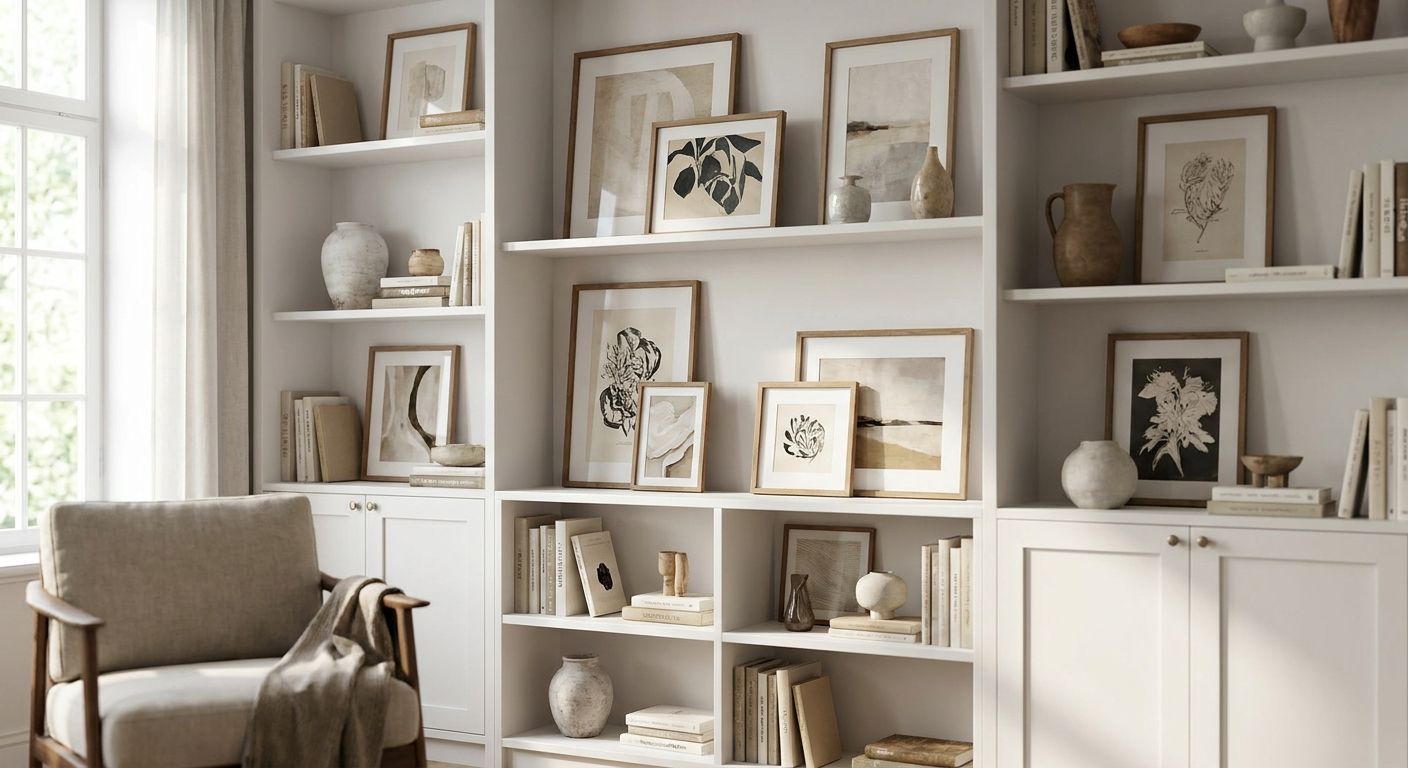
Buyers need to picture their own family in the space, and a wall covered in someone else's kids, pets, or wedding photos gets in the way of that. Botanical prints, abstract shapes, and simple still life work because nobody reads them as belonging to a specific family.
A palette that matches the walls, not fights them
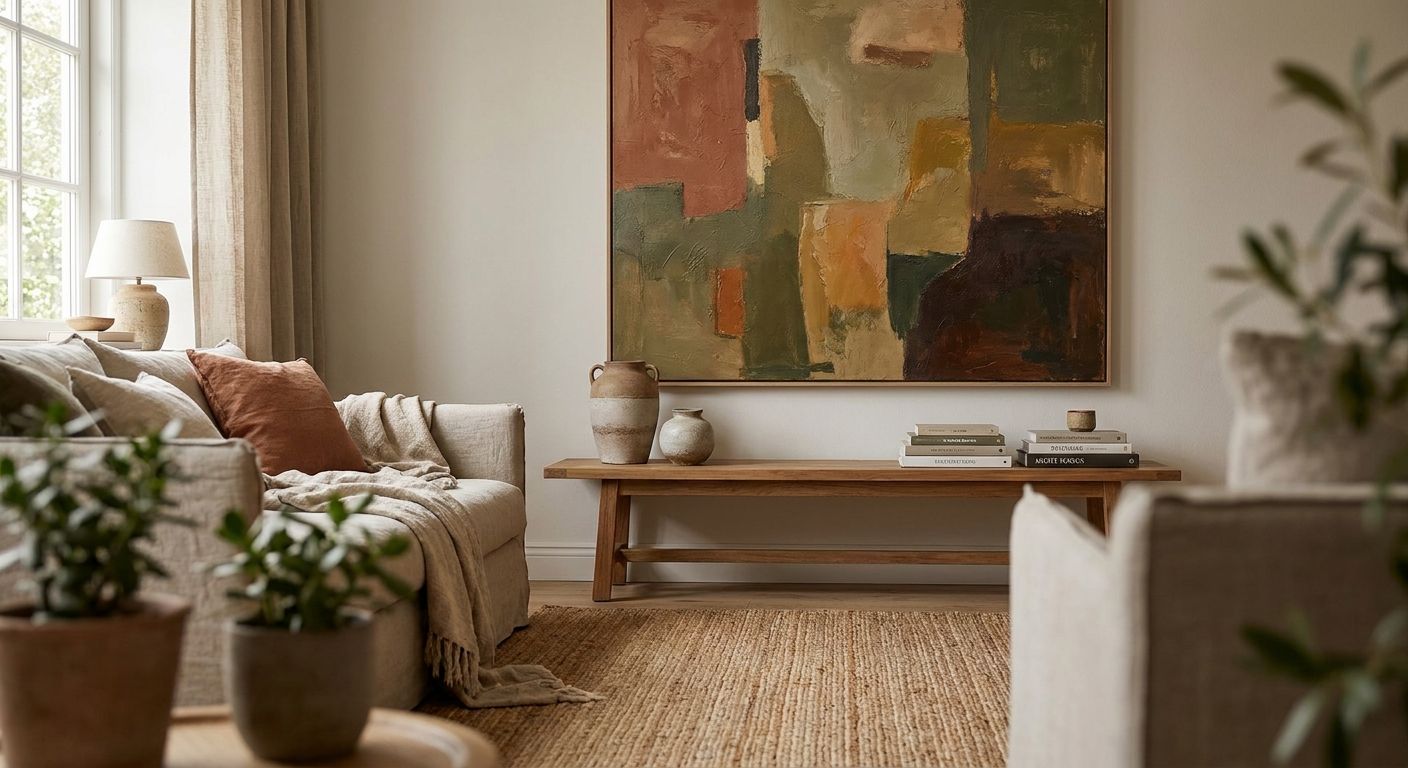
Most staged homes go neutral on the walls themselves — greige, warm white, soft taupe — so the art needs to sit inside that palette rather than clash against it. Matching the print's tone to the wall color is the single fastest way to make a room photograph as cohesive; the wall art color palette matching guide walks through how to pull that off room by room.
Scale that fits the room, not overwhelms it
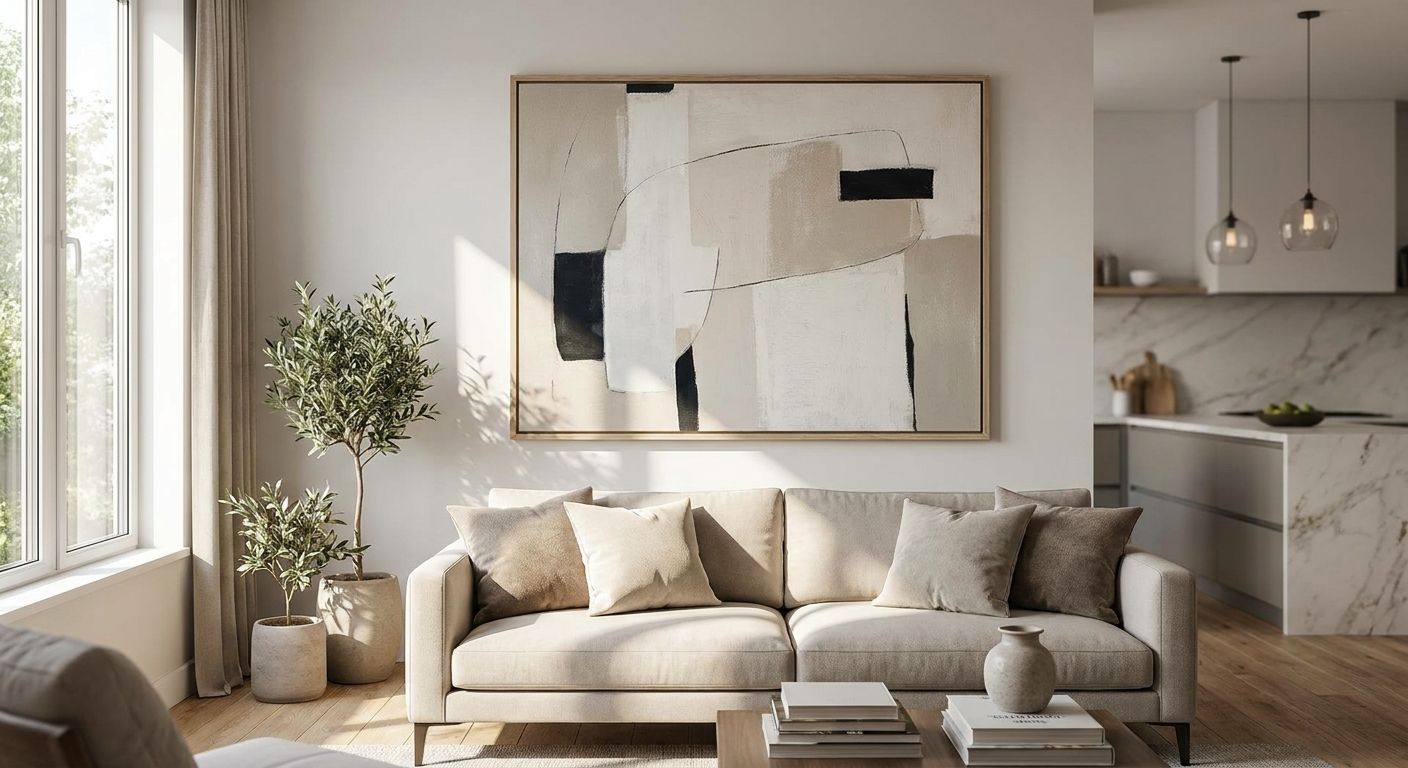
A piece too small looks like an afterthought above a sofa; one too large can make a modest living room feel cramped in listing photos. Size the art to the wall and the furniture beneath it, not to what looked good in a showroom.
Framing that survives repeated hanging and removal
Stagers move the same inventory between properties constantly, so the art needs to go up and come down without leaving marks that a seller has to patch before closing. That's a real concern when you're staging multiple listings a year and can't afford wall damage on every one.
Cost that scales across a whole house
A single statement piece for your own living room is one purchase. Staging a three- or four-bedroom house means buying for the entryway, living room, dining room, and at least one bedroom, so cost per piece across six to eight walls adds up fast — budget accordingly rather than picking one expensive anchor piece and leaving the rest of the house bare.
Style that reads current, not dated
2026 buyers respond to clean, uncluttered wall art the same way they respond to a decluttered kitchen counter — it signals the house is cared for. Trend-chasing prints that will look dated by 2028 aren't worth the spend for a staging job that lasts a few weeks.
Top Picks For Staging A Home
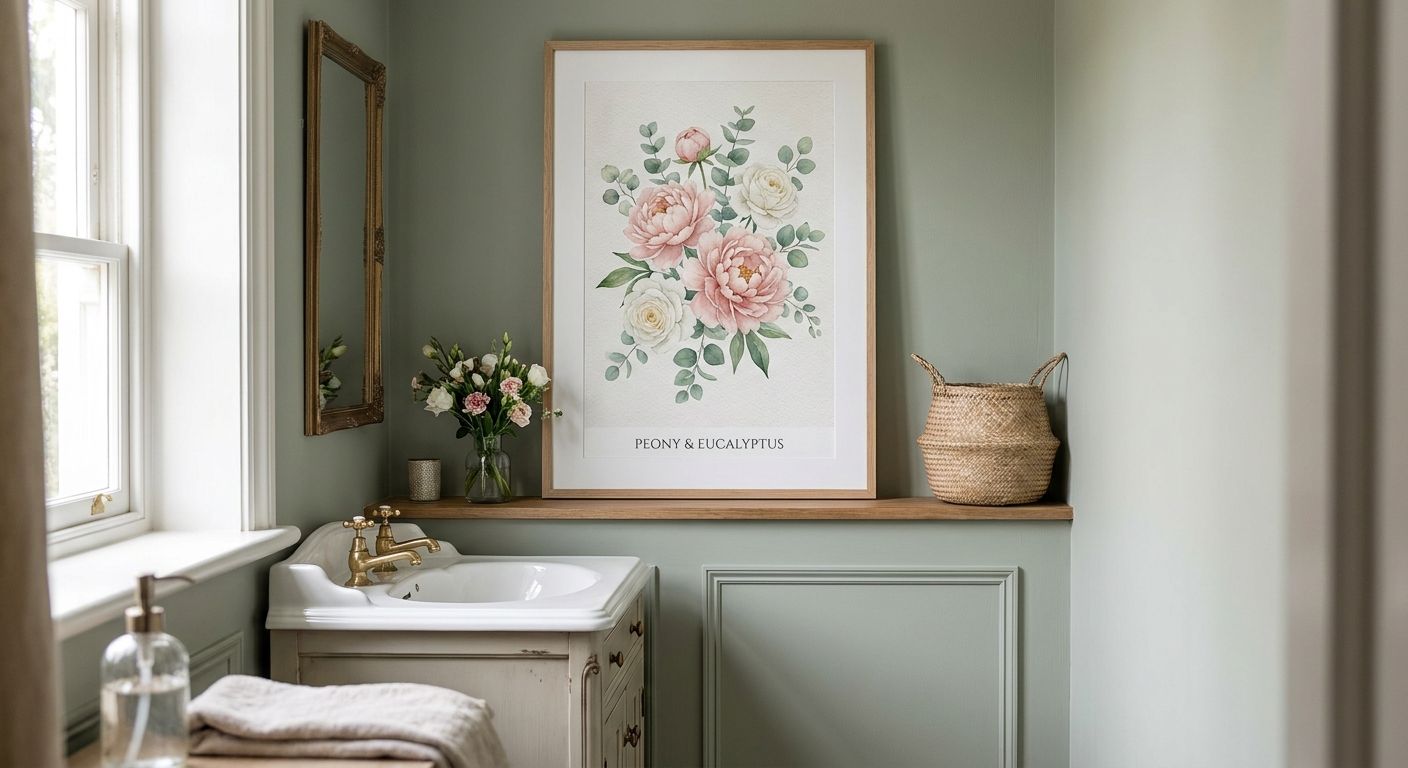
Tree Banksia — the safe pick. A botanical print with no faces, no text, and a palette that reads warm-neutral in almost any room. At $179.99 it's the piece to buy first if you're only staging one accent wall. Buy.
Flowervase, Style D — the quiet still life. This one leans into soft, muted tones that sit well in a dining room or kitchen nook without pulling focus from the staged table setting. Priced at $179.99, it's built for rooms where the furniture should be the star. Buy.
Cozy Tabletop Pomegranates — the warmth without the personality. A still life with just enough color to keep a neutral room from feeling flat, without introducing anything a buyer could read as "not for me." At $179.99 it works well paired with the two picks above for a multi-room staging job. Consider.


What To Avoid When Staging With Wall Art
- Family photos and portraits. They look great in a home you're keeping, but in a staged home they remind the buyer whose house this is, not theirs.
- Pet portraits and custom pieces. Same problem as above — personal, specific, and hard for a stranger to picture in their own life.
- Loud, saturated statement art in small rooms. A bold abstract can dominate listing photos of a modest bedroom and make the room read smaller than it is.
How The Picks Compare
| Pick | Subject | Palette | Price | Best Room | Verdict |
|---|---|---|---|---|---|
| Tree Banksia | Botanical | Warm neutral | $179.99 | Living room, entryway | Buy |
| Flowervase, Style D | Still life | Muted, soft | $179.99 | Dining room, kitchen | Buy |
| Cozy Tabletop Pomegranates | Still life | Warm accent | $179.99 | Kitchen, breakfast nook | Consider |
FAQ
What's the best wall art for staging a home in 2026?
Neutral botanical and still-life canvas prints work best because they read as move-in ready without pulling focus toward a specific family or taste. Pieces like Tree Banksia or Flowervase, Style D fit that brief at $179.99 each.
Should I use personal photos when staging a house?
No — personal photos, pet portraits, and family portraits should come down before showings. Buyers need to picture themselves living there, and personal art makes that harder.
How much wall art does a staged home need?
Most staged homes need a piece for the entryway, living room, dining room, and at least one bedroom — realistically six to eight walls for a typical three- or four-bedroom listing.
What size wall art works best for staging?
Size the piece to the wall and the furniture beneath it rather than picking one large statement print for every room. A wall that's too bare or too crowded photographs poorly either way.
Can I reuse the same wall art across multiple listings?
Yes, and most professional stagers do exactly that. Choosing damage-free hanging methods keeps the art in resellable condition between properties.
Does wall art actually affect how a home sells?
Wall art shapes how a room photographs and how a buyer feels walking through it, which matters for both online listing views and in-person showings in 2026's competitive market.
What colors work best for staging wall art?
Warm neutrals, muted tones, and soft greens or terracottas tend to match the greige and warm-white walls most staged homes use. Avoid anything that clashes with the wall color.
Is framed art or canvas better for staging?
Canvas prints are lighter, easier to hang and remove without wall damage, and typically cost less per piece than framed art — all useful when you're staging several rooms or several properties.
One Last Thing
The entryway wall is the one piece of art that will get photographed by every single buyer who walks through the door, whether they remember the rest of the house or not. If your staging budget only stretches to one really good print in 2026, put it there — not over the sofa.