Craft brewery and taproom wall art has one job beyond decoration: it turns a room full of steel tanks and folding chairs into a place people choose to linger, order a second flight, and post a photo of. The catch is that a taproom wall isn't a living room wall — it takes humidity off the dish pit, grease from the kitchen pass, and the occasional elbow from a crowded Friday night, so the art has to be chosen for durability first and style second.
- Wall art for breweries and taprooms needs materials that handle humidity, grease, and crowd contact, not delicate glass-framed pieces near the taps.
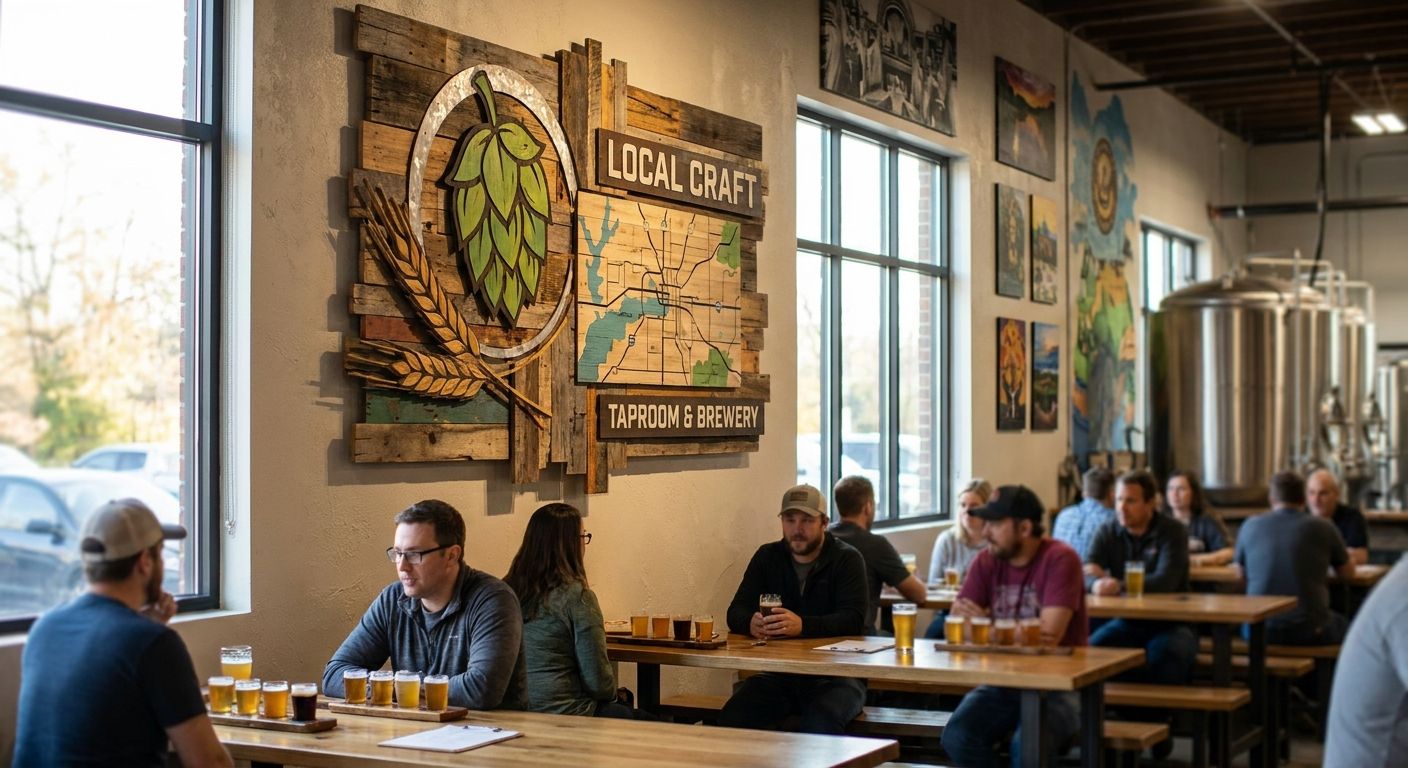
- One oversized canvas behind the bar reads as a feature wall faster than a dozen small frames scattered across the room.
- Gioia Wall Art's gallery-wrapped canvas prints skip glass entirely, a practical fit for exposed-brick or reclaimed-wood taproom walls.
- Rotating two or three pieces around seasonal releases keeps regulars checking the walls as often as the tap list.
Why wall art matters for craft breweries and taprooms
A taproom sells beer, but it also sells the twenty minutes someone spends waiting for their flight and the forty-five minutes after that when they decide to stay for a second round. Bare drywall and a chalkboard menu don't hold that attention; a wall that looks intentional does. Taprooms compete with wine bars and tasting rooms for the same after-work crowd, and both categories lean on the same trick — a strong visual anchor near the bar that gives customers something to look at, and photograph, while they wait.
The difference between a brewery and a typical restaurant is durability math. A dining room gets wiped down after service; a taproom gets condensation rings, spilled flights, and hands reaching past the art to grab a jacket off a hook. Wall art for breweries and taprooms has to survive that traffic in 2026 the same way it did in 2020 — the fix isn't a fancier piece, it's the right material in the right spot.
Build the wall plan before you buy anything
Audit your taproom's existing visual identity
Start with what's already on the walls and in the branding before adding anything new. Most taprooms already have a visual language — the can label, the tap handle carvings, the mural someone's cousin painted in year one — and new wall art should extend that story, not compete with it.
- Pull your can and growler label colors and note which ones repeat
- List any local landmarks, hop varieties, or founding-story elements already in your branding
- Check your merch line (t-shirts, koozies, hats) for recurring graphics or phrases
- Note whether your space leans industrial-chic, rustic-farmhouse, or modern-minimal
- Ask staff which corners guests already photograph most
Measure every wall zone before you shop
A taproom rarely has one wall — it has three or four zones with different traffic and lighting, and each needs its own plan. Skipping this step is the fastest way to end up with a piece that's too small for the space or blocked by a vent.
- Measure the feature wall behind or facing the bar first
- Measure booth and communal-table walls separately from the bar wall
- Note ceiling height near garage doors or roll-up windows, which changes scale
- Mark any obstructions: TVs, vents, electrical panels, dartboards
- Measure the corridor leading to restrooms — often the most-photographed spot in the building
Pick materials built for a taproom's conditions
Glass-framed prints look sharp in a showroom and terrible six feet from a tap wall covered in condensation. Gallery-wrapped canvas skips the glass problem entirely and takes wall bumps without shattering. This is where a faster path helps: browsing a curated canvas catalog built for durability saves the trial-and-error of testing frame types against your own taproom's humidity.
- Choose gallery-wrapped canvas over glass-framed art within 10 feet of the tap wall
- Use matte or low-sheen finishes to cut glare from string lights and Edison bulbs
- Reserve framed fine art for lower-traffic corners like private event rooms
- Avoid uncoated poster paper anywhere near steam from the kitchen or dish pit
- Check that any framed pieces near restrooms use acrylic glazing, not glass
Build one feature wall, not ten scattered frames
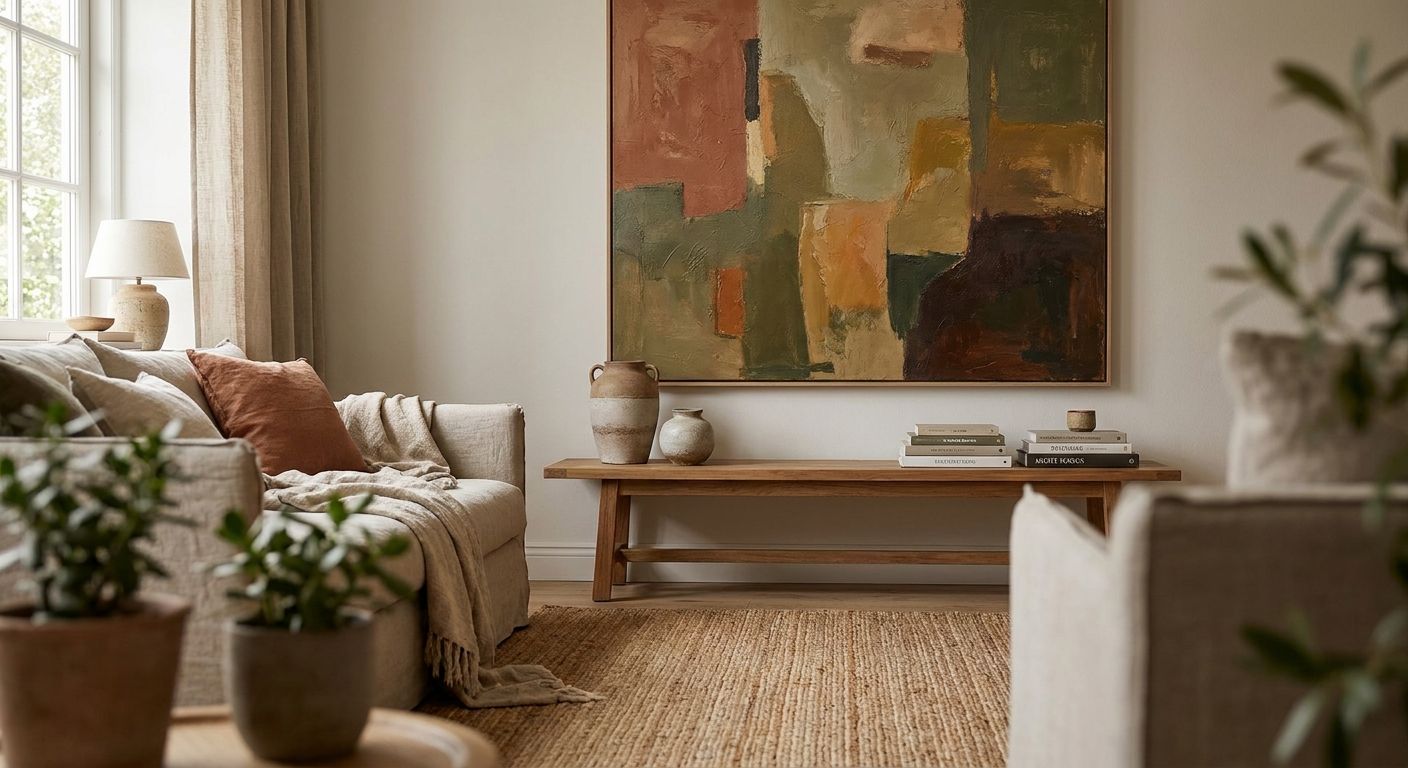
A single large canvas behind the bar or on the wall facing the entrance does more for a taproom's identity than a dozen small frames spread thin. This mirrors how restaurant and cafe interiors use one statement piece to anchor a dining room instead of decorating every inch.
- Pick one wall visible from the entrance or the bar and commit the largest piece there
- Size the canvas to cover roughly two-thirds of the available wall width, not the full wall
- Keep secondary walls simpler — a diptych or small grouping, not competing statement pieces
- Save framed collections or gallery-wall groupings for hallways and waiting nooks
Hang for foot traffic and photo moments, not just wall space
Standard gallery-hanging guidance puts the center of a piece around 57 to 60 inches from the floor, a rule built for seated living-room sightlines. A taproom full of bar-height stools and standing customers needs that number pushed up several inches so the art doesn't sit at elbow height. Hanging canvas art without damaging walls matters more here than in a house, since most taproom walls are exposed brick, concrete block, or reclaimed wood — none of which take a standard picture hook.
- Raise the hanging center to roughly 64-66 inches for spaces with bar-height stools
- Use masonry anchors on brick or concrete, not adhesive strips rated for drywall
- Leave 6-8 inches of clearance around any piece near a walkway or tap handle
- Test sightlines from the bar itself, not just from the entrance
- Add a small identifying label near local-artist pieces — it turns a wall into a talking point
Rotate art to match seasonal releases and local artists
A wall that never changes stops getting looked at after the first few visits. Rotating two or three pieces around a seasonal release or a local-artist feature gives regulars a reason to notice the walls again.
- Swap one feature piece per season rather than the whole wall
- Partner with a local artist or photographer for limited rotations tied to a release
- Keep a rotation calendar so changes align with release parties, not random weekends
- Photograph each rotation for social posts — the wall becomes marketing, not just decor


Comparing wall art options for a taproom
| Option | Best for | Key limitation |
|---|---|---|
| Gallery-wrapped canvas | Feature wall behind the bar or tap wall | Corners can chip if hung directly in a high-traffic path |
| Framed fine art prints | Private event rooms or low-traffic waiting areas | Glass glare under string lights and spot bulbs |
| Unframed poster prints | Rotating seasonal or event promos | Tears and fades faster under regular handling |
| Metal or acrylic prints | High-humidity spots near restrooms or covered patios | Reflective surface can glare under LED lighting |
Gallery-wrapped canvas wins for the main feature wall in 2026 — it skips glass, takes wall bumps, and holds up against the humidity swings a working taproom throws at it daily.
“If a bartender has to duck under a frame to pull a tap handle, the piece is hung wrong, not the bar.”
Common mistakes taprooms make with wall art
- Hanging at living-room height. The 57-60 inch gallery rule assumes seated sightlines; bar stools push guest eye level higher, so art ends up looking low and off-center.
- Choosing glass near the taps. Condensation and spilled flights fog and streak glass fast — canvas or acrylic survives the same spot without a second thought.
- Repeating the logo on every wall. One brand mark on merch and the entrance is plenty; four walls of the same logo reads as filler, not decor.
- Skipping masonry anchors. Adhesive strips rated for drywall fail on brick and concrete block, and a heavy canvas coming loose on a busy night is a liability, not just an inconvenience.
- Ignoring the restroom corridor. It's often the most-passed wall in the building and the easiest one to leave blank.
FAQ
What's the best wall art for a taproom feature wall?
A single oversized gallery-wrapped canvas placed behind or facing the bar works best for a taproom feature wall in 2026. It reads as intentional from the entrance and skips the glass-glare problem framed pieces run into under string lighting.
Is canvas or framed art better for a brewery?
Canvas is better for anywhere near the taps, kitchen, or restrooms because it has no glass to fog or crack. Framed fine art is fine in lower-traffic spots like private event rooms.
How high should wall art hang above bar-height seating?
Push the center of the piece to roughly 64-66 inches from the floor in areas with bar-height stools, several inches above the standard 57-60 inch living-room rule. That keeps the art above elbow and shoulder height for standing and seated guests alike.
Can wall art survive humidity near a taproom's kitchen or dish pit?
Gallery-wrapped canvas and acrylic or metal prints hold up in humid zones better than framed glass or uncoated poster paper. Keep anything with exposed paper or cardboard backing well away from steam.
Should taproom wall art match the brewery's logo colors?
It should echo the brand's existing palette without repeating the logo on every wall. Pulling two or three colors from your can labels ties the space together without turning it into a billboard.
How often should a taproom rotate its wall art?
Swapping one feature piece per season, tied to a new release or local-artist feature, keeps regulars noticing the walls without the cost of redoing the whole room. A full-wall change once or twice a year is enough for most taprooms.
Is original art or a canvas print better for a brewery's entrance wall?
A large canvas print is the practical choice for most taprooms because it's easier to source at a large scale and swap out later. An original painting works if the space has a lower-traffic entrance where a one-off piece won't take daily wear.
One last thing
The 57-60 inch "eye level" hanging rule that shows up in every home decor guide was built for someone sitting on a living-room sofa, not standing at a bar rail — and applying it in a taproom is the single most common reason a feature wall feels off without anyone knowing why. Push the center height up, size the canvas to the wall's real traffic zone, and pick a material that shrugs off a spilled flight, and the wall art for your breweries and taprooms project will outlast the trend it was inspired by.