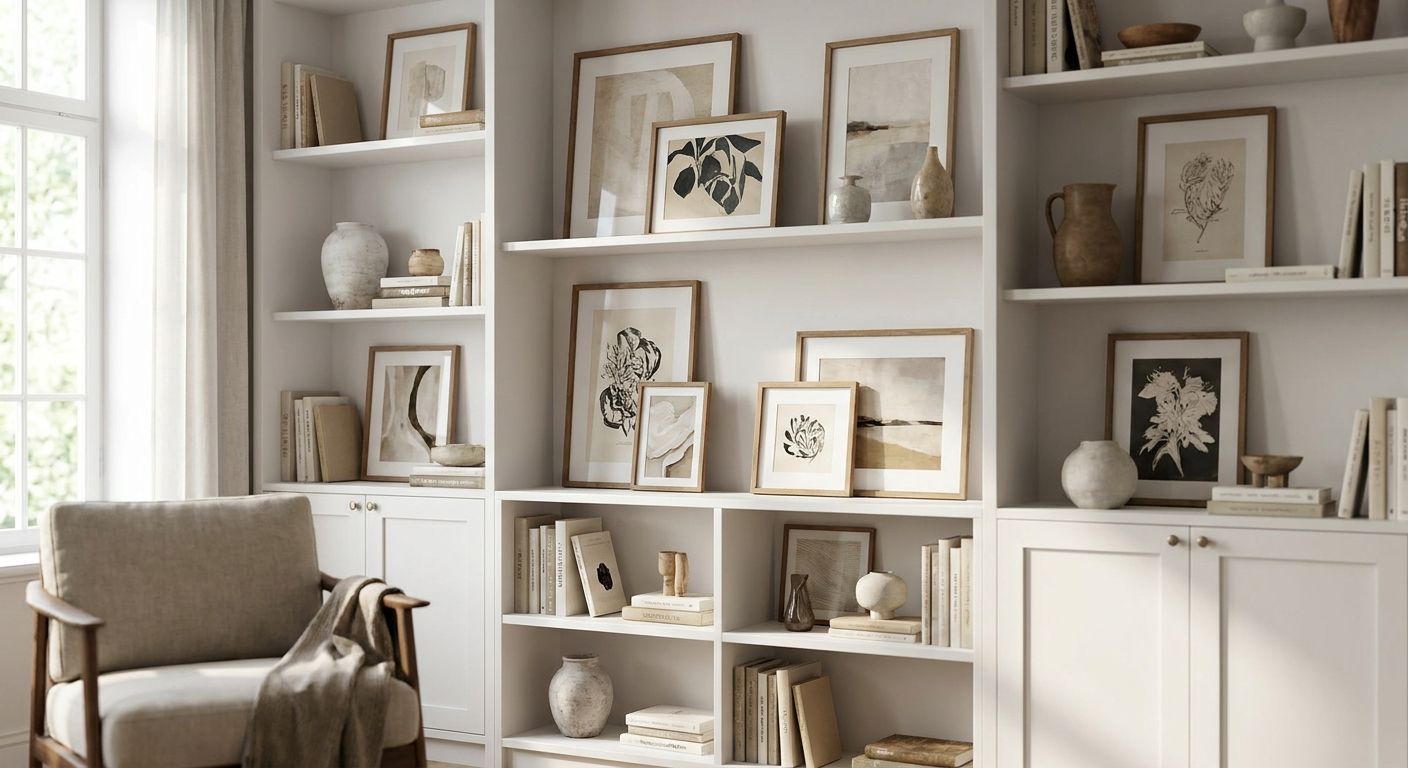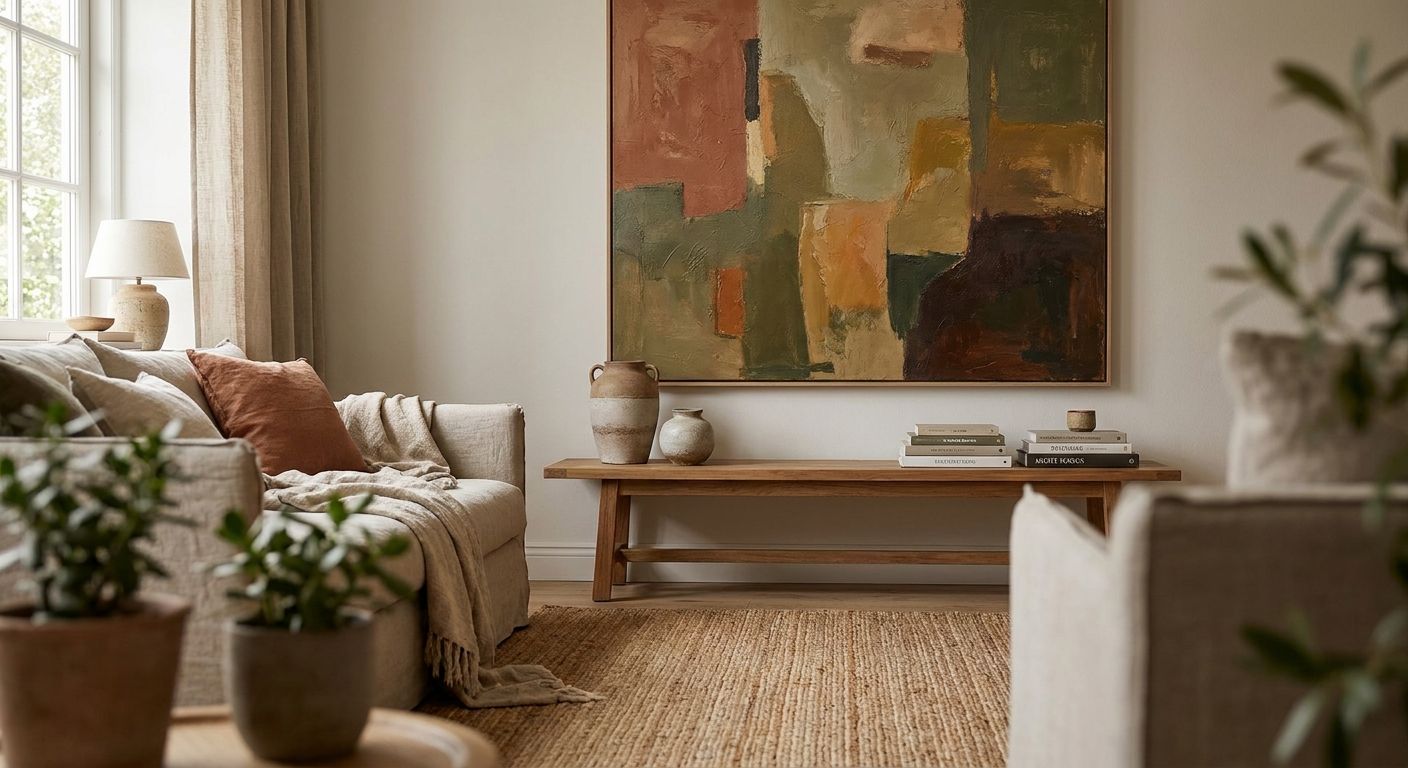
Shared desks, phone booths, and meeting pods each need art that reads well from ten feet away and never picks a fight with anyone's monitor setup. Here's how to choose wall art for co-working spaces that holds up to foot traffic, video calls, and a membership base with a dozen different tastes in 2026.
- Large-format abstract and landscape canvases handle high-traffic co-working walls better than personal photography or family portraits.
- Video-call backdrops need calm, low-contrast art placed behind seating, not directly behind the camera lens.
- Skip glass-framed prints near phone booths and hallways; canvas survives bumps that framed glass does not.
- Multi-panel sets cost less per square foot than single oversized canvases when furnishing several rooms at once.
Why This Matters
A co-working space is not one person's office. It's shared square footage that has to appeal to a graphic designer, a bootstrapped founder, and a remote accountant all on the same lease.
That changes the wall art math. In a private home office, you hang what you love. In a corporate office lobby or a co-working common area, you're furnishing for turnover — members change monthly, but the walls have to keep working for years.
Budget compounds the problem. Furnishing six meeting rooms and forty desks means the per-piece cost matters as much as the look, and 2026 co-working operators are watching square-footage spend closer than they did pre-pandemic.
Who This Is For
This guide is for co-working operators, community managers, and boutique office landlords furnishing shared desks, meeting rooms, and phone booths — not homeowners decorating a single private office. If you're buying one piece for one desk, a personal favorite works fine. If you're outfitting a floor that a hundred different members will sit under, the calculus changes toward broad appeal, durability, and fast reordering when a piece gets damaged or a room gets reconfigured.
What to Look for in Wall Art for Co-Working Spaces
Broad Appeal Over Personal Taste
A piece that thrills you might alienate half your membership base. Abstract compositions, landscapes, and botanical prints test better across strangers than family photos, pop culture references, or anything overtly political — they're the safest bet for walls that hundreds of different eyes will pass daily.
Durability for High-Traffic Walls
Hallways, phone booths, and shared kitchens take bumps that a private study never sees. Canvas prints shrug off a rolling chair or a dropped laptop bag far better than framed glass, which is why canvas dominates co-working inventories over framed pieces in high-traffic zones.
Video-Call-Ready Compositions
Members sit on calls all day, and whatever hangs behind them becomes part of every client meeting. Low-contrast, evenly toned art reads cleanly on camera; busy patterns or high-glare finishes create distracting backgrounds and washed-out video. A dedicated wall art for a home office video call background approach works just as well for co-working phone booths and huddle rooms.
Scalable Sizing Across Multiple Rooms
One 40-by-60-inch canvas that works in your flagship lounge won't automatically translate to a six-foot conference room wall or a narrow phone booth. Plan sizing per room type rather than buying one size and repeating it everywhere — a mismatch between wall and canvas is the fastest way to make a space look like an afterthought.
Neutral Palettes That Flex With Branding
Co-working brands refresh logos and accent colors more often than a typical office. Art anchored in neutral or earth-tone palettes survives a rebrand; art built around a specific brand color scheme gets dated the moment marketing changes the palette.
Low-Maintenance Hanging Hardware
Facilities teams reconfigure floor plans constantly as membership shifts. Pieces that hang and rehang without wall damage save real labor cost over a multi-location portfolio — worth understanding before your first bulk order, and a fast read on how to hang canvas art without damaging walls pays for itself the first time you relocate a meeting room.
Top Picks for Co-Working Wall Art
The Boardroom Anchor — the safe pick. A large-format abstract or landscape canvas, sized 40 inches or wider, sets the tone in a shared lobby or main lounge without competing with signage or branding. It reads as intentional from across the room, which is exactly what a first-impression wall needs. Best fit: corporate office lobbies and main entry walls. Verdict: Buy.
The Video-Call Backdrop — the practical pick. Placed behind seating in phone booths and huddle rooms, a muted, evenly lit piece keeps every video call looking polished instead of cluttered. This is the one pick that pays off daily rather than just on walkthroughs. Best fit: single-occupancy booths and one-on-one meeting rooms. Verdict: Buy.
The Client-Facing Statement — the wildcard. A bolder framed piece near a reception desk or a partner-facing conference room signals a more polished, premium tier of membership. It costs more attention to place correctly, and it's worth studying how law firm and financial office decor handles this exact tension between personality and professionalism. Best fit: premium suites and client-facing conference rooms. Verdict: Consider.
The Budget Multi-Panel Set — the volume pick. Three-panel or five-panel canvas sets cover more linear wall footage per dollar than a single oversized piece, which matters when you're furnishing a dozen identical desk pods on the same floor. The tradeoff is less individual impact per panel. Best fit: repeat desk-pod zones and open-plan bullpens. Verdict: Consider.


What to Avoid in Co-Working Wall Art
- Overly personal or nostalgic pieces. Family photography, inside jokes, or anything tied to one founder's taste reads fine in a private office and out of place the moment a hundred strangers share the wall.
- Glass-framed prints in traffic zones. A framed piece near a hallway or phone booth door is one rolling chair away from a repair bill; canvas takes the same bump and keeps hanging straight.
- Undersized single prints on open-plan walls. A 16-by-20-inch print looks intentional above a single desk and looks lost on a twenty-foot open floor plan wall — scale the piece to the room, not the other way around.
Verdict at a Glance
| Pick | Best Room | Priority Criteria Met | Verdict |
|---|---|---|---|
| The Boardroom Anchor | Main lobby, lounge | Broad appeal, scale | Buy |
| The Video-Call Backdrop | Phone booths, huddle rooms | Video-call ready | Buy |
| The Client-Facing Statement | Premium suites, conference rooms | Brand fit, impact | Consider |
| The Budget Multi-Panel Set | Desk pods, bullpens | Cost per square foot | Consider |
FAQ
What's the best wall art for co-working spaces?
Large-format abstract or landscape canvas prints work best for co-working spaces in 2026 because they read as intentional across shared rooms without alienating any one member's taste. Prioritize neutral palettes and canvas construction over framed glass in high-traffic zones.
Is canvas or framed art better for a co-working lobby?
Canvas holds up better than framed glass in a co-working lobby because it survives bumps from rolling chairs, bags, and daily foot traffic. Reserve framed pieces for lower-traffic premium suites where the extra polish matters more than durability.
How much wall art does a co-working floor need?
Plan wall art per room type rather than a flat count per floor: one anchor piece for the main lounge, a calm backdrop piece per phone booth or huddle room, and a multi-panel set for repeated desk-pod zones. Sizing to the specific wall matters more than hitting a total count.
What size wall art works for a co-working conference room?
A conference room typically needs one piece sized to cover roughly a third to half of the visible wall behind the head of the table, often 40 inches or wider on a standard-length wall. Undersized art in a conference room reads as an afterthought on camera and in person.
Does wall art help with video calls in shared office spaces?
Yes, low-contrast, evenly toned wall art placed behind a seated caller improves how professional a video call looks compared to a bare wall or a busy pattern. It matters most in phone booths and one-on-one meeting rooms where members take back-to-back calls.
Should co-working wall art match the brand colors?
Wall art should complement rather than exactly match brand colors, since co-working brands tend to refresh palettes more often than a typical office. Neutral or earth-tone art survives a rebrand; art built around one specific brand color does not.
What wall art should co-working spaces avoid?
Avoid overly personal photography, framed glass in high-traffic hallways, and undersized single prints on large open-plan walls. Each of these looks intentional in a private office and out of place across a shared floor with dozens of members.
One Last Thing
The piece that gets the most compliments in a co-working space is rarely the boldest one in the room — it's the calm abstract or landscape canvas positioned behind the seat where members take their calls, because that's the wall a hundred different clients see on video every week in 2026, even if none of them ever set foot in the building.