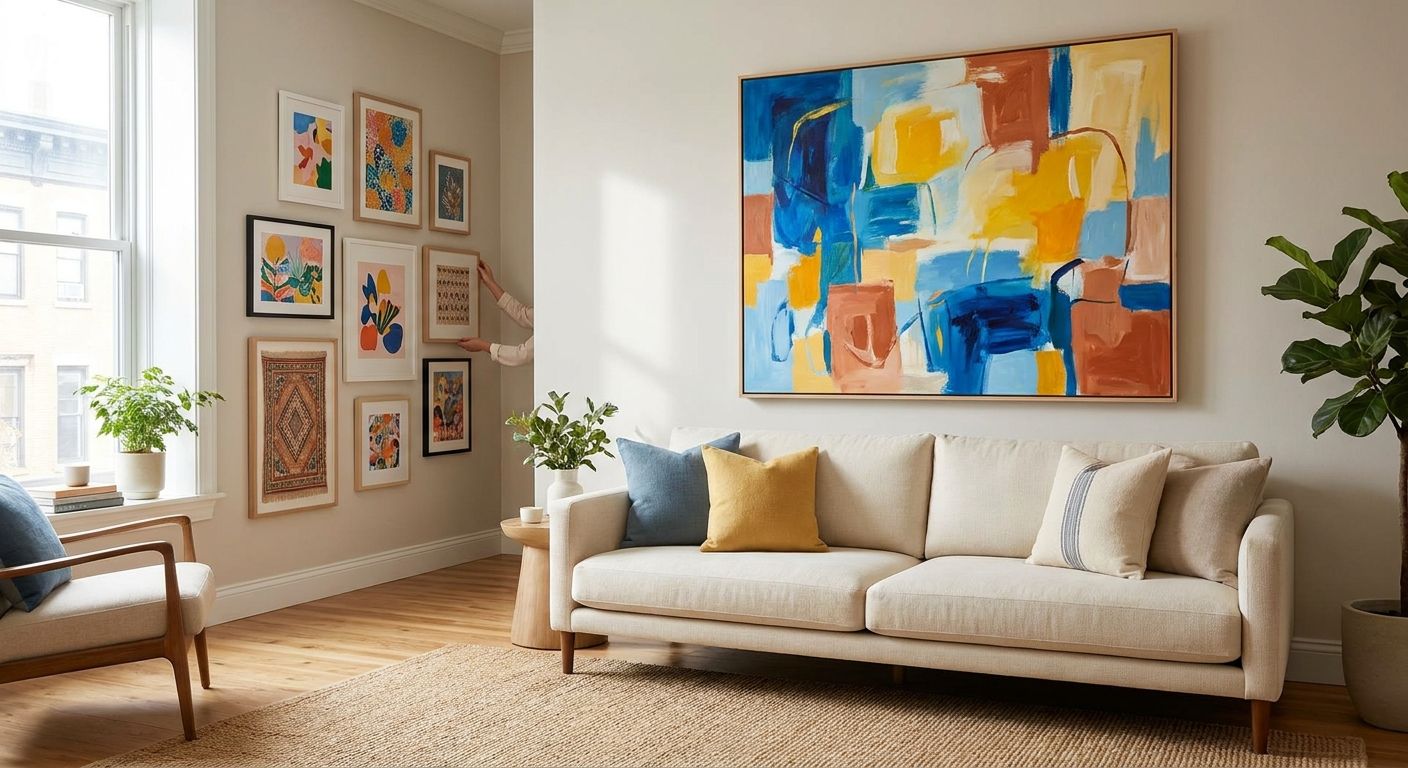
Renting means white walls, beige carpet, and a lease that says no paint — but nothing stops you from hanging color, and wall art is the fastest way to make a neutral rental feel like yours in 2026.
- Adding color with wall art in a rental starts with one anchor piece, not a full room overhaul — pick that first.
- Ready-to-hang canvas art from Gioia Wall Art skips frames, glass, and landlord-unfriendly hardware.
- Command strips and museum putty hold most canvas prints under 5 lbs without wall damage.
- Layering 2-3 color-linked pieces across a rental reads intentional; one loud print alone reads accidental.
Why this matters
A neutral rental isn't a design failure — it's a landlord's insurance policy. Every wall gets the same greige because it photographs well and offends no one moving out in eleven months.
But a wall with zero color reads temporary, not calm. The fix isn't paint you can't use or furniture you can't afford to replace when you move again. It's wall art you can take with you, in colors you actually chose, hung in a way your security deposit survives.
What you'll need
- 1-3 canvas prints or framed pieces in a color family you want to commit to
- Command strips or hooks rated for the piece's actual weight (check the label, don't guess)
- A tape measure and a pencil for eyeball marks
- A level, or a level app on your phone
- Painter's tape for a quick placement preview before you commit to a hole
Start your shortlist with ready-to-hang wall art for renters — pieces built to go up without frames, glass, or a trip to a hardware store you don't want to make twice.
The steps
1. Pick one anchor piece before anything else
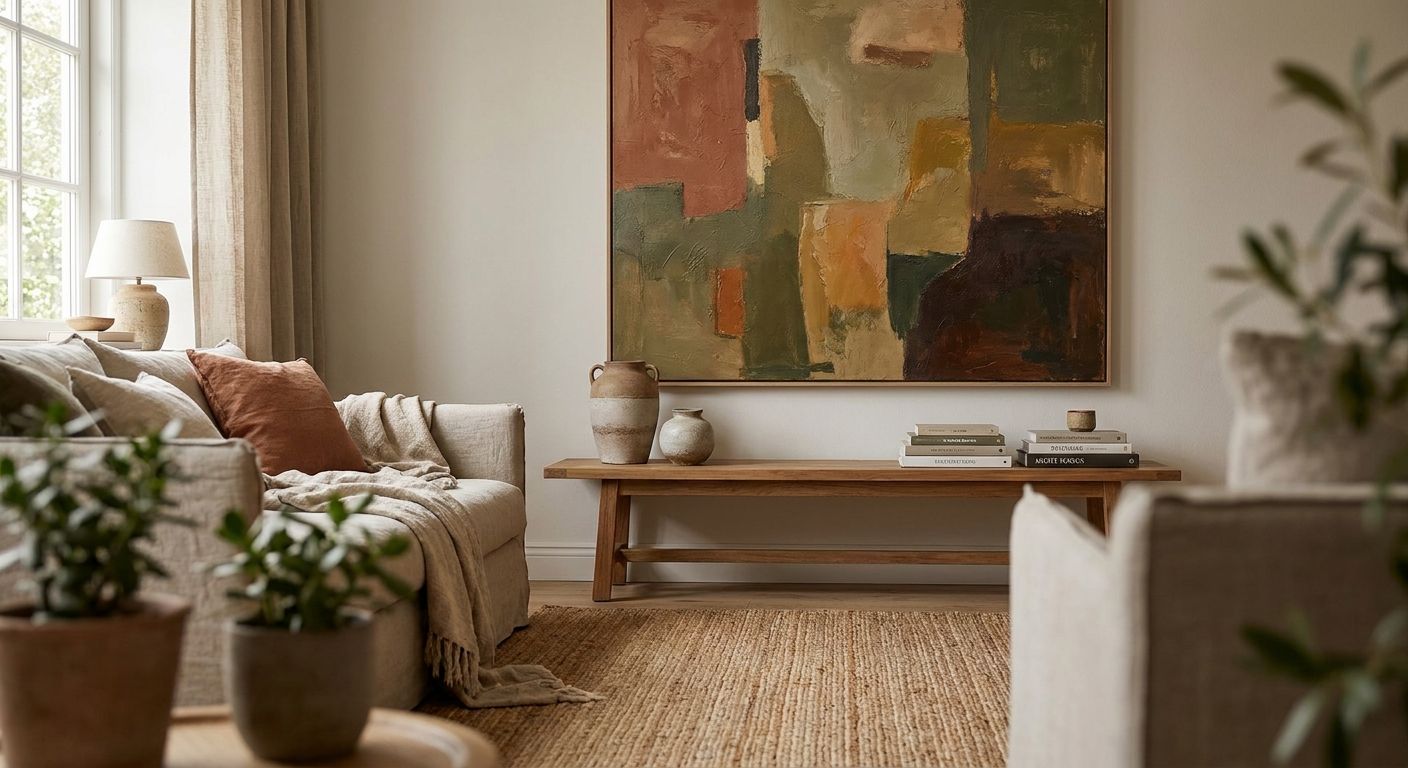
Don't buy five colorful prints at once. Pick a single canvas in the color you want to build around — a terracotta still life, a cobalt floral, a citrus-toned abstract — and let that piece decide your palette for the rest of the room.
This matters because renters who buy color piecemeal usually end up with a wall that looks like a clearance bin, not a room. One anchor piece in 2026 costs you one decision instead of five.
Common mistake: buying the loudest print in the store because it photographed well online, then realizing it clashes with everything else you own.
2. Test the color against your actual light
Hold the print (or a printout of the product photo) against the wall at the time of day you're actually in that room. North-facing rooms mute warm colors like coral and mustard; south-facing rooms wash out cool blues and greens.
A color that reads rich on your phone screen can go flat under a rental's stock overhead fixture. Five minutes of testing here saves you from hanging a piece you quietly stop liking by week three.
Common mistake: judging the color only from the product photo, taken in studio lighting that doesn't match your apartment.
3. Choose pieces that read as intentional, not accidental
A single bright canvas on an all-white wall can look like an afterthought. Two or three pieces that share a color note — even in different subjects — read like a decision you made on purpose.
This is the difference between "I hung a poster" and "I decorated." Look for pieces from the same artist or the same color family so they talk to each other without matching exactly.
Common mistake: hanging one colorful piece dead center on a large blank wall, leaving it looking stranded instead of anchored.
4. Hang without losing your deposit
Skip nails unless your lease explicitly allows small holes and you're prepared to patch them. For most canvas prints under roughly 5 lbs, Command strips or removable hooks rated for that weight hold fine and pull off clean when you move.
Read the specifics in how to hang canvas art without damaging walls before you commit to a spot — it covers weight limits and wall types that matter more than most renters expect.
Common mistake: using regular adhesive strips instead of ones rated for the piece's actual weight, then finding the canvas on the floor a week later.
5. Build your palette across two or three rooms, not just one
Once your anchor piece is up, extend the same color logic into an adjacent room — a hallway, a bedroom, even a bathroom. This is how a rental starts to feel decorated instead of decorated-in-one-corner.
Use how to match wall art to your room's color palette as your reference for keeping the color thread consistent without every room looking identical.
Common mistake: treating each room as a separate project with no color relationship, so the apartment feels like four different people live there.
6. Scale the piece to the actual wall, not the empty space you're picturing
A small print on a large blank rental wall disappears; an oversized print in a small bedroom overwhelms it. Measure the wall before you buy, not after the canvas arrives.
As a rough guide, wall art should cover roughly 60-75% of the width of the furniture it's hung above — a sofa, a bed frame, a console table. That ratio has held up in interior design guidance for decades and it still works in a rental in 2026.
Common mistake: ordering the smallest, cheapest size to save money, then hanging a postage-stamp print on an 8-foot wall.


7. Add a second layer once the first feels settled
Give your anchor piece a few weeks before adding more. Renters who buy everything at once often end up over-decorating a space they're still learning to live in.
When you do add a second piece, pick something that repeats a shade from the first — not an exact match, just a shared note. That's what makes a rented room look curated instead of thrown together.
Common mistake: waiting for "the perfect matching set" instead of building color gradually, which usually just delays decorating the space entirely.
Troubleshooting
The color feels too intense once it's up. Move the piece to a smaller wall, a hallway, or a spot with less direct light — intensity often reads differently in context than it did in the store aisle.
My lease bans nail holes entirely. Stick to weight-rated adhesive strips or hooks and confirm the wall texture first — smooth painted drywall holds adhesive far better than textured or popcorn ceiling-style walls.
The print looks washed out under my apartment's overhead lighting. Most rental fixtures run cool white LED, which flattens warm tones. A small clip lamp angled at the piece restores color depth without you touching the fixture.
Everything still feels neutral even with one colorful piece up. One print rarely carries a whole room — you likely need the second layer from Step 7, not a bigger version of the first piece.
Command strips won't hold on my textured wall. Test the weight rating against the actual piece, and consider a slightly lighter print or a smaller canvas size instead of forcing a heavier one to stick.
Tools and resources
- A tape measure and painter's tape for placement previews before committing to adhesive
- Command strips or hooks rated to the exact weight of your canvas, not a rough guess
- small apartment canvas prints sized for rentals where wall space is tight
- A level app or a physical level for straight hangs on the first try
- A soft cloth for wiping the wall before adhesive strips go up — dust cuts adhesion
If the loudest print you own still feels too big for the room, that's a sign to scale down the piece, not abandon color entirely.
What to do next
Once your anchor wall is working, extend the same color logic to a dedicated accent wall instead of spreading pieces thin across every room. Read wall art for accent walls for how to pick one wall to carry the color statement while the rest of the rental stays calm.
FAQ
How do I add color to a rental without painting the walls?
Wall art is the fastest way to add color without painting in 2026 — a single colorful canvas or framed print does the work a feature wall would, without the landlord conversation. Anchor one piece first, then build outward with pieces that share a color note.
Will Command strips hold a canvas print without damaging rental walls?
Command strips rated for the print's actual weight hold cleanly on smooth painted drywall and remove without marks when done correctly. Textured or popcorn walls hold less reliably, so check the rating against your piece before hanging.
What size wall art works best for adding color to a small rental room?
A print covering roughly 60-75% of the furniture width below it reads balanced in most rental-sized rooms. Oversized prints overwhelm small bedrooms; undersized ones disappear on large blank walls.
Should I buy one bold piece or several smaller colorful prints?
Start with one anchor piece in the color you want to commit to, then add a second piece that shares a color note a few weeks later. Buying several unrelated colorful prints at once usually looks scattered rather than decorated.
Is ready-to-hang canvas art better than framed art for renters?
Ready-to-hang canvas skips glass and heavier frame hardware, which makes it lighter to mount with adhesive strips instead of wall anchors. Framed art still works in a rental but usually needs a rated picture hook rather than adhesive alone.
How much does it cost to add color to a rental with wall art?
Cost depends entirely on the piece and size you choose, since wall art spans a wide price range by size and material. Starting with one anchor canvas keeps the initial cost lower than committing to a full multi-piece set.
Does colorful wall art make a small rental look busier?
One well-scaled colorful anchor piece makes a small rental look decorated, not busy — the clutter comes from too many unrelated pieces, not the color itself. Keep the palette to two or three shared tones across the room.
One last thing
The fastest color mistake renters make in 2026 isn't picking the wrong shade — it's buying the piece before measuring the wall it's going on. Measure first, choose the anchor piece second, and the rest of the room follows a lot faster than repainting ever would.