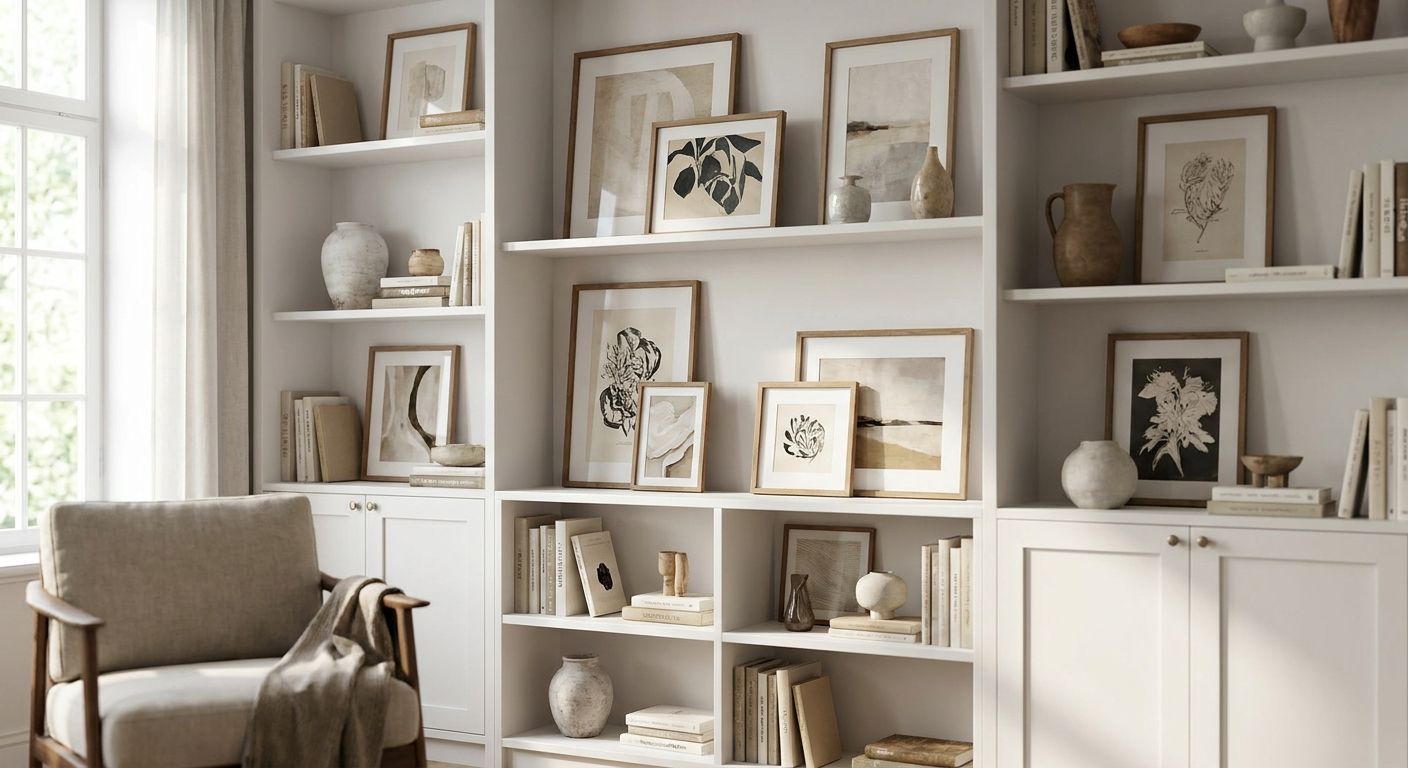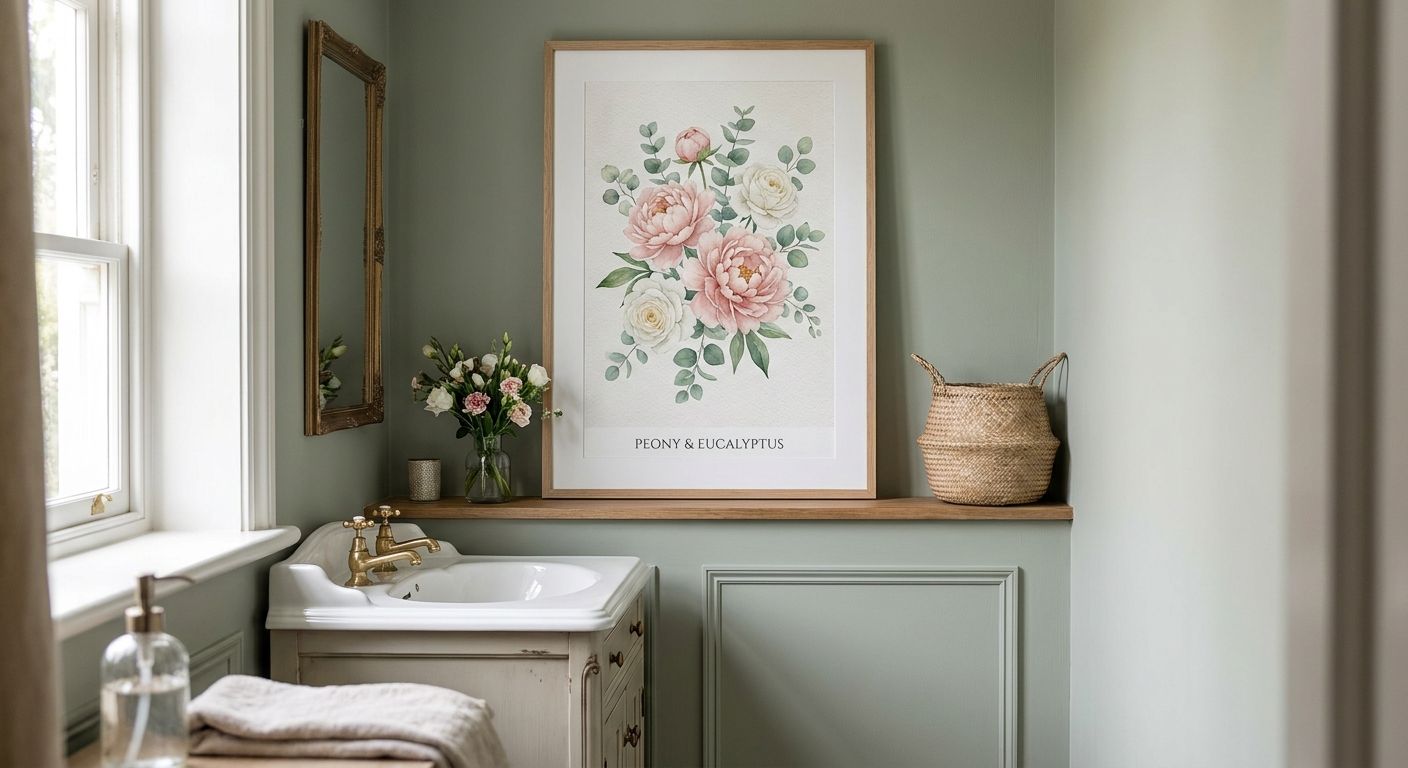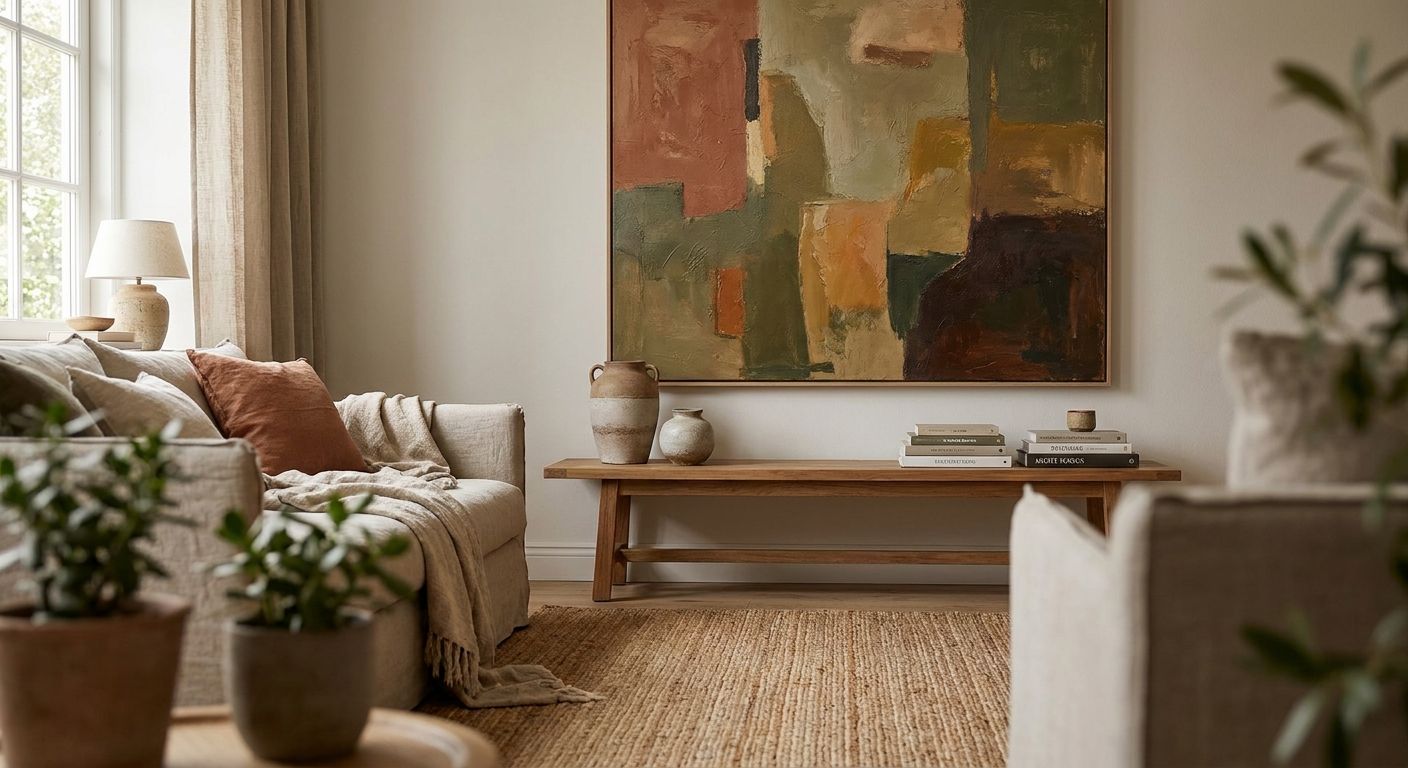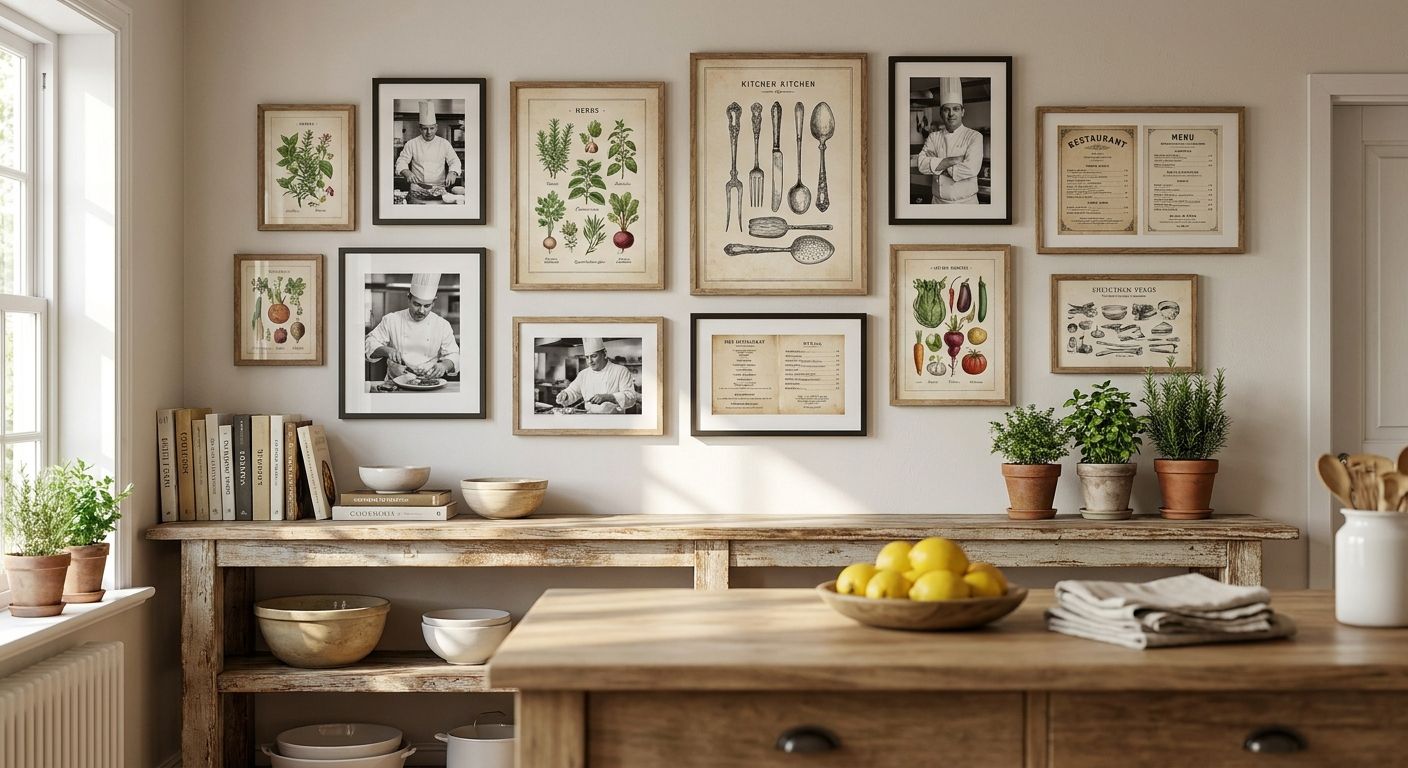
Food and culinary wall art brings the market table, the fruit bowl and the flour-dusted countertop onto your kitchen wall, and it works because it echoes what already happens in the room instead of fighting it. Kitchens face steam, grease and daily traffic that living rooms never see, so the same fruit-and-flower print that looks perfect in a dining room needs a different finish, size and placement here.
- Food and culinary wall art needs a protective finish near stoves — raw canvas absorbs grease and steam within a year.
- Farmhouse kitchens pair best with warm produce and flower market prints; sleek modern kitchens lean toward black-and-white food photography.
- Breakfast nooks call for 16x20 or smaller pieces, not oversized statement canvases that crowd a small table.
- A three-print culinary set spaced 2-3 inches apart reads as curated over open shelving, not cluttered.
- Original paintings and unframed posters both have a place in a kitchen, but only one survives a sink-adjacent wall long term.
Why food and culinary wall art matters for kitchens
A kitchen is the one room where wall art has to survive its environment, not just match it. Steam from a stockpot, splatter from a skillet and the daily bump of a chair pushed back from the breakfast table put more wear on a print in 2026 than a decade in a formal living room.
That's the real reason flower market prints show up so often in kitchen decor — they carry the same warmth as literal produce imagery without demanding you find a spot for something delicate. Food and culinary wall art earns its place in a kitchen when the finish matches the room's actual conditions, not just its color scheme.
Gioia Wall Art's culinary category spans framed prints, canvas, posters and original paintings, and each of those formats behaves differently once it's six feet from a stovetop. Picking the wrong one is the single biggest reason a print looks tired after a year instead of five.
Update your style match first
Culinary imagery reads completely differently depending on the kitchen style around it. A fruit-basket still life in a stainless-and-white modern kitchen looks like a mismatch; the same print in a modern farmhouse kitchen looks intentional.
- Farmhouse and cottage kitchens: warm fruit, bread, and market-stall imagery with visible brushwork
- Coastal and Hampton kitchens: seafood, citrus and pastel produce tones
- Modern and minimalist kitchens: black-and-white food photography or single-subject line art
- Mediterranean and French-inspired kitchens: olive branches, wine and pantry still lifes
- Japandi kitchens: one muted, single-subject print rather than a busy scene
Protect the print from heat and grease
The stove wall and the sink wall are the two worst spots for anything unframed. Steam and airborne grease settle on exposed canvas fibers faster than most people expect, and once grease is in the weave it doesn't come out.
- Keep any print within 3 feet of a gas range behind glass or acrylic, not raw canvas
- Choose satin or matte canvas coatings over high-gloss near cooking zones
- Reserve the sink-adjacent wall for framed prints, not posters
- Position statement pieces on the wall opposite the range, where steam exposure drops sharply
- Wipe glazed frames monthly with a dry microfiber cloth; skip glass cleaner directly on the frame edges
Size the piece to the wall, not the table
Kitchen walls are often broken up by cabinets, windows and appliances, leaving awkward strips rather than one clean expanse. Measure the actual open wall space before picking a print size — most kitchen mistakes come from going too big for a narrow run.
- Above a breakfast nook table: one 16x20 or 18x24 piece, or a two-print pair
- On an open wall beside a fridge: a single vertical piece 24x36 or larger
- Over open shelving: three smaller prints (8x10 to 11x14) spaced evenly
- In a narrow strip between cabinets and ceiling: a horizontal panoramic print
- Above a range hood (with proper heat clearance): a single small-to-medium framed piece only
Pull the palette from your counters and cabinets
Culinary prints carry a lot of color — citrus yellows, tomato reds, olive greens — and a kitchen already has plenty of color in its cabinetry, backsplash and countertop. Pick a print that shares at least one dominant tone with the room instead of introducing a competing palette.
- White or cream cabinets: almost any culinary palette works, lean toward the boldest option
- Navy or dark green cabinets: choose prints with cream, gold or citrus accents for contrast
- Butcher block or wood countertops: warm-toned produce and bread imagery reads naturally
- Stainless steel appliances: black-and-white or monochrome food photography keeps the look modern
- Patterned backsplash tile: pick a single-subject, low-detail print so the wall doesn't compete with the tile
Group prints into a gallery or set
A single culinary print can feel sparse on a big kitchen wall, but a matched set fills the space without overwhelming it. This is where most kitchens land in 2026 — three or four smaller prints instead of one oversized canvas.
- Space individual prints 2-3 inches apart for a tight, gallery-style grid
- Mix one photographic print with one illustrated piece for texture without clashing
- Keep frame finishes consistent (all black, all natural wood) even if the subjects vary
- Anchor the set to the widest piece of furniture below it, not the whole wall
- Leave the range hood and any vent clear of hanging pieces entirely
Hang it so it survives daily kitchen traffic
Kitchens see more foot traffic and more accidental bumps than almost any other room, which means the hanging hardware matters as much as the print itself. A cheap adhesive strip that holds fine in a bedroom often fails in a kitchen within months of temperature swings from the oven.
- Use D-rings and picture wire rated for the actual frame weight, not sawtooth hangers on anything over 11x14
- Anchor into a stud whenever the print sits above a table or counter that gets bumped
- Leave at least 4 inches of clearance from any cabinet edge to avoid door-swing damage
- Check level with a laser or bubble level, not by eye, since kitchen sightlines are unforgiving
- If renting, use removable strips rated for the print's weight and check the rating against the actual frame, not just the canvas
Comparing your options for kitchen culinary art
| Option | Best For | Key Limitation |
|---|---|---|
| Canvas print | Farmhouse and rustic kitchens, statement walls near open shelving | Absorbs grease and steam over time if hung too close to the stove |
| Framed print | Modern, coastal and Scandinavian kitchens, breakfast nooks | Glass can glare under strong overhead or under-cabinet lighting |
| Poster (unframed) | Rental kitchens, budget gallery walls | Curls in humidity and has the shortest lifespan of any format in a kitchen |
| Original painting | Statement dining walls, collectors who want a one-of-a-kind piece | Harder and more expensive to replace if damaged near a busy work zone |
Verdict: for most kitchens, a framed print in a satin or matte finish is the safest food and culinary wall art choice — it survives steam and grease better than raw canvas without the fragility of an unframed poster.
Common mistakes kitchens make with culinary wall art
- Hanging an unframed canvas directly above the range, where steam and grease shorten its life to a year or less
- Choosing an oversized statement piece for a small breakfast nook, which crowds the table instead of framing it
- Matching a print's palette exactly to the cabinets, leaving zero contrast and making the wall disappear
- Skipping glass or acrylic glazing on the sink-adjacent wall, the second-worst spot in the room for raw canvas
- Layering a busy food photograph above open shelving that's already full of colorful dishware, creating visual competition instead of a focal point
“If a print sits within three feet of a gas range, it needs glass between it and the room — no exceptions.”
FAQ
What is the best food and culinary wall art for a small kitchen?
A single 16x20 framed print or a two-piece set works best in a small kitchen — oversized canvases crowd narrow walls and breakfast nooks. Stick to one dominant subject rather than a busy multi-item scene.
Is canvas or framed art better for kitchens?
Framed prints hold up better in kitchens because glass or acrylic blocks grease and steam that raw canvas absorbs over time. Canvas still works on walls at least several feet from the stove and sink.
How close can wall art be to a stove?
Keep unframed canvas at least 3 feet from a gas range; anything closer needs glazing to survive steam and grease exposure. The wall directly opposite the range is the safest spot for a statement piece.
What size wall art works above a breakfast nook?
A single 16x20 or 18x24 print, or a matched pair, fits most breakfast nooks without overwhelming the table. Measure the open wall space above the table before sizing up.
Does food and culinary wall art work in modern kitchens?
Yes, black-and-white food photography or single-subject line art suits modern and minimalist kitchens far better than colorful market-stall scenes. Stick to one clean subject rather than a busy composition.
Can I hang posters in a kitchen?
Unframed posters are the least durable option in a kitchen because humidity causes curling faster than in any other room. They work fine on walls away from the stove and sink, especially in rentals.
How do I arrange a gallery of culinary prints?
Space three or four smaller prints 2-3 inches apart and keep frame finishes consistent even if the subjects vary. Anchor the grid to the widest piece of furniture beneath it, not the entire wall.
What kitchen wall art styles are popular in 2026?
Flower market and produce-still-life prints remain the most requested culinary styles in 2026, especially in farmhouse and coastal kitchens. Black-and-white food photography continues to lead in modern and minimalist spaces.
One last thing
The wall opposite your range, not the wall above it, is almost always the best spot for your boldest culinary piece in 2026 — it gets the visual attention of anyone standing at the stove without taking any of the steam or grease. If you're only adding one piece this year, put it there.