Home gyms live or die on motivation, and a blank cinder block wall or a stack of resistance bands staring back at you every rep does nothing for that. The right wall art for home gyms turns a garage corner or basement nook into a space you actually want to show up to in 2026.
- Extra-large canvas prints work best for home gym motivation because they read clearly from across a room mid-workout.
- Skip glass-framed pieces near equipment in 2026 — glare and breakage risk make them the wrong wall art for home gyms.
- Black-and-white photography wall art holds up in humid, poorly ventilated basements better than watercolor or paper prints.
- Line art wall art for minimalist homes gives a calm visual anchor without competing with mirrors or screens.
Why this matters
A home gym is a repetition machine — you see the same four walls hundreds of times a month. Generic decor or an empty wall doesn't do anything for you at rep eight of a set. Gioia Wall Art customers converting basements, garages, and spare rooms into workout spaces in 2026 consistently reach for pieces that are bold enough to register at a glance but durable enough to survive humidity, sweat, and the occasional dropped kettlebell nearby.
Who this is for
This guide is for anyone building a home gym in a basement, garage, spare bedroom, or converted den and wondering what actually belongs on the wall — not just what looks good in a showroom. If your space doubles as a basement family room on weekends and a lifting zone on weekday mornings, the wall art needs to work in both modes: motivating during a workout, not garish during movie night.
What to look for in wall art for home gyms
Moisture and humidity tolerance
Basements and garages run humid, especially in summer 2026 without dedicated dehumidifiers. Canvas prints with a protective coating hold up far better than framed paper prints, which can ripple or foxing-stain within a season in an uninsulated space.
Size that reads from across the room
You're not standing six inches from the wall admiring brushwork — you're seeing it from a treadmill or a bench 10 to 15 feet away. Small pieces (under 16x20) disappear at that distance; go bigger than you think you need.
Motivational, not busy, imagery
High-contrast, simple compositions register faster during a set than cluttered, detail-heavy scenes. Your eye needs to process the image in under a second, not study it.
Mounting that survives vibration
Dropped weights and rack-mounted equipment cause floor and wall vibration. Ready-to-hang canvas with solid stretcher bars stays put better than lightweight poster frames on standard hooks.
A color palette that energizes without overstimulating
Deep blacks, charcoals, and single accent tones tend to outperform busy multi-color prints in a workout setting — they read as intentional rather than decorative clutter.
Placement clearance from equipment
Anything within arm's reach of a barbell path, kettlebell swing radius, or resistance band anchor point is at risk. Keep wall art at least a few feet clear of active movement zones.
Top picks for home gym wall art
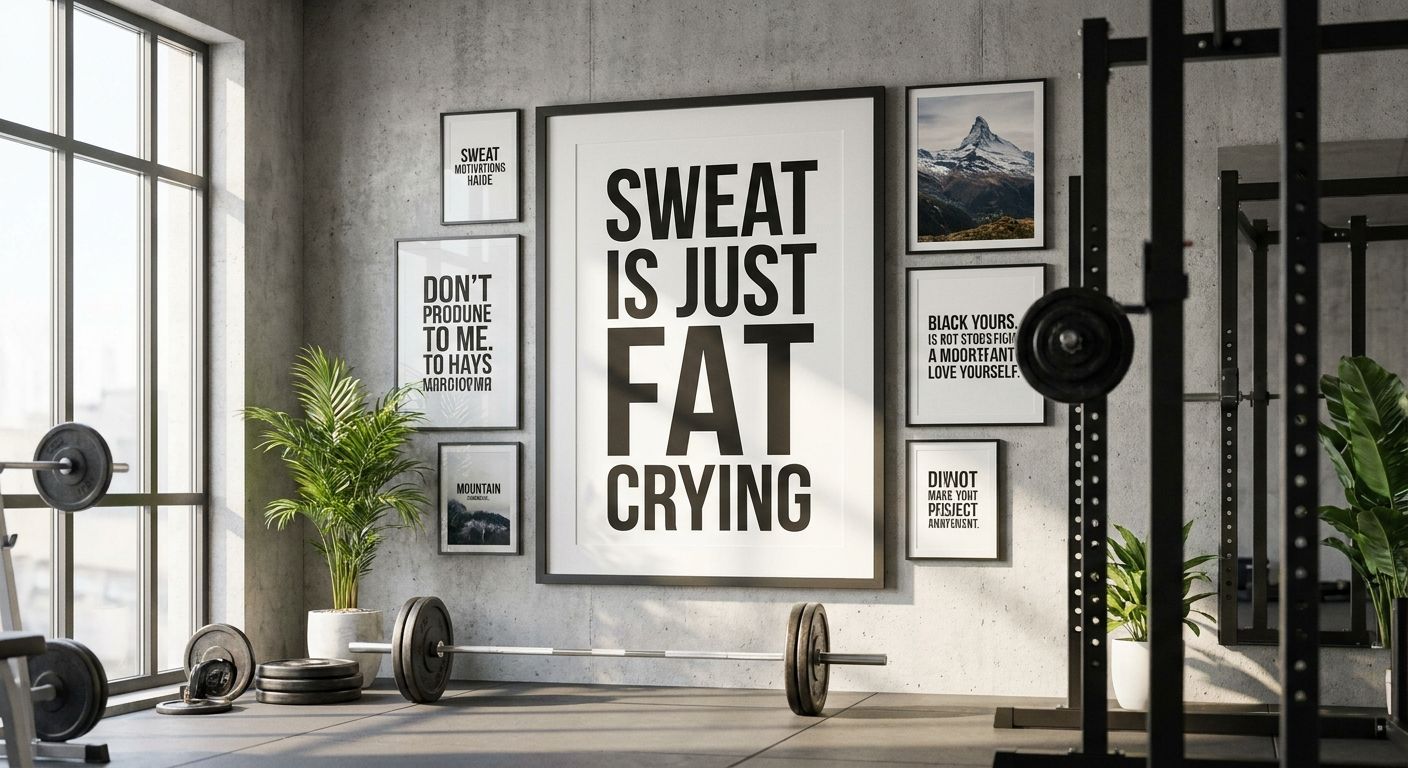
The safe pick — extra-large statement canvas. A single oversized canvas print, sized 40 inches or wider, anchors an entire wall without needing a gallery arrangement to fill the space. Extra-large canvas wall art for statement walls covers sizing logic for rooms with 8-to-10-foot ceilings, which describes most finished basements and converted garages. One piece, zero arranging decisions, high visibility from any angle in the room. Buy.
The minimalist option — line art. For lifters who want a clean, uncluttered aesthetic that won't compete with mirrors or a mounted TV, simple line-based compositions keep the wall calm between sets. They read fast at a glance, which matters when you're counting reps and not admiring art. Consider if your gym doubles as a meditation or stretching corner too.
The moody, high-impact option — black and white photography. High-contrast black-and-white prints hold their punch under garage lighting, which is often a single overhead fixture rather than layered ambient light. They also resist the faded, washed-out look that colorful prints can get under fluorescent tubes over a year or two. Buy for garages and unfinished basements specifically.
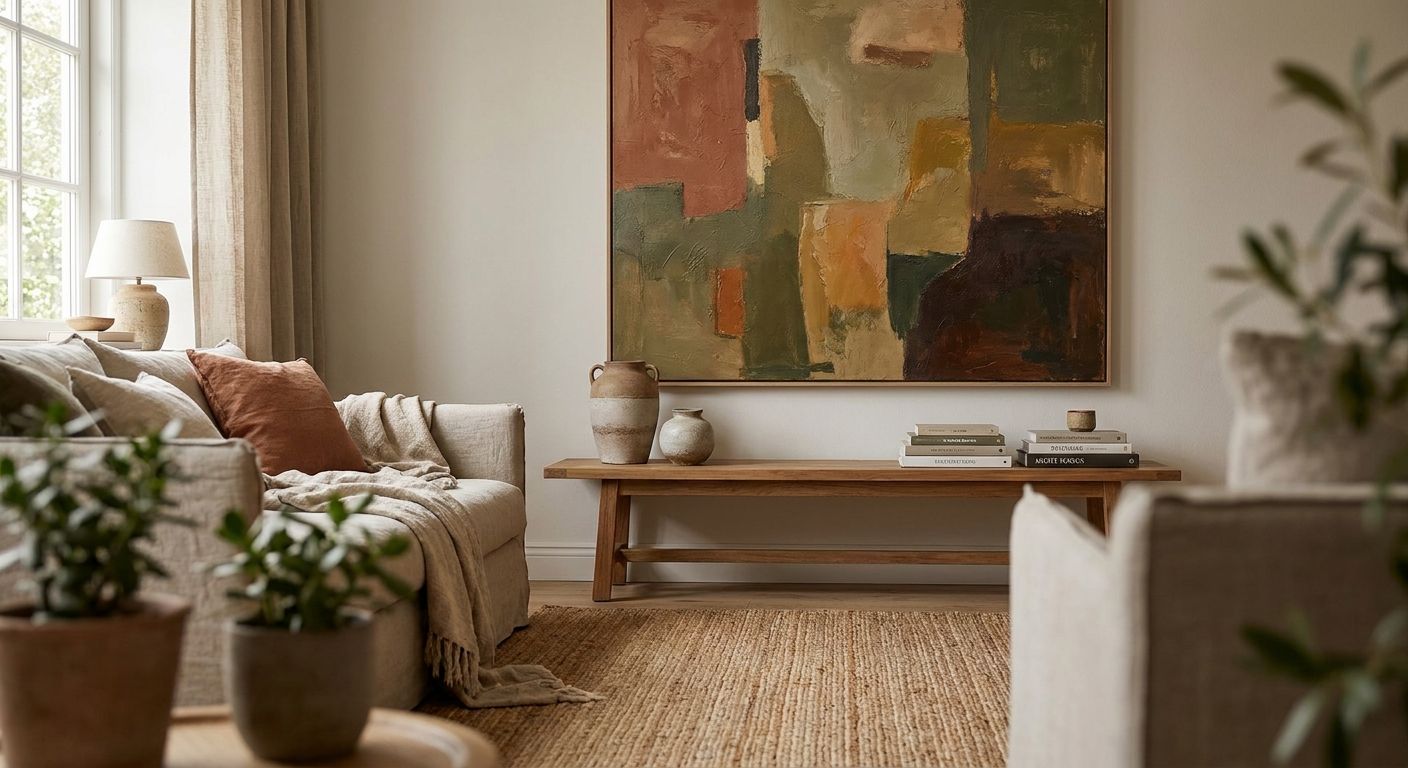
The wildcard — a single bold abstract. Abstract compositions with strong geometric shapes work when you want energy without a literal theme (no barbells, no quotes, no gym clichés). It's a gamble on personal taste, so Consider rather than commit sight unseen.
What to avoid
- Glass-framed prints near equipment. Glare under gym lighting hides the image, and glass near a squat rack or free-weight zone is a breakage risk waiting to happen.
- Delicate paper prints in unfinished spaces. Basements and garages without climate control will warp or stain unprotected paper within a season, even framed.
- Overly literal "gym motivation" text art. Bold quote prints look sharp in a photo but wear out fast on a wall you see 20 times a week — imagery tends to age better than slogans.
Before hanging anything permanently, run through how to hang canvas art without damaging walls — vibration from dropped weights makes secure mounting non-negotiable in a home gym, more so than in a living room.
Verdict comparison
| Style | Humidity tolerance | Visual clarity at distance | Best for | Verdict |
|---|---|---|---|---|
| Extra-large statement canvas | High | Excellent | Finished basements, single-wall focus | Buy |
| Line art / minimalist | Medium | Good | Dual-purpose gym/stretch rooms | Consider |
| Black-and-white photography | High | Excellent | Garages, unfinished basements | Buy |
| Bold abstract | Medium | Good | Personality-forward setups | Consider |
| Framed paper prints with glass | Low | Fair | Not recommended for active gym walls | Skip |
FAQ
What's the best wall art for home gyms in 2026?
Extra-large canvas prints and black-and-white photography lead the pack for home gyms in 2026 because they read clearly from a distance and tolerate humidity better than framed paper. Both hold up in garages and basements without climate control.
Is canvas better than framed art for a home gym?
Yes, canvas is generally the better choice for a home gym because it skips the glass that glares under gym lighting and risks breaking near equipment. Canvas also handles humidity swings in basements and garages more reliably than paper under glass.
How big should wall art be in a home gym?
Go bigger than a standard living room piece — 40 inches or wider reads clearly from 10 to 15 feet away, which is the typical distance from a treadmill or bench to the wall. Anything under 16x20 tends to disappear at that range.
Can I hang wall art near a squat rack or weight bench?
Keep wall art a few feet clear of any active movement zone, including barbell paths and kettlebell swing radius. Direct placement above or beside equipment increases the risk of damage from dropped weights or vibration.
Does humidity in a garage gym ruin wall art?
Unprotected paper prints can ripple or stain within a season in a humid, uninsulated garage. Coated canvas prints tolerate humidity far better and are the safer pick for garage gyms in 2026.
Should I use motivational quote art or imagery in a home gym?
Imagery tends to outlast quote art because bold slogans wear thin after repeated daily viewing, while a strong photograph or abstract composition stays visually interesting longer. Quote art photographs well for social media but isn't always the best long-term wall choice.
What colors work best for gym wall art?
Deep blacks, charcoals, and single accent tones read as intentional and energizing without overstimulating the space. Busy multi-color prints can feel cluttered in a room already full of equipment.
Is one large canvas better than a gallery wall in a home gym?
A single oversized canvas is usually the easier and more effective choice for a home gym because it fills the wall without requiring careful arrangement across a busy, equipment-heavy space. Gallery walls work better in rooms with slower, closer viewing, not a workout zone.
One last thing
The detail most people skip: check sightlines from your primary equipment position before you buy, not after. Stand where you'll actually be during a set — on the bench, on the mat, mid-squat — and look at the wall from that exact angle before committing to size or placement, because a piece that looks perfect from the doorway can sit awkwardly out of view once you're actually working out in 2026.