Hamptons-style wall art pairs the breezy, moneyed calm of Long Island beach houses with the kind of canvas prints that read expensive without shouting about it. This guide breaks down what actually works on the walls of a coastal luxury home in 2026, and what to skip.
- Sydney Harbour canvas print anchors a Hamptons-style entryway at $179.99 — Buy for foyers and open-plan hallways.
- Extra-large single canvases beat small print clusters in double-height Hamptons living rooms.
- Skip glossy black frames — brushed oak, whitewash, or unframed canvas reads coastal luxury in 2026.
- Hibiscus Bird works for sunrooms and pool-house walls at $179.99 — Consider for botanical accents.
- Muted blue, sand, and driftwood tones outperform saturated nautical navy in 2026 coastal luxury interiors.
Who this is for
This guide is for homeowners furnishing a shingle-style, coastal, or beach-club-adjacent property who want hamptons artwork that feels collected rather than themed — think Southampton weekend house, not a beach-motel gift shop. It's also for interior designers sourcing for clients who want Coastal Luxe finishes: linen, driftwood, whitewashed oak, muted blues, and quiet horizon lines instead of anchors and lighthouses. If your client's brief says "elevated coastal" or "quiet luxury by the water," this is the buying framework to use.
Why this matters
Hamptons style gets confused with generic "beach house" decor constantly, and the two produce very different results on a wall. Generic coastal leans into literal nautical objects — rope, anchors, primary-blue stripes. Hamptons-style wall art leans into restraint: tonal palettes, natural materials, water and sky as subject rather than symbol. Get the palette or scale wrong and a $180 canvas print looks like it belongs in a rental unit instead of a $2M shingle-style home. Gioia Wall Art stocks over 6,000 curated prints, and the coastal wall art for beach houses collection is the fastest way to see the difference between the two aesthetics side by side.
What to look for in hamptons artwork
A muted, tonal palette
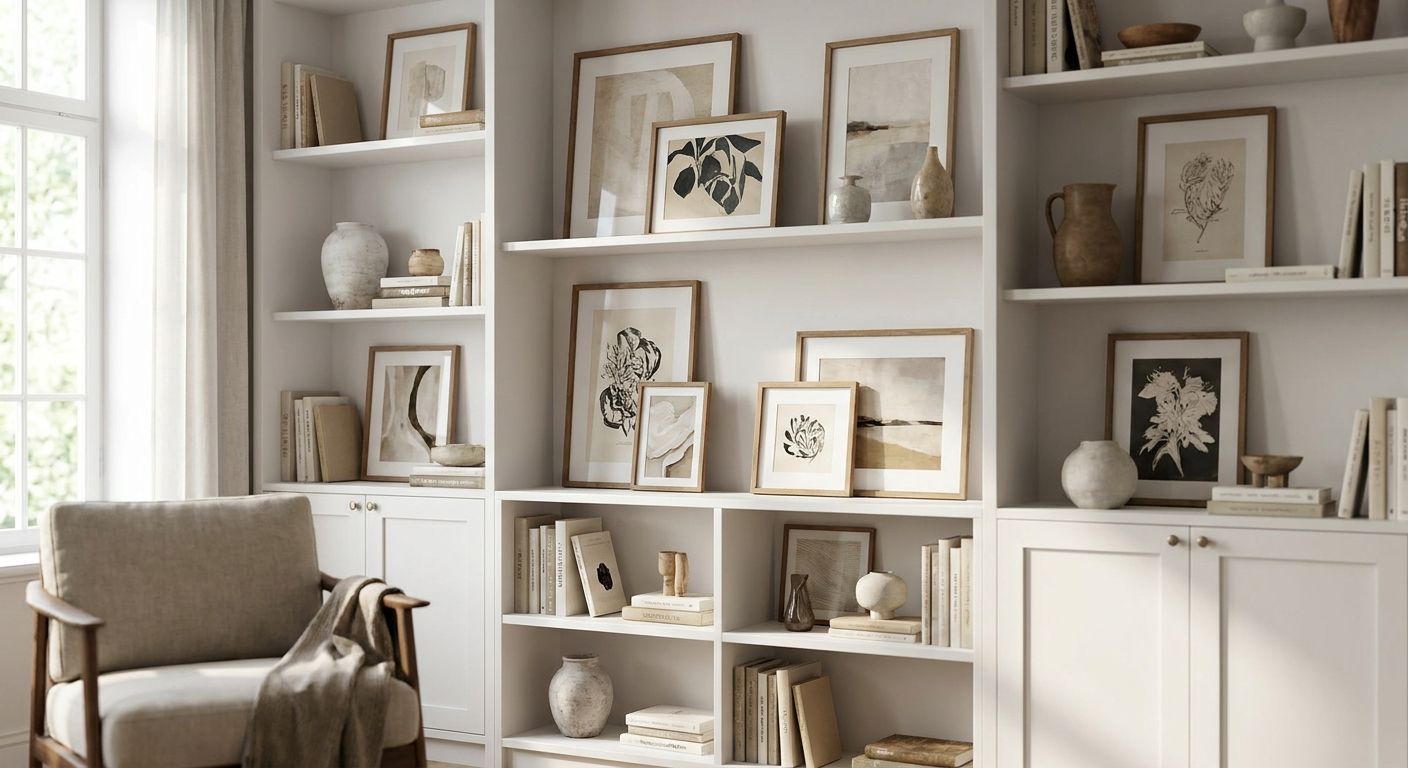
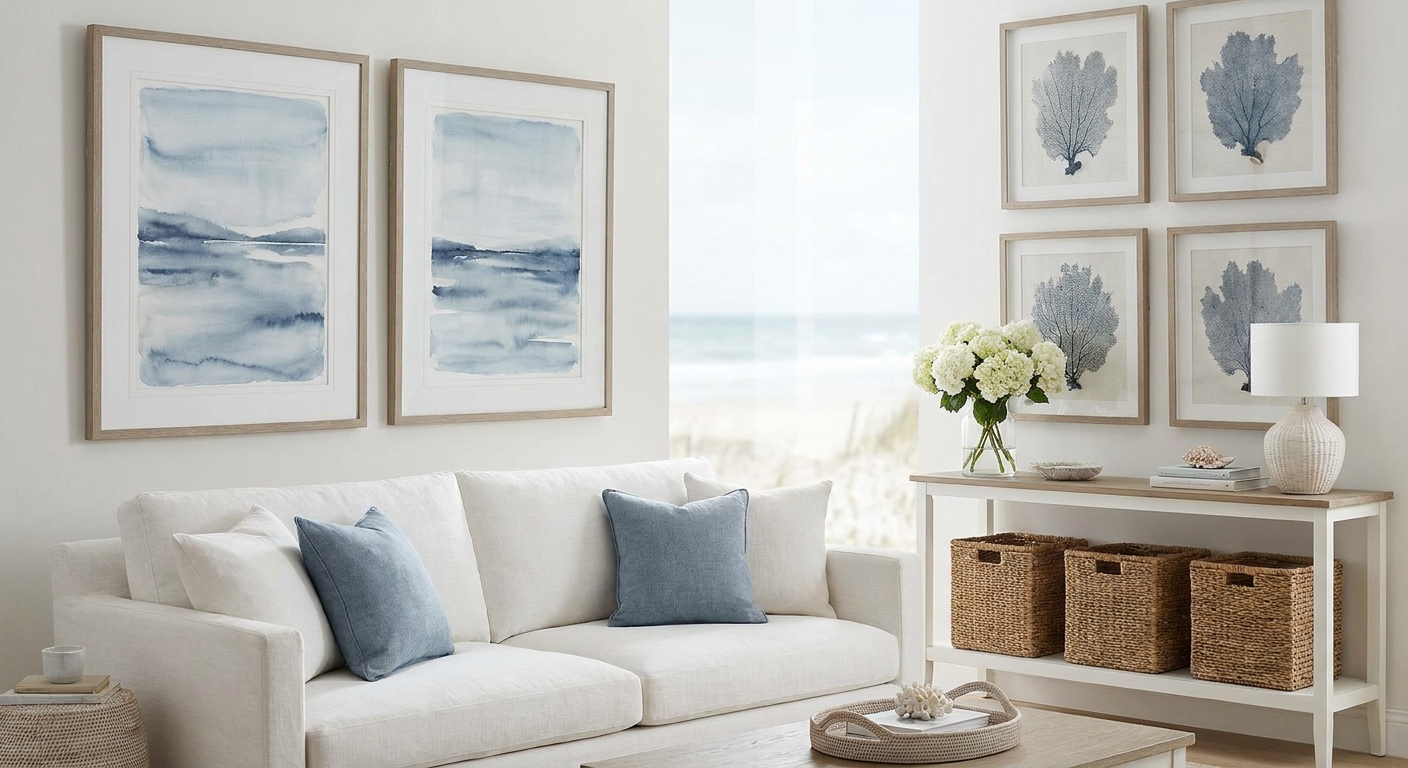
Hamptons interiors run on restraint — sand, driftwood grey, seafoam, and soft navy, never saturated primary blue. A canvas print in muted tones reads as curated; a bright, high-contrast beach scene reads as a hotel lobby. Test any piece against a swatch of your wall color before committing — if it competes rather than complements, it's the wrong piece.
Scale that matches open-plan rooms
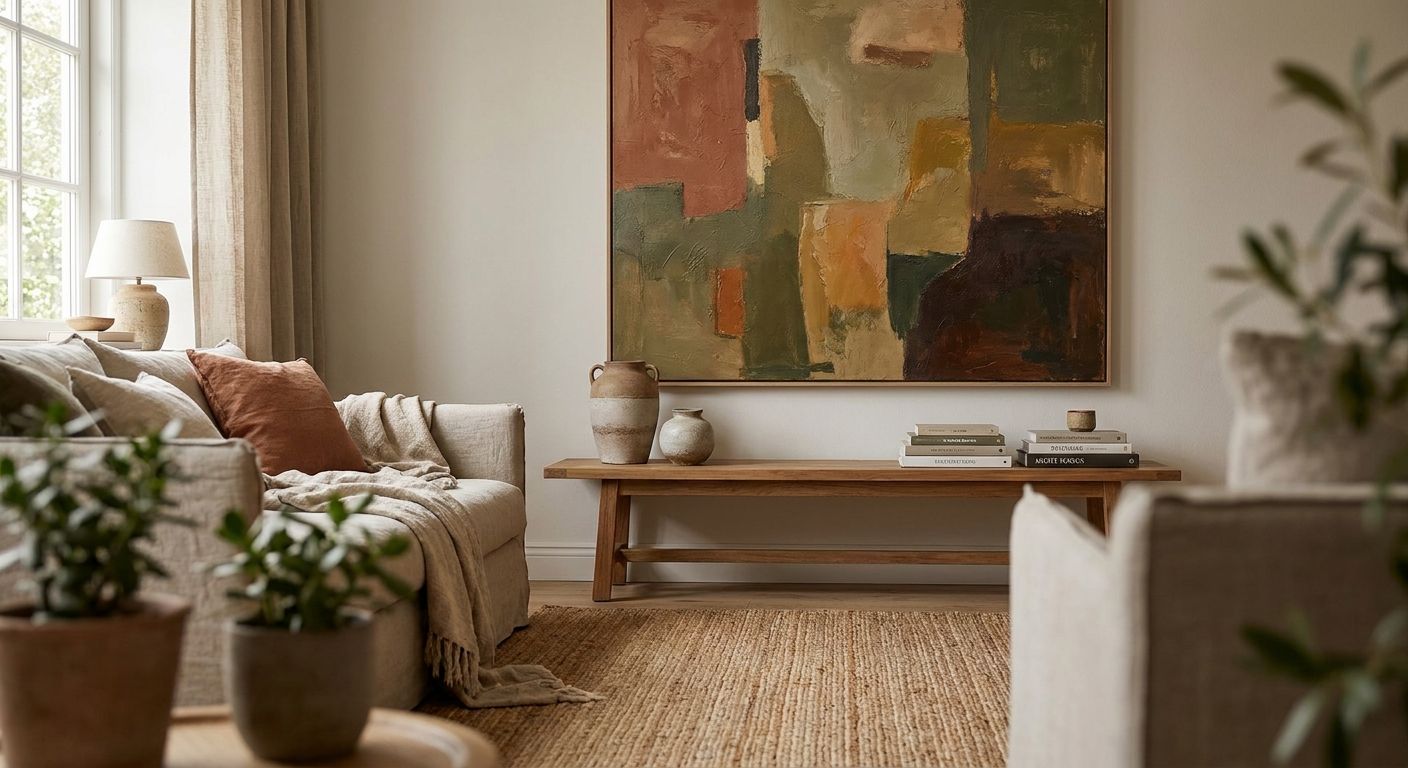
Hamptons-style homes tend toward vaulted ceilings and open-plan living, which swallows small art. A single 40x60-inch canvas over a sofa reads intentional; three 16x20-inch prints in the same spot read like an afterthought. As a rule of thumb, wall art should span roughly two-thirds the width of the furniture it hangs above.
Frame and finish
Glossy black frames and heavy gilt read traditional-formal, not coastal luxury. Brushed oak, whitewashed timber, or a clean unframed canvas edge match the natural-material language of shingle-style architecture. If a piece only comes in a dark frame, ask whether it can ship as a canvas print instead.
Subject matter with restraint
Water, sky, dune grass, and abstract horizon lines outperform literal nautical iconography — anchors, sailboats-as-clip-art, rope motifs — in 2026 coastal luxury interiors. A hazy sunrise or harbor scene does more design work than a cartoon lighthouse.
Print material and texture
Canvas with visible weave texture reads more like fine art than a flat poster print, which matters in a room where every other surface is natural linen, rattan, or oak. Framed fine art prints work well in more formal Hamptons rooms like a dining room or study, while canvas suits casual open-plan spaces.
Placement logic
Entryways and stairwells in Hamptons-style homes want a single statement piece, not a gallery wall — the architecture already has enough visual movement from beams and millwork. Reserve gallery-wall layouts for a den, mudroom, or powder room where the scale is smaller.
Top picks for Hamptons-style rooms
Sydney Harbour — the safe pick. A tonal blue-and-sand harbor scene at $179.99 that reads coastal without being literal, sized right for an entryway or over-console placement. Buy.
Summer days, Sydney skyline — the statement piece. At $209.99, its horizon-line composition and warm light suit a double-height living room wall where you want one dominant piece rather than a cluster. Buy for open-plan spaces over 20 feet wide.
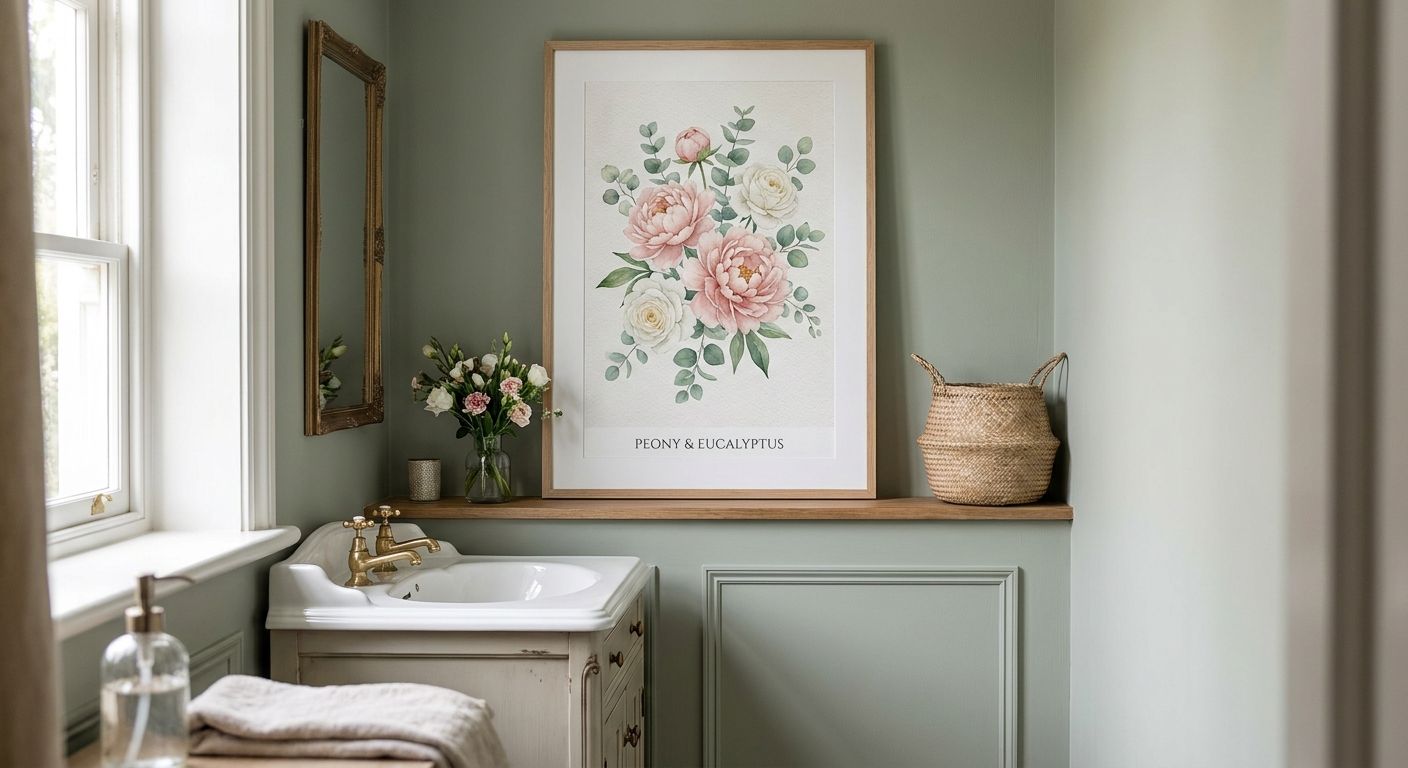
Hibiscus Bird — the wildcard. A botanical piece at $179.99 that brings a Hamptons garden-room feel — works in a sunroom, breakfast nook, or pool house rather than a formal living room. Consider if your palette already has green or botanical accents.


If you're furnishing a room with double-height ceilings or a great room over 300 square feet, jump straight to extra-large canvas wall art for statement walls rather than trying to make a standard-size print work — scale is the single most common mistake in Hamptons-style rooms.
What to avoid
- Literal nautical clip-art — anchors, ropes, and cartoon lighthouses belong in a beach-motel lobby, not a Hamptons living room. They date a room within a year or two.
- High-gloss black or gold frames — they clash with the whitewashed oak and linen textures that define the Hamptons aesthetic; brushed or unframed canvas works better.
- Undersized prints over large furniture — a 16x20-inch canvas over an 8-foot sofa reads like it was left over from a smaller apartment, not sized for the room.
How the top picks compare
| Pick | Palette | Best room | Price | Verdict |
|---|---|---|---|---|
| Sydney Harbour | Tonal blue/sand | Entryway, console | $179.99 | Buy |
| Summer days, Sydney skyline | Warm horizon | Open-plan living room | $209.99 | Buy |
| Hibiscus Bird | Botanical green | Sunroom, pool house | $179.99 | Consider |
FAQ
What is Hamptons-style wall art?
Hamptons-style wall art uses muted, tonal coastal palettes — sand, seafoam, soft navy — with natural-material framing, avoiding literal nautical imagery like anchors or rope motifs. It pairs with shingle-style architecture, linen upholstery, and whitewashed oak furniture common in Hamptons-style homes.
What colors work best for hamptons artwork?
Sand, driftwood grey, seafoam, and muted navy outperform saturated primary blue in Hamptons interiors. Bright, high-contrast beach colors tend to read more like a rental than a considered coastal luxury home.
Is Hamptons style the same as coastal grandmother?
No — they overlap but Hamptons style leans more formal and architectural, while coastal grandmother leans softer and more layered with vintage textiles. Both favor muted palettes over saturated nautical colors.
How big should wall art be in a Hamptons-style living room?
Wall art should span roughly two-thirds the width of the furniture below it, which in an open-plan Hamptons living room often means a single canvas 40 inches wide or larger. Small clusters of prints tend to get lost in vaulted-ceiling rooms.
Should Hamptons artwork be framed or canvas?
Canvas with visible texture suits casual open-plan rooms, while framed fine art prints in brushed oak or whitewash work better in more formal dining rooms and studies. Avoid glossy black or heavy gilt frames in either case.
How much does Hamptons-style wall art cost in 2026?
Curated canvas prints in coastal palettes typically run $179.99 to $209.99 depending on size and material as of 2026. Larger statement canvases for open-plan rooms sit at the higher end of that range.
What subjects fit Hamptons wall art?
Water, sky, dune grass, and abstract horizon lines fit best, along with restrained botanical pieces for sunrooms. Literal nautical iconography like anchors or lighthouses tends to date a room quickly.
Can Hamptons wall art work in a small coastal cottage?
Yes, but scale down to a single mid-size canvas rather than a gallery cluster, and keep the palette consistent with the home's natural-material finishes. A 24x36-inch tonal harbor scene works well in a smaller cottage living room.
One last thing
The detail most people miss: Hamptons-style rooms almost never use matching sets. A single strong canvas per room, chosen for tonal fit rather than a themed collection, is what separates a curated coastal-luxury home from one that looks like it shopped a beach-decor catalog in one sitting.