A two-story foyer swallows small art whole — this ranks the large wall art for foyer walls that actually hold a 20-foot run, from oversized single-panel canvas to multi-panel stair treatments, so you buy the right scale the first time in 2026.
- Large wall art for foyer walls over 12 feet needs single pieces starting around 48 by 72 inches — undersized art reads as clutter from the landing.
- An oversized abstract or landscape canvas is the safe pick for a two-story entry in 2026 — Buy.
- Vertical stacked runs and multi-panel triptychs solve staircases better than one giant rectangle — Consider.
- A single framed print under 40 inches wide is the most common foyer mistake — Skip it for double-height walls.
- Original paintings work as the investment pick when the entry is the first thing guests see year-round.
Why this matters
A two-story foyer is the one room in the house where furniture doesn't set the scale — the architecture does. Coffee-table art rules (hang it 8 inches above the sofa, size it to the console) don't apply when the wall runs from an entry bench up past a landing to a second-floor ceiling.
Most people under-buy for this space. They pick a print sized for a bedroom, hang it at the standard 60-inch center, and it disappears against 15 feet of blank drywall. The entryway wall art that actually reads from the front door and the upstairs landing at the same time is a different category of purchase — bigger, bolder, and often multi-piece.
The fix isn't complicated once you know the scale rules. It's picking the right format for a vertical, double-height wall instead of applying single-room logic to an architectural feature.
How this list was ranked
Each pick below is ranked on how it performs specifically in a two-story entry: does it hold the wall from 15 feet away at the front door, does it still read clearly from the second-floor landing, and does the format (single canvas, multi-panel, framed print, original) match how tall foyers actually get lit and viewed. Sizing benchmarks reference the standard interior design proportion rule — art spanning roughly two-thirds the width of the wall segment it anchors — cross-checked against the vertical runs typical of two-story entries in 2026 residential builds. Gioia Wall Art's curated catalog spans canvas, framed prints, and original paintings, which is why the format comparison matters as much as the size comparison here.
The ranked list
1. Oversized single-panel abstract or landscape canvas — the safe pick
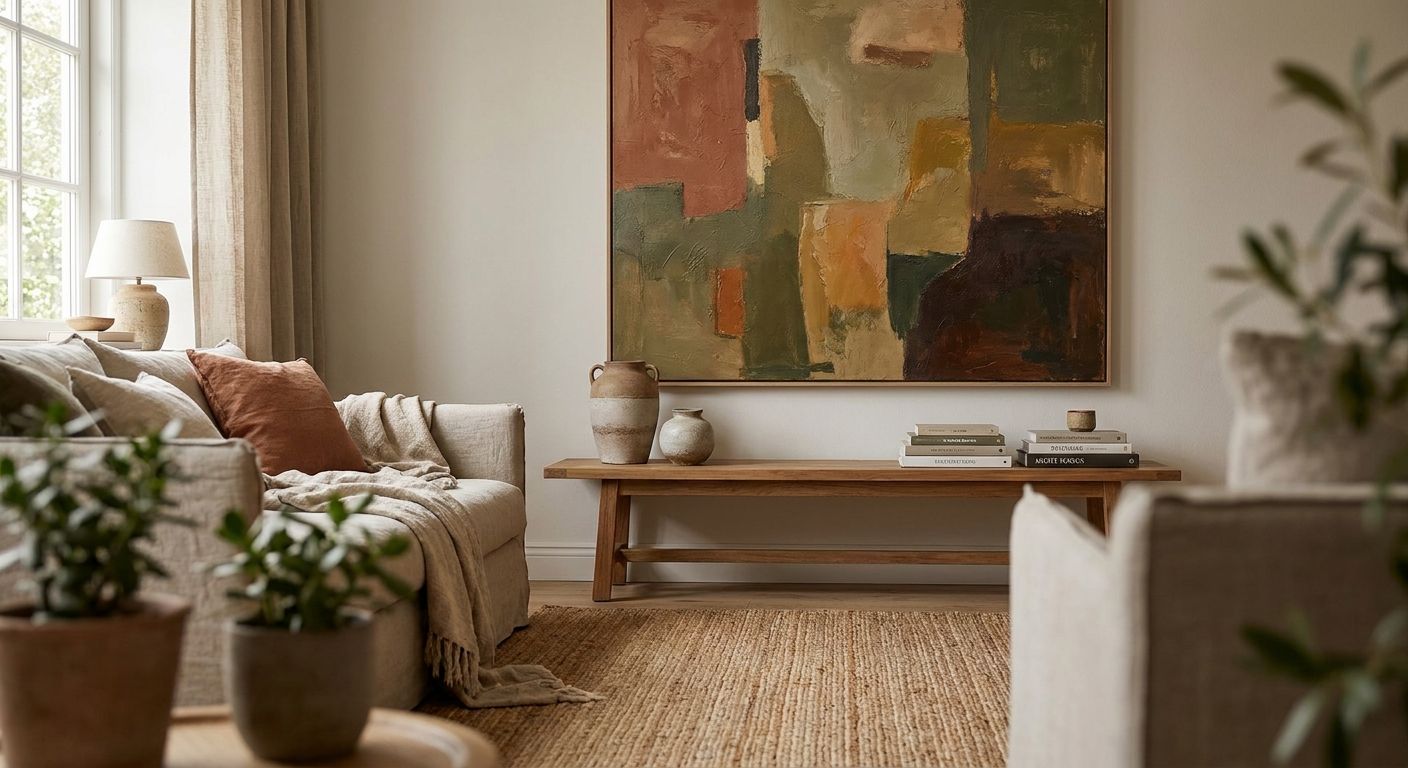
One large canvas, 60 by 90 inches or bigger, in an abstract or landscape composition. This is the format that performs best in extra-large canvas wall art settings because a single sweeping composition doesn't fragment when viewed from two different floor levels.
A landscape or abstract piece with strong horizontal movement — a desert scene, a sunset gradient, a color-field abstract — reads at both the front door and the second-floor landing without needing a second glance to "finish" the composition. Verdict: Buy for any two-story foyer over 10 feet wide.
2. Vertical stacked runs for staircases — the architecture pick
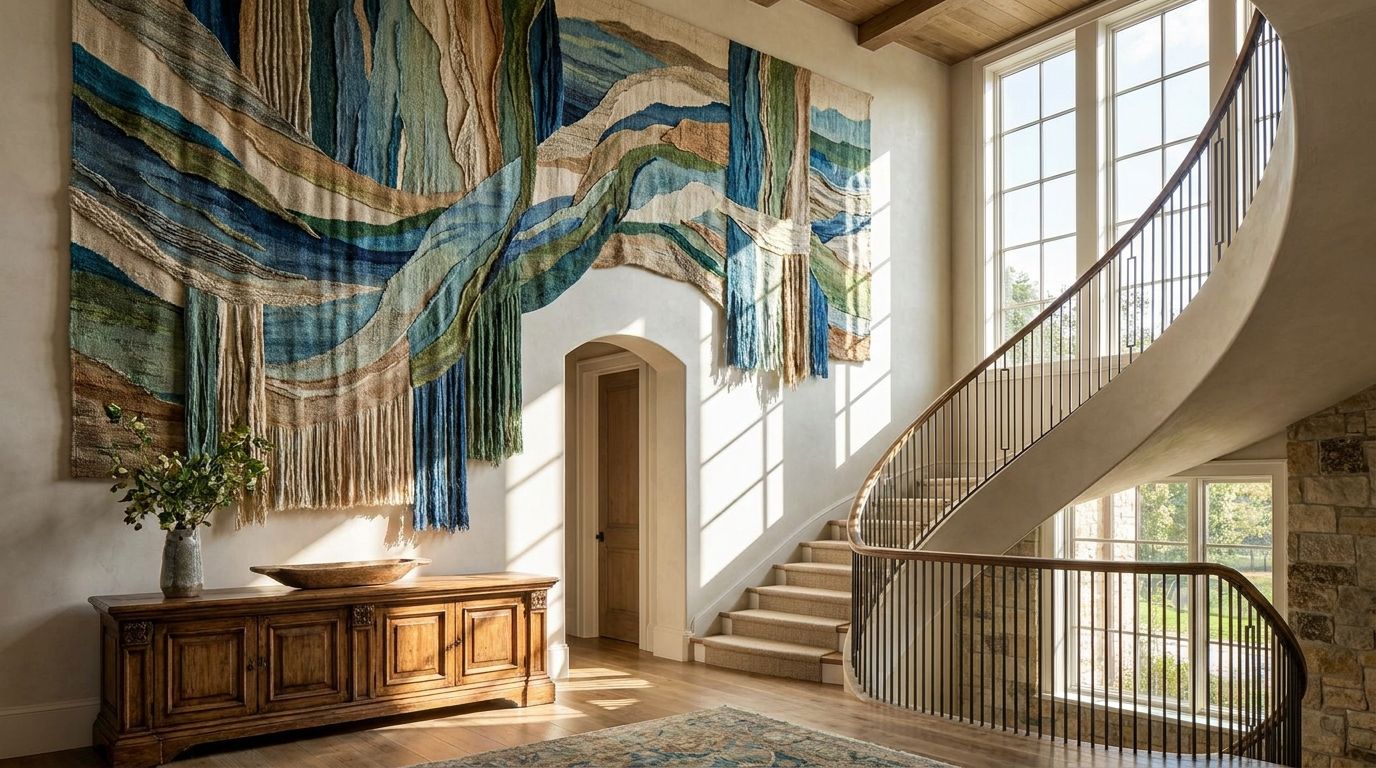
When the foyer wall follows a staircase rather than sitting flat and square, a single rectangle stops working the way it does on a flat wall. Wall art for staircases and high ceilings needs pieces sized and stacked to follow the stair rake line instead of fighting it.
This format uses two or three canvases of graduated or matching size, hung on a diagonal that mirrors the stair pitch. It's more planning-intensive than a single hero canvas but solves the specific problem of a wall that isn't a flat rectangle. Verdict: Buy for staircase-adjacent foyers, Skip for flat double-height walls where a single canvas does the job with less measuring.
3. Multi-panel triptych sets — the modular pick
A three- or five-panel canvas set spreads one large image across separate stretched canvases with visible gaps between panels. It fills a wide, tall wall the way a single canvas does, but ships and hangs in smaller, more manageable pieces — a real advantage when the wall is 18 feet up a stairwell and a single 6-foot canvas isn't going up that stairwell easily.
The tradeoff is alignment: gaps need to be even, and the composition needs to be chosen for panel breaks, not just cropped. Verdict: Consider when a single oversized canvas isn't practical to transport or hang.
4. Large framed fine art print — the classic pick
A framed print in a substantial mat and frame, sized 40 by 60 inches or larger, brings a more formal, gallery-adjacent look than raw canvas. Frames add visual weight, which matters in a foyer where the piece needs to compete with a chandelier, a staircase railing, and often a console table below it.
The catch: framing at this scale gets heavy, and glass or acrylic glazing on a piece this large needs proper wall anchors, not picture-hanging strips. Verdict: Buy for foyers with a more traditional or transitional style, Wait if the wall anchors aren't rated for the weight yet.
5. Original painting as the entry statement — the investment pick
An original, one-of-one painting sized for the wall does something a print run can't: it's the only one. In a room every guest sees on the way in, that uniqueness carries weight a mass-produced canvas doesn't.
Original paintings at foyer scale run larger and heavier than most canvas prints, so confirm the exact dimensions and mounting hardware before committing wall space. Verdict: Buy for anyone treating the foyer as a design centerpiece rather than a pass-through.
6. A cluster gallery wall of smaller framed pieces — the collector's pick
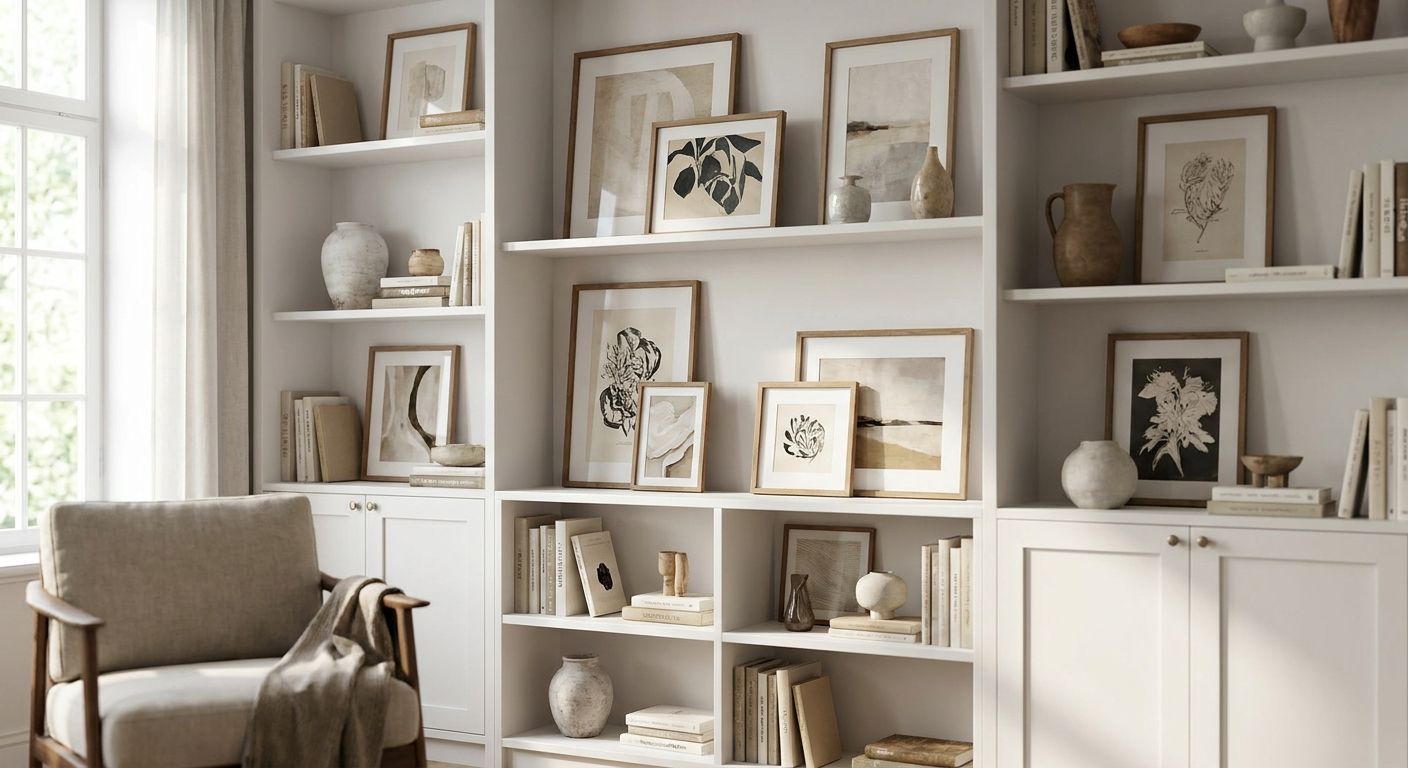
Instead of one large piece, a curated cluster of eight to twelve smaller framed prints fills the same footprint with more variety. This works when the foyer isn't purely double-height — a mix of wall segments at different heights — and it lets a collector rotate individual pieces over time.
The risk is visual noise: too many unrelated styles in one cluster reads as clutter rather than curation. Verdict: Consider for eclectic or maximalist interiors, Skip if the goal is one strong first impression rather than a gallery moment.


Comparison table
| Pick | Best For | Typical Size Range | Format | Verdict |
|---|---|---|---|---|
| Oversized single canvas | Flat double-height walls | 60x90 in and up | Single canvas | Buy |
| Vertical stacked run | Staircase walls | Graduated, 2-3 pieces | Canvas or framed | Buy |
| Multi-panel triptych | Wide walls, easier transport | 3-5 panels, combined 6+ ft | Canvas set | Consider |
| Large framed print | Traditional or transitional foyers | 40x60 in and up | Framed print | Buy |
| Original painting | Design-centerpiece entries | Varies, confirm before ordering | Painting | Buy |
| Gallery cluster | Eclectic, maximalist interiors | 8-12 smaller frames | Mixed framed | Consider |
Where to buy
- Confirm the finished size before ordering, not the image size. Canvas wrap and framing add inches on every side — a piece listed at 60 by 90 inches can land closer to 62 by 92 once stretched or matted.
- Check whether the piece ships ready-to-hang. Gioia Wall Art's canvas prints come stretched and framed pieces arrive with hardware, which matters when the alternative is coordinating a custom framer for a 90-inch piece in 2026.
- Order a color swatch or proof for anything replacing natural light in a north-facing entry. A landscape or abstract that reads warm on screen can shift noticeably cool under foyer lighting.
“If the piece looks big laid flat on the floor, it's still too small for a 20-foot stairwell.”
Sizing mistakes in a foyer almost always run in one direction: too small, not too big. Before ordering, choosing the right canvas size for the specific wall segment — not the room as a whole — prevents the most common return request in this category.
FAQ
What's the best large wall art for a two-story foyer in 2026?
An oversized single-panel abstract or landscape canvas at 60 by 90 inches or larger is the safest pick for a flat, double-height foyer wall in 2026. Multi-panel sets and vertical stacked runs work better when the wall follows a staircase.
How big should wall art be for a two-story entryway?
Aim for a piece that spans roughly two-thirds the width of the wall segment, which usually means starting at 48 by 72 inches for foyers over 10 feet wide. Smaller pieces disappear against 8 to 12 feet of vertical wall.
Is a canvas print or a framed print better for a foyer?
Canvas prints work better for modern or minimalist foyers and are easier to hang at large scale without added frame weight. Framed prints suit traditional or transitional entries but need wall anchors rated for the extra weight at 40 by 60 inches and up.
How much does large-scale foyer wall art cost?
Canvas prints in the large-format range at Gioia Wall Art run around $179.99 per panel as of 2026, with multi-panel sets priced per piece. Original paintings and custom framed pieces vary based on size and materials.
Should I use one large piece or a gallery wall in a two-story foyer?
One large piece is the stronger choice when the goal is a single first impression from the front door. A gallery cluster works better in eclectic or maximalist interiors where variety matters more than one focal statement.
How high should art hang on a two-story foyer wall?
Center the piece around 60 inches from the floor when there's a single focal point at entry level, but on staircase walls, follow the stair rake angle instead of a fixed height. A flat 60-inch rule doesn't apply once the wall itself is angled.
Can multi-panel canvas sets work in a two-story foyer?
Yes, multi-panel triptych sets are often easier to transport and hang than a single oversized canvas in a stairwell setting. They fill the same wall footprint across 3 to 5 separate panels with even gaps between them.
What size mistake do people make most with foyer wall art?
Buying a piece sized for a bedroom or hallway and hanging it at standard 60-inch center height in a double-height wall. It reads as too small the moment it's viewed from the second-floor landing.
One last thing
The piece that looks oversized in the box is usually the right size once it's on an 18-foot wall — foyers are the one room where buyer's remorse runs toward "should have gone bigger," not the reverse.